“This post contains affiliate links. As an Amazon Associate, I earn from qualifying purchases”
Having geese in your backyard is a big problem. I learned this myself. I searched and found ways to keep them away. Here are the methods that work.
First, goose repellents are effective. They make your yard less inviting to geese. Using motion-activated sprinklers scares them off because they don’t like surprises.
Next, changing your lawn can help too. Geese love short grass for feeding and watching for predators. Planting tall fescue makes your lawn less attractive to them.
Also, during nesting season, geese look for safe places for their nests. Making sure they don’t find such spots in your yard is key.
Lastly, understanding goose migration helps with control efforts year-round. This knowledge lets you prepare before they arrive.
Key Takeaways
- To deter geese, use repellents and grow tall grass and shrubs.
- Scare them with fake predators, shiny ribbons, and noise devices without causing harm.
- Let your lawn grow longer by planting tall fescue grass since geese like short grass.
- Cover ponds with netting and avoid leaving food or bird seeds outdoors.
- Regularly inspect for nesting areas in your yard and keep it tidy to discourage geese from staying.
Identify Why Geese Are Attracted to Your Backyard
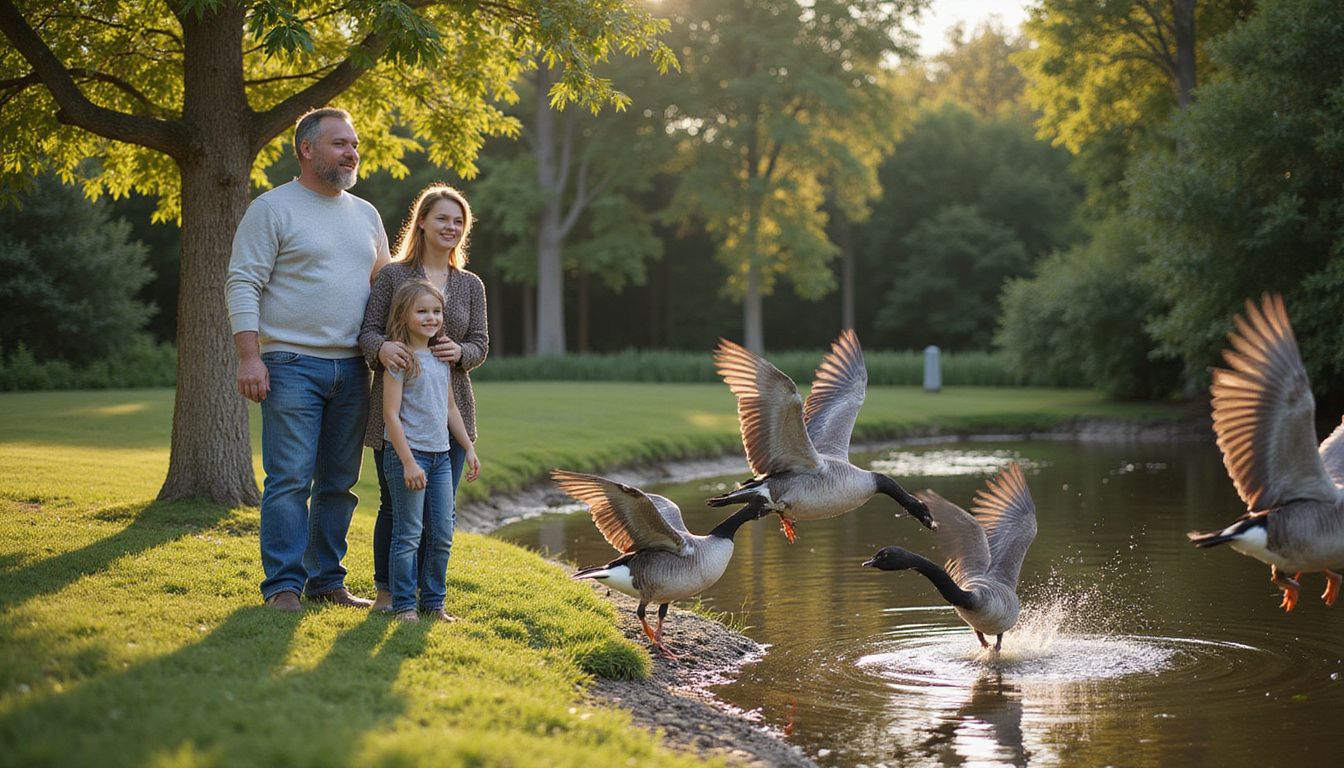
Geese prefer landing in large, open areas with nearby water and easy access to food, making my backyard an ideal spot for them.
Wide, open lawns
Canada geese like wide, open yards because they can spot predators and find plenty of food. My big, open lawn attracts these birds more. They eat the grass and leave droppings.
To make my backyard less attractive to them, I let the grass grow taller since geese prefer short grass for easy eating. I also planted more shrubs. This made it tougher for the geese to roam freely and feel secure.
These changes helped lower the number of geese visiting my yard without causing them harm.
Presence of water sources
Canada geese like water for drinking and cleaning their feathers. My yard had a pond that attracted them quickly. They also stayed because it felt safe to them.
To keep the geese away, I covered my pond with netting to make access difficult. I also stopped filling the bird bath during their migration seasons. These steps helped me manage goose visits without harming them or breaking migratory bird laws.
Easy access to food
Geese started visiting my yard for the bird seed and grass. To stop them, I made sure no food scraps were left outside.
I then improved how I stored leftovers from feeding birds or pets. I used containers that geese couldn’t open, which reduced their visits significantly.
Humane Ways to Deter Geese
To keep geese away without harm, consider changing your lawn and adding plants. Fences and strings around the edge can also help stop them from landing.
Remove turfgrass or let your lawn grow taller
I learned that geese stay away from tall grass. They like short lawns to see danger and find food. I let my lawn grow longer, and it worked over time.
By changing how I manage my lawn, I controlled the geese.
Using taller fescue made my yard less attractive to them but better for the ecosystem. This method didn’t hurt the birds or stop their migration. It just made them go somewhere else safely.
Create natural barriers with shrubs or tall plants
Geese steer clear of areas filled with tall bushes and high plants as these obstruct their sight. Setting up such vegetation proves a potent strategy in controlling geese. This tactic repels geese while elevating seclusion and augmenting the aesthetic appeal of the territory.
I opt for the rapid development of thick shrubs for optimal outcomes. Such a method decreases the unobstructed space geese favor, rendering my yard less appealing for them.
Install fences or perimeter strings
I set up fences and strings around my yard to stop Canada geese from landing and walking through. The fences blend with the garden’s design, keeping the space secure without hurting its looks.
Also, I added scary items to keep geese away more effectively.
Use Visual and Sound Deterrents
To keep geese away, use visual and sound deterrents.
– Place fake predators and shiny ribbons around your yard to disrupt their sense of safety.
– Use devices that emit predator sounds or sudden loud noises to keep them alert.
Place goose deterrent decoys
I utilize goose deterrent decoys in my garden. They take the shape of coyotes or foxes, which naturally intimidate geese. This trick prompts the geese into sensing danger nearby and they steer clear of the region.
Shifting the locations of these decoys often is pivotal as stationary decoys eventually get overlooked by the geese, realizing they’re faux.
I rotate their locations every couple of days to maintain a constant sense of caution in the geese. This strategy effectively deters them without causing harm. On top of this, I drape reflective scare tape throughout my garden as an added measure against geese.
This dual-approach ensures my lawn remains devoid of unwanted feathered guests.
Hang reflective scare tape
Use reflective scare tape to frighten geese. This tape shines and moves in the wind, which geese don’t like. Tie it on trees or poles in sunny, windy spots where geese gather.
Also, put decoys out to deter these birds.
Use noise-emitting devices
I used noise devices to scare geese away. These machines mimic sounds of goose predators and their distress calls. This method keeps geese out of my yard. I also sprayed goose repellents around water areas to deter them further.
Apply Goose Repellents
So, you’re looking at goose repellents next. Spraying your lawn with stuff that geese don’t like can really help. Some of these sprays are made from things we find in nature—safe for pets and plants but not fun for geese.
Spray non-toxic chemical repellents
I use non-toxic chemical sprays for goose control. These sprays are safe for the yard and do not harm plants or animals. They make the grass taste bad to geese, making them leave.
To apply, I follow the bottle’s instructions, usually spraying every few weeks or after rain. This method keeps my backyard free from geese and protects the environment.
Use naturally derived repellents
Natural repellents with grape extract keep geese away without hurting pets or plants. Spray these around water spots or lawns where geese like to eat.
Apply the spray after cutting the grass and before rain comes to make it last longer. Keep using the spray every few weeks to make your yard less attractive to geese.
Prevent Nesting Areas
To keep geese away, always check your yard for spots where they might want to build nests. Cut down tall grasses and clear out dense bushes so these birds don’t feel hidden or safe.
Regularly inspect and remove potential nesting spots
I check my yard weekly for geese nesting areas. Keeping bushes trimmed and removing leaf piles are effective strategies. These actions eliminate hidden and quiet spots where geese prefer to nest, improving goose control around my home.
By reducing safe spaces, geese are less likely to settle on the property. This approach has effectively kept geese away without harm.
Keep overgrown spaces trimmed
To keep geese away, I cut long grass and bushes short. Geese like to hide in tall vegetation for safety. By maintaining a tidy yard, they find my place less appealing. Regular trimming with a lawn mower and garden shears also deters other pests.
Geese droppings are another issue. However, without cover or food sources in my yard, geese usually leave. Keeping the yard clean and trimmed prevents them from settling here, effectively managing the goose population around my home.
Conclusion
To get rid of Canada geese, I made my yard less inviting. I learned tall fescue grass and no open water deter them. Adding barriers helps too. Using decoys and noise scares the geese away.
I also spray repellents on my lawn that geese dislike. Ensuring there are no cozy nesting spots is crucial. This approach requires effort but effectively controls goose problems in outdoor spaces.
FAQs
1. How can I stop Canada geese from invading my backyard?
You can use various bird control methods to deter Canadian geese, such as goose repellents or deterrents. These may include motion-activated sprinklers that scare away the birds when they attempt to roost in your yard.
2. What effect does overgrazing by geese have on my lawn?
Overgrazing by a goose population can damage your lawn significantly. The nutritious tall fescue grass you might be growing could be consumed excessively, leaving bare patches and an abundance of goose droppings which affect soil health.
3. Can I feed the geese to make them leave?
Feeding the geese may seem like a good idea, but it actually encourages more visits rather than deterring them. It’s also important to note that certain foods are unhealthy for these migratory birds and feeding wildlife is often discouraged under laws like the Migratory Bird Treaty Act.
4. Are there any legal issues with getting rid of Canada Geese?
Yes, according to the Migratory Bird Treaty Act, it’s illegal in many areas to harm or kill Canadian Geese without a permit. Always opt for humane bird repellent methods and if necessary consult with local wildlife authorities about goose control options.
5. How do I maintain privacy while controlling the goose problem?
Opting for non-intrusive bird control measures helps maintain privacy while dealing with this issue effectively. Motion-activated sprinklers offer an excellent solution since they function automatically without constant supervision yet provide effective deterrent against unwanted poultry visitors.