“This post contains affiliate links. As an Amazon Associate, I earn from qualifying purchases”
Birds in the backyard can be nice, but sometimes they cause trouble. I found bird netting as a top choice for keeping them away and learned about kind ways to handle this issue. Here are some gentle methods to manage these challenging birds.
Bird netting works well for control. It stops birds from reaching certain areas. For tougher cases, bird spikes keep nuisance birds off surfaces like rooftops without harm. Geese deterrents specially address problems with Canada geese.
Another smart move is using non-toxic tastes like methyl anthranilate. This substance bothers birds but is safe for them and other wildlife.
Sounds also help. Playing distress calls of specific birds can scare away flocks safely.
Cleaning up bird droppings regularly reduces the attraction for them to come back.
Finally, making water sources unavailable and securing trash bins cuts off their food supply, discouraging pests like rodents too which often follow where birds go.
Key Takeaways
- Use bird netting and spikes to prevent birds from landing, without causing them harm.
- Scare birds away with distress calls and shiny objects for a safe method.
- Avoid touching or moving bird nests since it’s illegal and harmful to the birds.
- Eliminate sources of food, water, and nesting spots to deter nuisance birds from your yard.
- If these steps fail, hire professionals with effective and safe tools.
Common Types of Backyard Nuisance Birds
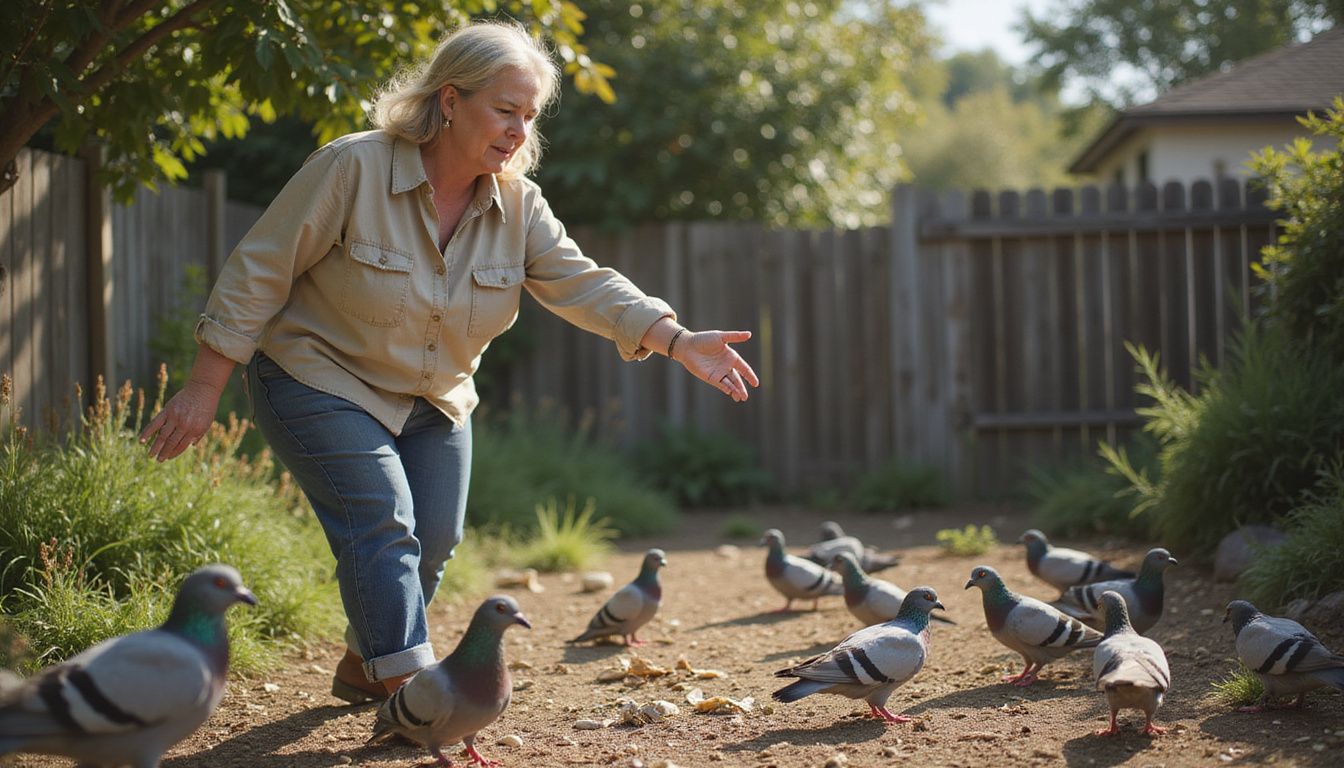
In my backyard, pigeons, sparrows, starlings, and woodpeckers often become a nuisance. They damage plants, leave droppings everywhere, and create noise.
Pigeons
Pigeons often visit my backyard, searching for food and a place to rest. Their droppings can damage surfaces and may carry mites into homes. To deter pigeons, I use bird spikes and netting on ledges and eaves.
Reflective objects also help scare them away. These methods are effective in pigeon control and don’t harm the birds.
Sparrows
Sparrows cause problems by nesting in small spaces around homes. Bird netting effectively keeps them out of these areas, preventing nest building. For sparrows that rest on ledges and window sills, bird spikes are useful.
These spikes deter sparrows from landing, forcing them to find other spots. Making homes less appealing to sparrows is essential without causing them harm.
Starlings
Starlings often invade backyards in big groups, causing noise and leaving droppings. They eat almost anything, including food from bird feeders and gardens. To control starlings, using bird spikes or netting is effective.
Reflective objects and motion-activated sprinklers also work because starlings dislike surprises.
Planting peppermint and lavender repels starlings. It’s important to remove standing water like birdbaths to discourage them from gathering for drinks or baths. Keeping garbage cans sealed prevents them from scavenging leftovers.
Woodpeckers
Woodpeckers cause trouble by pecking on trees and wooden parts of homes. Bird netting and reflective items work well to keep them away without hurting them. Keeping the yard free from insects cuts down their food source, making my place less attractive to them.
A plastic owl decoy also helps in scaring off woodpeckers effectively while following wildlife control rules.
Effective Bird Deterrent Methods
To stop birds from invading my backyard, I can put spikes on ledges or cover areas with netting. Also, hanging shiny objects and using motion-activated sprinklers work well to scare them off.
Bird Spikes
I use bird spikes to keep pigeons and other birds away. I place them on ledges, beams, and rooftops. These spikes are safe for the birds—they just can’t land or nest there. They’re made of rustproof material, making them durable.
Bird spikes help reduce bird droppings, keeping areas clean.
Installing them is easy. I look for spots where birds usually gather in my yard then secure the spikes in those places. Bird spikes are an effective method for controlling birds without harming them.
Bird NettingBird netting helps keep unwanted birds out of my backyard. It acts as a barrier, preventing them from entering. After installing it, I noticed fewer bird droppings, making the garden cleaner.
Installing the netting required effort but was worth it. The netting comes in different sizes, and I chose one that fit my area well. With the net over my fruit trees and vegetable patch, birds couldn’t eat my plants anymore.
This method is humane since it doesn’t hurt the birds; it only keeps them away.
Reflective Objects
I discovered a method to deter birds from my backyard using shiny objects like old CDs, aluminum foil strips, or special mirrors. These items reflect light and scare birds away because they don’t like the bright flashes.
I placed reflective tapes around my garden and fruit trees. This strategy kept sparrows and pigeons at bay without harming them. The reflective items create unpredictable light patterns when moved by the wind, preventing birds from getting used to them.
This technique proves effective for bird control over time.
Motion-Activated SprinklersMotion-activated sprinklers serve as a valuable tool for discouraging birds like pigeons, sparrows, and starlings from loitering in gardens. By sensing movement and discharging water, these apparatuses manage to fend off the birds without inflicting any harm.
With seamless operation and functionality in both daylight and darkness, they avert the undesired entry of birds into the designated area.
The moment a motion-activated sprinkler in my yard responded to a bird’s presence, the difference was noticeable at once.
Employing these sprinklers brings about two-fold advantages. They deter the birds while also tending to your lawn with necessary hydration. Birds are averse to sudden shocks like unexpected showers, hence the setup of these sprinklers can aptly handle bird infestation issues.
Plus, it helps curb the issue of unwelcome bird droppings and noise.
How to Safely Remove Bird Nests
Finding a bird’s home in your yard means you need to be careful. First, check if the nest is still in use or empty. If it’s old and no birds live there anymore, you can carefully take it away.
Make sure not to touch active homes because this can harm the birds or their babies. Use gloves for safety and clean up any leftover materials to keep things tidy and prevent future homes in the same spot.
Identify Active Nests
I always check if birds are flying in and out. This shows the nest is active with eggs or baby birds. Disturbing these nests is illegal, so I watch from a distance. Seeing parents bring food tells me they’re raising young ones there.
Remove Old or Inactive Nests
Removing old or unused nests helps with bird control. Wear gloves and dispose of the nest in a trash bag to prevent other animals from taking over.
I removed an abandoned sparrow nest from under my roof eaves after checking it was safe. This action made my yard less attractive to nuisance birds.
To stop future nesting, take similar steps.
Prevent Future Nesting
After clearing old nests, my next move is to prevent birds from returning. I install bird spikes and netting. These barriers deter pigeons, sparrows, and starlings from nesting again.
I also set up visual scares like reflective tapes or discs. They mimic danger signals with their light reflections, keeping birds away from my garden safely. For spots where water gathers, I place a motion-activated sprinkler.
This surprises birds with water bursts, teaching them to stay away.
By combining these strategies, birds find my backyard less appealing for nesting. Through consistent use of bird control techniques like spikes, netting, and deterrents, managing unwanted avian visitors becomes more manageable over time without causing harm.
Natural Ways to Deter Birds
To fend off birds, I use scare tactics, block access to their food and water sources, and plant species they dislike. This approach helps manage bird control effectively.
Use Predator Decoys
I use predator decoys, like fake owls and hawks, for bird control. I move them around my yard every few days so birds don’t grow accustomed to them. This method scares off smaller birds and helps prevent a bird infestation without harm.
Also, I make sure to remove food and water sources from my backyard. This makes the area less appealing to nuisance birds seeking these resources.
Eliminate Food and Water Sources
Birds visit my yard for food and water. To prevent this, removing bird feeders is key. Securing trash cans stops them from scavenging scraps. Not leaving pet food outside also cuts down visits.
Eliminating standing water removes drinking or bathing spots for birds. This means emptying containers after rain and repairing leaky faucets outdoors. These actions have significantly reduced bird presence in my backyard.
Plant Bird-Repelling Plants
I found that certain plants can deter birds. Lavender and marigolds, for example, repel sparrows and pigeons because of their smell or appearance. By planting these, I create a natural barrier around my yard.
Also, putting thorny bushes under windows prevents birds from building nests there.
Sometimes, hiring professionals is the smart move for bird control.
When to Call Professional Help
Sometimes, bird control in my backyard needs professional help. This is true when bird spikes and netting don’t stop pigeons or starlings from returning. Professionals use stronger tools like methyl anthranilate sprays and advanced technologies.
I once called experts because birds were damaging my house and their droppings posed health risks. They installed digital media devices that make bird distress calls to scare the birds away safely.
These professionals also taught me long-term solutions to keep birds out of my garden and off home surfaces.
Conclusion
To keep birds away from my yard, I use effective strategies. Bird spikes and netting deter birds effectively. Shiny objects also help. Motion-activated water sprays scare them off too.
If dealing with a nest, I check if it’s active before disturbing it. Fake predators work to prevent new birds from arriving. For tough bird problems, hiring a professional is wise.
This approach keeps my yard clean and free from bird damage or droppings.
FAQs
1. How can I control bird infestation in my backyard?
You can control bird infestation by using various methods such as bird netting, spikes, and deterrents. These tools prevent nuisance birds like house sparrows and seagulls from settling or scavenging in your yard.
2. Can bird behavior influence the effectiveness of bird removal methods?
Yes, understanding bird behavior is crucial for effective removal. For instance, some birds like European starlings form murmurations which may require different strategies compared to solitary species.
3. What are some common deterrents for larger birds like the Canada goose?
For larger nuisance birds such as the Canada goose, geese deterrents often include methyl anthranilate spray or devices that emit distress calls specific to these species.
4. Are there any natural ways to deter birds from my backyard?
Yes! Birds have a keen sense that you can use to your advantage. Certain smells or sounds (like predator’s calls) can keep them away without causing harm.
5. How do I clean up after getting rid of a bird infestation?
Once you’ve controlled the infestation, clean up all remaining droppings and nests carefully with proper protection – this helps avoid attracting more birds back into your yard.