“This post contains affiliate links. As an Amazon Associate, I earn from qualifying purchases”
A muddled yard typically signals inadequate drainage. I’ve acquired this knowledge from my own encounters. This guide assists in rectifying the problem, discussing both immediate solutions and enduring fixes such as rain gardens and French drains.
Launching with elementary steps, these can significantly aid in airing out your yard. Next, for persistent correction, think about the installation of a rain garden or a French drain system.
These solutions efficiently manage water runoff and further elevate your yard’s allure.
For those leaning towards instant solutions, the placement of stepping stones and the utilization of organic mulch are effective ways to control mud instantly. Plus, the introduction of soil amendments can progressively enhance your soil’s drainage.
It is crucial to inspect for solidified soil or clay soil regions since they are frequent culprits for drainage hitches. Here, a lawn aerator could be beneficial by instigating more room in the soil for water to permeate.
Infusing ground covers into your landscape blueprint can also safeguard against erosion while aiding moisture regulation.
If excess water runoff poses a challenge, think about constructing dry wells or employing DIY drainage systems to diverge the water from the trouble spots.
Through comprehending the fundamental causes of inadequate drainage and probing these pragmatic solutions—from uncomplicated rake work to sophisticated installations like French drains—you can transform a soggy yard into a functional outdoor arena.
Key Takeaways
- Use pine flakes or straw to soak up water and clear mud in your yard.
- Install a French drain to direct water away from your house, keeping the yard dry.
- Create a rain garden with plants that thrive in wet areas to catch and manage runoff water.
- Mix compost into the soil to improve drainage and prevent puddles.
- Aerate the lawn to reduce soil compaction, helping air and water reach plant roots more effectively.
Common Causes of a Muddy Backyard
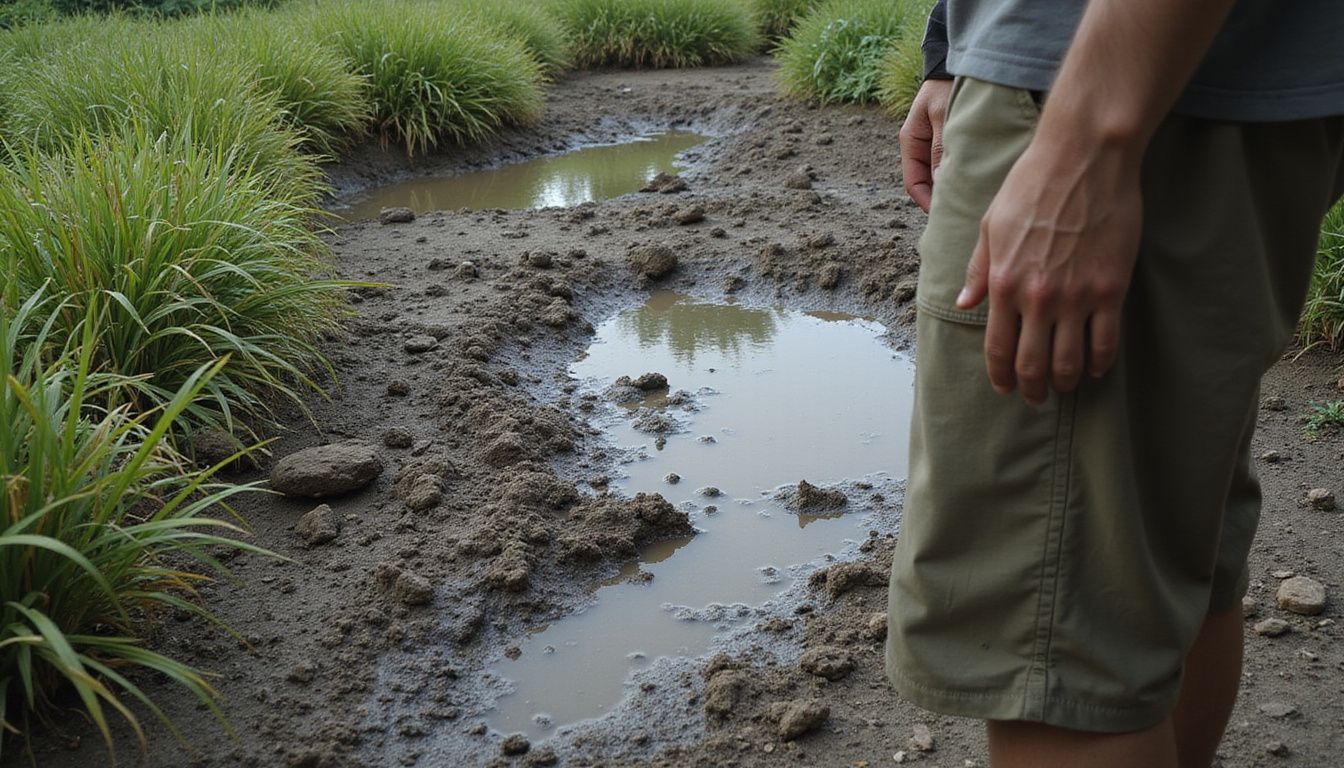
My backyard turns muddy from poor drainage, compacted soil, or when rainwater runoff from the roof collects too much. This situation can result from a yard’s bad shape or tightly packed earth.
Poor Drainage and Landscape DesignPoor drainage made my yard muddy. The ground didn’t slope away from the house, causing rainwater to pool. A friend solved a similar issue by adding slopes and planting water-absorbing plants.
So, I did the same.
The yard’s clay soil blocked water flow. Mixing in organic matter improved its drainage. Stepping stones provided a clean path and enhanced the yard’s look.
Soil CompactionSoil compaction stops water from soaking into my yard. This happens when soil gets pressed down by feet, rain, or heavy objects. Water then pools on the surface, causing mud.
To fix this, I aerate my lawn once a year. Aeration creates holes in the soil so air, water, and nutrients can reach plant roots more easily. Using an aerator tool helps prevent compaction and improves drainage in my yard.
Gutter Downspouts and RunoffGutter downspouts caused a big problem in my yard, pouring rainwater too close to the house and turning the area into mud. I solved this by moving my downspouts further from the foundation, directing water away where it wouldn’t cause issues.
Some neighbors catch this runoff water in barrels for their gardens, a clever solution.
To tackle muddy yards quickly…
Quick Temporary Fixes for Muddy Yards
If your yard turns into a muddy mess after rain, don’t worry. You can spread wood chips or hay in the wet spots to soak up moisture fast.
Use Pine Flakes or Straw
I found a quick solution for a muddy yard. By distributing pine flakes or straw, you can instantly solve the mud problem. These materials absorb moisture in the ground and also make it less slippery.
Gradually, they decompose and contribute organic matter to the soil, improving its quality.
Distributing pine flakes or straw is similar to adding a comfortable layer over your garden; it offers quick relief from mud and boosts soil health for improved plant growth.
Lay Gravel or Mulch in Problem Areas
Gravel and mulch have solved my yard’s mud problem. Gravel improves soil drainage, allowing water to flow without creating mud. Mulch absorbs moisture, keeping the ground firm. These materials are affordable and easy to use.
I got gravel for places in the yard where water pooled the most. Spreading it on these paths stopped them from getting muddy after rain. For garden areas, I surrounded plants with mulch.
This change prevented the soil from turning into mud during showers.
Now, my yard remains walkable even after heavy rains.
Long-Term Solutions for Eliminating Yard Mud
Fixing a muddy yard for good takes some work, but it pays off. Installing a French drain or creating a rain garden helps water move right where you want it. Planting tough plants that love to spread their roots can also soak up lots of moisture.
This keeps your yard dry and looking great all year round.
Install a French Drain
I installed a French drain in my yard to solve the mud problem. This system moves water away from the house and yard. I dug a trench that sloped from my home, placed a perforated pipe inside, and covered it with gravel.
Then, I put soil on top of the gravel. The water flows into the trench, through the holes in the pipe, and away from my house.
The project took one weekend and was affordable. Pipes and gravel were cheap. Now, my backyard is dry and functional again thanks to this simple solution.
Build a Rain Garden
After putting in a French drain, I created a rain garden to catch runoff water. This area in the yard collects water after rain. I chose plants like blue vervain that thrive in wet and dry conditions for beauty and to support nature.
To shape my rain garden, I dug it into a shallow bowl form so ground covers could spread their roots easily. I placed stepping stones to make a path through it. Over time, standing water reduced, attracting more birds and making the yard less muddy.
Plant Hardy Ground Covers
Constructing a rain garden aids in rectifying the muddy yard, and planting sturdy ground covers is equally beneficial. Such plants, for instance creeping thyme and moss phlox, are resilient.
They proliferate widely and anchor the soil to avert mud. Ground covers bring an additional aesthetic appeal to the yard.
Their dense root systems contribute to soil drainage improvement by soaking up surplus water. Consequently, the yard isn’t persistently damp. I select plants that prosper in my local weather conditions for increased simplicity in management.
This strategy addresses not just the issue of inadequate drainage but also boosts lawn maintenance. It serves as an effective and efficient technique for maintaining optimal soil moisture without requiring a substantial amount of input.
Maintenance Tips to Prevent Future Mud Issues
To prevent mud in your yard, mix organic matter into the soil and aerate it often. Here are more tips:
– Improve drainage with a French drain.
– Use stepping stones in high traffic areas.
– Add ground covers to absorb water runoff.
– Fix compacted soil by digging to create space for air and water.
Improve Soil Drainage with CompostIntegrating compost into the soil enhances its water flow. Compost decomposes compact clay soil and equalizes moisture, warding off water from accumulating on top. This action aids in regulating rainwater runoff while simultaneously optimizing plant nutrient levels.
With continuous compost addition every year, maintaining lawns becomes less laborious as the soil rapidly ingests water, averting slushy spots. This method mirrors organic processes where dropped leaves provide nourishment to the soil, ensuring its hydration and good drainage.
Consequently, my lawn displays improved aesthetics and I hardly encounter pooled water or muddiness after a rain shower.
Dethatch and Aerate the Lawn Regularly
I concentrate on yard maintenance primarily via dethatching and aerating. Thatch, comprising dead grass and roots, hinders water and nutrients absorption by the soil. I get rid of this layer annually employing a dethatcher, that facilitates grass growth.
Aeration is equally vital. Compacted soil tends to resist water penetration, resulting in a marshy backyard. I utilize a tool that perforates the ground letting air and water get deeper into the soil.
This procedure admits moisture and helps avert compaction in the long run. To ensure grass healthiness, the essentials of lawn care should be dethatching and aeration.
Conclusion
Getting rid of mud in my yard requires effort. Mixing straw or pine chips can quickly reduce mud. A French drain or rain garden also offers a long-term solution for standing water and soil drainage problems.
By planting hardy plants, I stabilize the ground and reduce muddiness. Regular lawn care such as adding compost and aerating helps prevent future issues by improving soil health. This approach keeps my outdoor space looking neat and minimizes mess after rainstorms.
FAQs
1. How can I improve the drainage in my muddy yard?
You can enhance soil drainage in your muddy yard by installing a French drain or rain garden, which helps manage water runoff and reduces excess moisture in the soil.
2. What are some DIY solutions for a dirt-filled yard?
DIY solutions include adding organic matter to clay soil to enrich it, using stepping stones to reduce compacted areas, or planting ground covers that thrive in poor drainage conditions.
3. Can lawn care techniques help with getting rid of dirt from my yard?
Yes, proper lawn care like regular watering and mowing can prevent silty buildup and keep your yard looking neat and clean.
4. How does functional yard design assist with managing a muddy backyard?
A well-thought-out functional yard design considers factors like rainwater run-off patterns and uses elements such as stepping stones or ground covers to control mud while maintaining aesthetics.
5. Why is my backyard always muddy even when it doesn’t rain much?
Your backyard may be struggling with compacted soil which prevents proper water absorption leading to poor drainage – this keeps the moisture trapped causing constant muddiness.