“This post contains affiliate links. As an Amazon Associate, I earn from qualifying purchases”
If you’re thinking about starting a chicken flock for eggs and meat, you’ve come to the right spot. This guide will walk you through everything you need to know about how to raise chickens for eggs and meat successfully. From choosing the right breeds to setting up a cozy coop and ensuring your birds are healthy and happy, we’ve got you covered. Whether you’re a newbie or looking to improve your chicken-raising game, this article is packed with practical tips and advice.
Key Takeaways
- Choose the right chicken breeds based on your needs for eggs or meat.
- Build a safe and comfortable coop with enough space and protection from predators.
- Feed your chickens a balanced diet tailored to their life stage and purpose.
- Monitor your chickens’ health regularly and be aware of common issues.
- Learn about hatching chicks and caring for them in their early weeks.
Understanding Chicken Breeds for Eggs and Meat
Choosing the right chicken breed is a big deal when you’re aiming for either lots of eggs, a good supply of meat, or both! Different breeds have different strengths, so knowing what you want from your flock is the first step. Some are egg-laying machines, others grow quickly for meat, and some are decent at both. It’s all about finding the right fit for your needs and your backyard.
Best Breeds for Egg Production
If you’re all about the eggs, you’ll want to focus on breeds known for their laying abilities. These chickens are often smaller and more efficient at converting feed into eggs. They might not be the best choice if you’re also looking for meat, but they’ll definitely keep your egg carton full. Some popular choices include:
- Leghorns: These are classic egg-layers, known for their high production of white eggs.
- Australorps: A great choice for brown eggs, and they’re known for being good layers even in colder months.
- Ancona: These chickens are active foragers and lay a good number of white eggs. You can find more information about Ancona chickens and other breeds online.
Top Breeds for Meat Production
Meat chickens are bred to grow quickly and efficiently, providing a good amount of meat in a short time. These breeds typically aren’t great egg layers, as their energy is focused on growth. If meat is your goal, consider these:
- Cornish Cross: This is the most common meat breed, known for its rapid growth and large size.
- Jersey Giant: As the name suggests, these are large chickens that provide a good amount of meat, though they take longer to mature than Cornish Crosses.
- Bresse Gauloise: A French breed known for its excellent meat quality.
Dual-Purpose Breeds
Dual-purpose breeds are a compromise, offering a decent amount of both eggs and meat. They won’t excel in either category like specialized breeds, but they can be a good option if you want a versatile flock. Some popular dual-purpose breeds include:
- Rhode Island Reds: These are hardy birds that lay a good number of brown eggs and provide a decent amount of meat.
- Plymouth Rocks: Another popular choice, Plymouth Rocks are known for their docile temperament and good egg and meat production.
- Wyandottes: These are beautiful birds that lay a good number of brown eggs and are also a decent size for meat.
Choosing between egg-laying, meat, and dual-purpose breeds really depends on your priorities. If you want a ton of eggs, go for the specialized layers. If you want meat quickly, choose a meat breed. And if you want a bit of both, a dual-purpose breed might be the best fit. Consider your space, climate, and how much time you want to invest in your flock when making your decision.
Setting Up Your Chicken Coop
Essential Coop Features
So, you’re getting chickens? Awesome! First things first, they need a place to live. A good chicken coop isn’t just a house; it’s their safe space, their restaurant, and their bedroom all rolled into one. Think of it as a tiny fortress against the world.
Here’s what your coop absolutely needs:
- Roosts: Chickens like to sleep off the ground. Provide roosting bars, ideally 2-4 feet off the ground, giving each bird about 8-12 inches of space. I’ve found that using old tree branches works great and looks nice.
- Nesting Boxes: You’ll need a spot for the hens to lay their eggs. Provide one nest box for every three to four hens. A simple wooden box lined with straw does the trick. Make sure they are positioned lower to facilitate easy access for the hens.
- Ventilation: Chickens produce a lot of moisture, especially in their droppings. Good ventilation is key to preventing respiratory problems. Make sure you have openings near the top of the coop to let out the damp air, but avoid drafts directly on the chickens.
- Easy Access for Cleaning: You’ll be cleaning the coop regularly, so make it easy on yourself. A large door or removable panels will save you a lot of backaches. I learned this the hard way with my first coop!
- Food and Water: Chickens need constant access to fresh food and water. Use feeders and waterers that are designed to minimize waste and keep the food and water clean.
A well-designed coop makes chicken keeping much easier and more enjoyable. It’s worth spending the time and effort to get it right from the start. Trust me, your chickens (and your back) will thank you.
Space Requirements for Chickens
How much space do chickens actually need? More than you think! Overcrowding can lead to stress, disease, and behavioral problems like feather pecking. Here’s a general guideline:
- Coop Space: Aim for at least 4 square feet per chicken inside the coop. This allows them enough room to move around comfortably, especially during bad weather.
- Run Space: The outdoor run should provide at least 8-10 square feet per chicken. If you plan to let your chickens free-range sometimes, you can get away with a smaller run, but it’s always good to have a secure, enclosed space for them.
- Vertical Space: Don’t forget about vertical space! Chickens like to perch and explore different levels. Providing roosts at varying heights can help keep them entertained and reduce boredom.
Here’s a quick table to help you visualize the space requirements:
| Number of Chickens | Minimum Coop Space (sq ft) | Minimum Run Space (sq ft) |
|---|---|---|
| 3 | 12 | 24 |
| 6 | 24 | 48 |
| 10 | 40 | 80 |
Predator-Proofing Your Coop
Predators are a real threat to chickens. Foxes, raccoons, hawks, and even dogs can easily kill your birds if they’re not properly protected. A secure coop is non-negotiable.
Here’s how to keep your chickens safe:
- Secure the Perimeter: Use heavy-gauge hardware cloth (not chicken wire!) to enclose the run. Bury the hardware cloth at least 12 inches deep to prevent digging predators. I’ve even added an outward-facing apron of hardware cloth to deter diggers.
- Cover the Top: If possible, cover the top of the run with hardware cloth or netting to protect against aerial predators like hawks and owls. If you can’t cover the entire run, consider using reflective tape or decoys to scare away birds of prey.
- Secure the Coop Door: Use a strong latch or lock to secure the coop door at night. Raccoons are notorious for figuring out simple latches. An automatic coop door can be a lifesaver if you sometimes forget to close the coop at dusk.
- Eliminate Gaps and Weak Spots: Regularly inspect the coop and run for any gaps or weak spots that predators could exploit. Seal any cracks or holes with caulk or hardware cloth.
- Consider a Livestock Guardian Animal: If you live in an area with a high predator population, consider getting a livestock guardian animal like a dog, llama, or donkey. These animals can provide excellent protection for your chickens.
Feeding Your Chickens for Optimal Health
Nutritional Needs for Laying Hens
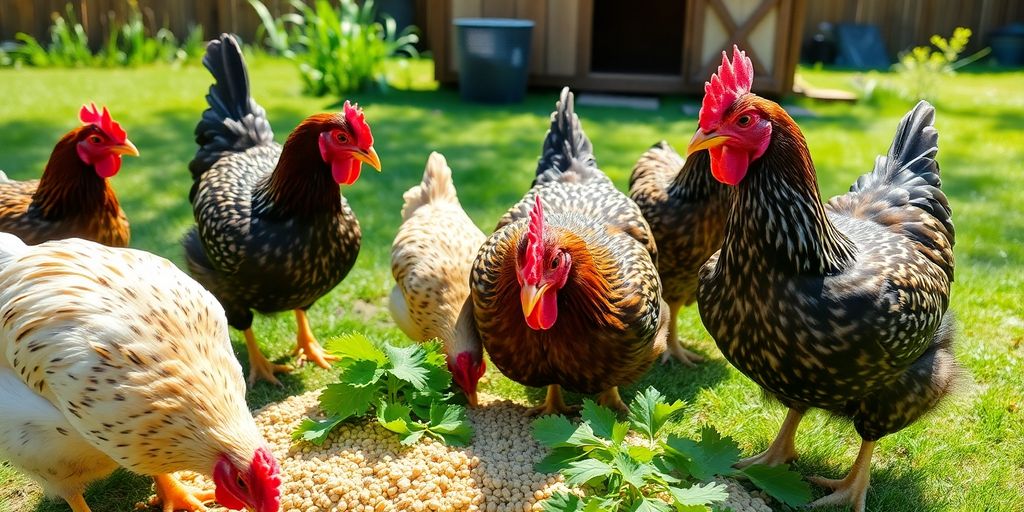
Making sure your laying hens get the right food is super important for good egg production and their overall health. Layer feed is specially formulated to meet their needs. It usually has around 16% protein and extra calcium for strong eggshells. You can also get an all-flock feed and offer free-choice calcium on the side. This lets the chickens eat as much calcium as they need.
- Protein: 16% for egg production and overall health.
- Calcium: Essential for strong eggshells; supplement if needed.
- Vitamins and Minerals: A balanced mix is important for health.
It’s a good idea to check the feed’s expiration date and store it in a dry, cool place to keep it fresh and prevent mold. Nobody wants moldy chicken feed!
Feeding Meat Chickens
Meat chickens grow fast, so they need a diet that supports that growth. They need a higher protein feed than laying hens, especially when they’re young. A typical meat bird feeding schedule looks something like this:
- Starter Feed (0-3 weeks): High protein (20-24%) for rapid growth.
- Grower Feed (3-6 weeks): Slightly lower protein (18-20%) to maintain growth.
- Finisher Feed (6 weeks to harvest): Lower protein (16-18%) to reduce fat.
Supplementing with Treats
Treats can be a fun way to bond with your chickens, but it’s important not to overdo it. Treats should only make up a small part of their diet – no more than 10%. Too many treats can throw off their nutritional balance. Some good treat options include:
- Mealworms: High in protein and a favorite among chickens.
- Fruits and Vegetables: Offer variety, but avoid avocado and rhubarb leaves, which are toxic.
- Grains: Oats, wheat, and barley can be given in small amounts.
It’s also important to make sure your chickens always have access to fresh, clean water. A reliable chicken feeder is a must. You can also grow herbs for them to eat and to keep their nest boxes fresh.
Caring for Chickens Year-Round
Seasonal Care Tips
Chicken care isn’t just a spring and summer thing; you gotta think about all four seasons! Winter is probably the trickiest. When the days get shorter, egg production naturally slows down. You might consider adding some artificial light to the coop to mimic longer days, but honestly, I usually just let them rest. It’s a good time to preserve extra eggs from the more productive months by water-glassing them. This way, you’ll have eggs even when your hens aren’t laying as much. Make sure they have unfrozen water, too – heated waterers are a lifesaver. In the summer, make sure they have plenty of shade and fresh, cool water to prevent heatstroke. I like to give them frozen treats, like watermelon rinds or frozen berries, to help them cool off. Fall is all about preparing for winter – cleaning out the coop, making sure it’s well-insulated, and stocking up on feed. Spring is when everything comes back to life! It’s a good time to clean the coop thoroughly and let the chickens out to forage in the fresh grass. Watch out for predators, though, as they’re often more active in the spring.
Health Monitoring Practices
Keeping an eye on your chickens’ health is super important. I try to spend a few minutes each day just observing them. Are they active and alert? Are they eating and drinking normally? Are their feathers looking healthy? Early detection is key when it comes to chicken illnesses. Have a chicken hospital ready for quarantine. Here’s what I look for:
- Lethargy: If a chicken is unusually sleepy or inactive, something might be wrong.
- Changes in droppings: Unusual color or consistency can indicate illness.
- Respiratory issues: Coughing, sneezing, or difficulty breathing are red flags.
- Changes in appetite or water intake: A sudden decrease or increase can be a sign of a problem.
- External parasites: Check for mites or lice around the vent area.
It’s also a good idea to have a relationship with a vet who’s familiar with poultry. That way, you have someone to call if you run into a problem you can’t handle yourself. I learned that the hard way when one of my hens got a nasty leg injury. Now I have a vet on speed dial!
Common Health Issues
Chickens can get sick just like any other animal. Some common health issues include:
- Coccidiosis: A parasitic disease that affects the intestines, especially in young chicks. Symptoms include bloody droppings and lethargy. Medicated chick starter feed can help prevent this.
- Marek’s Disease: A viral disease that can cause tumors and paralysis. Vaccination is the best way to prevent it.
- Respiratory Infections: Chickens are susceptible to various respiratory illnesses, such as infectious bronchitis and mycoplasma. Symptoms include coughing, sneezing, and nasal discharge. Good ventilation in the coop can help prevent these.
- External Parasites: Mites and lice can cause irritation and anemia. Regular coop cleaning and dust baths can help control them. I keep some poultry spray on hand for emergencies.
- Egg Binding: When a hen has trouble laying an egg. This can be caused by a variety of factors, including calcium deficiency or being overweight. Providing a balanced diet and adequate calcium can help prevent it.
Knowing what to look for and acting quickly can make a big difference in your chickens’ health and well-being. And remember, a healthy flock means more eggs and meat for you!
Hatching and Raising Chicks
Incubation Basics
So, you’re thinking about hatching your own chicks? It’s a pretty cool experience, but it does take some work. You’ll need an incubator, of course. Maintaining a consistent temperature and humidity is key for successful hatching.
Here’s a quick rundown:
- Temperature: Keep it around 99-102°F (37.2-38.9°C).
- Humidity: Aim for 50-60% for the first 18 days, then bump it up to 65-75% for the last few days before hatching.
- Turning: Turn the eggs at least 3 times a day (but an odd number of times, so they aren’t sitting on the same side overnight).
Don’t get discouraged if not all the eggs hatch. It happens! Just learn from the experience and try again. It’s all part of the process.
Setting Up a Brooder
Once those chicks hatch, they’ll need a safe and warm place to live – that’s where the brooder comes in. A brooder is basically a chick nursery. You can use a large plastic tub, a wooden box, or even a kiddie pool. The important thing is that it’s draft-free and easy to clean. Make sure you have a chick brooder ready before the chicks arrive.
Here’s what you’ll need:
- Heat lamp: To keep the chicks warm.
- Thermometer: To monitor the temperature.
- Bedding: Pine shavings are a good option.
- Feeder and waterer: Specifically designed for chicks.
Keep the brooder temperature around 95°F (35°C) for the first week, then reduce it by 5°F each week until they’re fully feathered.
Caring for Chicks in Their First Weeks
Those first few weeks are crucial for chick development. Make sure they have access to fresh water and chick starter feed at all times. Clean the brooder regularly to prevent disease. Watch for signs of illness, like lethargy or diarrhea.
Here’s a simple feeding schedule:
| Age | Feed Type | Notes |
|---|---|---|
| 0-8 weeks | Chick Starter | High in protein for growth |
| 8-18 weeks | Grower Feed | Lower protein, prepares for laying |
| 18+ weeks | Layer Feed (hens) | Calcium-rich for egg production |
Handle the chicks gently and spend time with them so they get used to you. Raising baby chicks is a big commitment, but it’s also incredibly rewarding. You’ll get to watch them grow from tiny fluffballs into productive members of your flock.
Harvesting Eggs and Meat
Collecting Eggs Properly
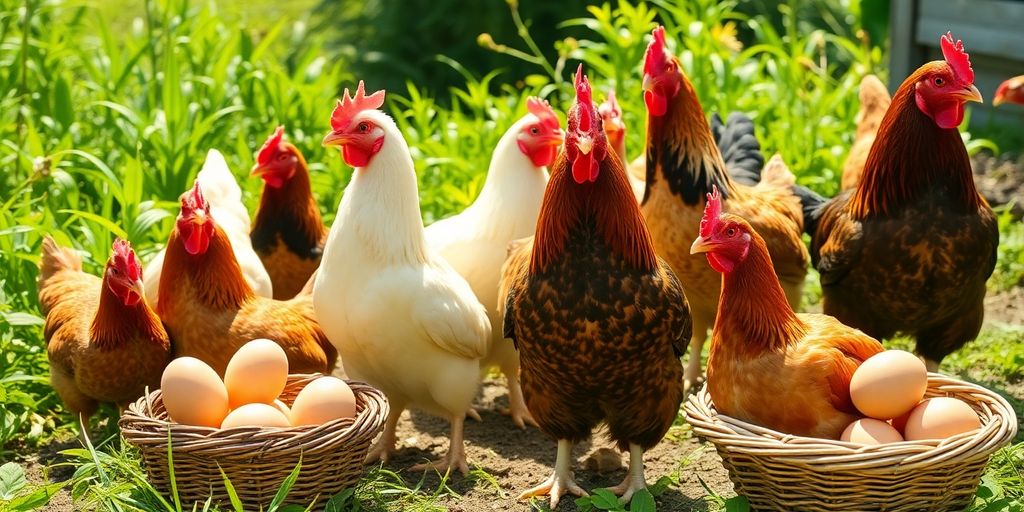
Okay, so you’ve got chickens, and they’re laying. Now what? Collecting eggs seems simple, but there’s a right way to do it to keep them fresh and clean. First, gather eggs daily, or even twice a day during hot weather, to prevent them from overheating or getting pecked at by the chickens. Use a basket or egg apron to keep them safe.
- Collect eggs frequently.
- Check for cracks or damage.
- Store eggs properly (more on that later).
I remember when I first started, I’d leave the eggs in the coop all day. Big mistake! The chickens would sometimes crack them, and they definitely weren’t as fresh. Now, I make it a morning and evening routine.
Processing Meat Chickens
Okay, this is the part some people find tough, but it’s a necessary step if you’re raising chickens for meat. You’ll want to have all your equipment ready beforehand. This includes sharp knives, a scalding pot, a plucker (optional, but makes life easier), and a clean workspace. The age at which you process your meat chickens depends on the breed, but usually, it’s around 8-12 weeks.
Here’s a basic rundown:
- Humanely dispatch the chicken.
- Pluck the feathers.
- Eviscerate the bird.
- Chill the carcass.
Storing and Preserving Eggs
So, you’ve got a bunch of eggs. Now, how do you keep them from going bad? Fresh eggs can last for several weeks in the refrigerator. The key is to store them properly. Keep them in their carton, pointy end down, to help maintain freshness. If you have more eggs than you can use in a few weeks, consider preserving them. Water-glassing is a great method for long-term storage. You can also freeze eggs, but you’ll need to crack them first and mix the yolks and whites together. Pickling is another option for preserving extra eggs and adds a unique flavor.
| Method | Shelf Life | Notes |
|---|---|---|
| Refrigeration | Several weeks | Keep in carton, pointy end down |
| Water-glassing | Up to a year | Use food-grade lime |
| Freezing | Several months | Crack and mix yolks and whites |
| Pickling | Several months | Adds flavor, use proper pickling brine |
Integrating Chickens into Your Homestead
Permaculture Principles
Integrating chickens into a permaculture system is all about creating a mutually beneficial relationship. Chickens can play multiple roles, from pest control to composting, making them valuable contributors to a sustainable homestead.
- Chickens can scratch and till garden beds, preparing them for planting.
- Their manure is a rich source of nutrients for compost.
- They help control insect populations, reducing the need for pesticides.
By carefully planning your homestead layout, you can maximize the benefits chickens provide while minimizing potential drawbacks, such as damage to delicate plants. Consider using chicken tractors or rotational grazing to manage their impact on specific areas.
Using Chickens for Pest Control
One of the most appreciated benefits of keeping chickens is their natural ability to control pests. They are voracious eaters of insects, larvae, and weeds, which can significantly reduce the need for chemical interventions in your garden. A few chickens can make a big difference in managing pest insect populations around your property.
- Chickens will happily devour slugs, snails, and beetles.
- They scratch through leaf litter, exposing and consuming hidden pests.
- They can help control weed growth by eating seeds.
Creating Compost with Chicken Manure
Chicken manure is a fantastic resource for creating nutrient-rich compost. However, it’s important to compost it properly to avoid burning plants with its high nitrogen content. Composting chicken manure not only reduces waste but also provides a valuable soil amendment for your garden. You can use the deep litter bedding method in the coop to start the composting process.
- Mix chicken manure with carbon-rich materials like straw, leaves, or wood shavings.
- Turn the compost pile regularly to ensure proper aeration.
- Allow the compost to age for several months before using it in your garden.
Properly composted chicken manure adds essential nutrients to the soil, improving its structure and fertility. Some people even find that the income of selling the eggs is secondary to the value of the fertilizer they produce.
Wrapping It Up: Your Chicken Journey Awaits
So, there you have it! Raising chickens for eggs and meat can be a fun and rewarding adventure. It might seem a bit overwhelming at first, but trust me, once you get the hang of it, it’s pretty straightforward. Just remember to give them a good home, keep them fed, and watch out for those pesky predators. Whether you’re in it for the fresh eggs or the meat, your flock will bring a lot of joy and satisfaction to your life. Plus, there’s nothing quite like the taste of homegrown eggs or chicken. So, roll up your sleeves, get your coop ready, and start your chicken-raising journey. You won’t regret it!
Frequently Asked Questions
What are the best chicken breeds for laying eggs?
Some of the top breeds for egg production include Leghorns, Rhode Island Reds, and Australorps. These hens are known for laying a lot of eggs.
How do I set up a chicken coop?
Your chicken coop should have good ventilation, enough space for them to move around, and safety from predators. Make sure to include nesting boxes for egg laying.
What should I feed my chickens?
Chickens need a balanced diet of grains, protein, and greens. Layer feed is great for hens that lay eggs, while meat chickens need a high-protein diet.
How can I keep my chickens healthy?
Regularly check your chickens for signs of illness, provide clean water and food, and keep their living area clean to prevent disease.
How do I hatch eggs or raise chicks?
You can hatch eggs using an incubator or buy day-old chicks from a hatchery. Make sure to have a brooder set up for the chicks to stay warm and safe.
What do I do with the eggs and meat after harvest?
Collect eggs gently and store them in a cool place. For meat chickens, follow safe processing methods. You can freeze or can eggs for later use.