“This post contains affiliate links. As an Amazon Associate, I earn from qualifying purchases”
Managing skunks in the backyard can be quite a challenge, something I have firsthand experience with. These night crawlers start their activities just as we’re preparing to hit the sack.
In the following lines, I’ll share useful strategies for deterring them. Putting obstructions and introducing offensive scents can make a difference.
Begin by closing off points that skunks could use as entryways. Then, shift your attention to odors they find repulsive. For instance, predator urine is an effective skunk repellant – coyote urine is a good illustration.
Traps for skunks are also beneficial, though cautious handling is essential.
Consider your garbage bins as well; ensuring they’re properly closed deters skunks from foraging for food. Everyday items such as hydrogen peroxide and baking soda can neutralize a skunk’s defensive spray if they manage to unleash it.
Placing moth balls around areas skunks might frequent could persuade them to relocate. However, be conscious of the toxic substances moth balls can introduce to your landscape.
It’s vital to interact kindly with these creatures, recognizing their role in maintaining ecological equilibrium by consuming nuisance pests like raccoons and rodents, which are also nocturnal.
Key Takeaways
- Block all entry points to stop skunks from getting into your yard. Fix any holes and use garbage cans with secure lids. Avoid leaving pet food outside.
- Use deterrents that skunks dislike, such as coyote urine or mothballs. Install motion-activated lights and sprinklers to frighten them away at night.
- If a skunk settles in your yard, set up humane traps for catch-and-release or contact animal control experts. To eliminate skunk odor, mix hydrogen peroxide, baking soda, and dish soap together.
Signs of Skunks in Your Backyard
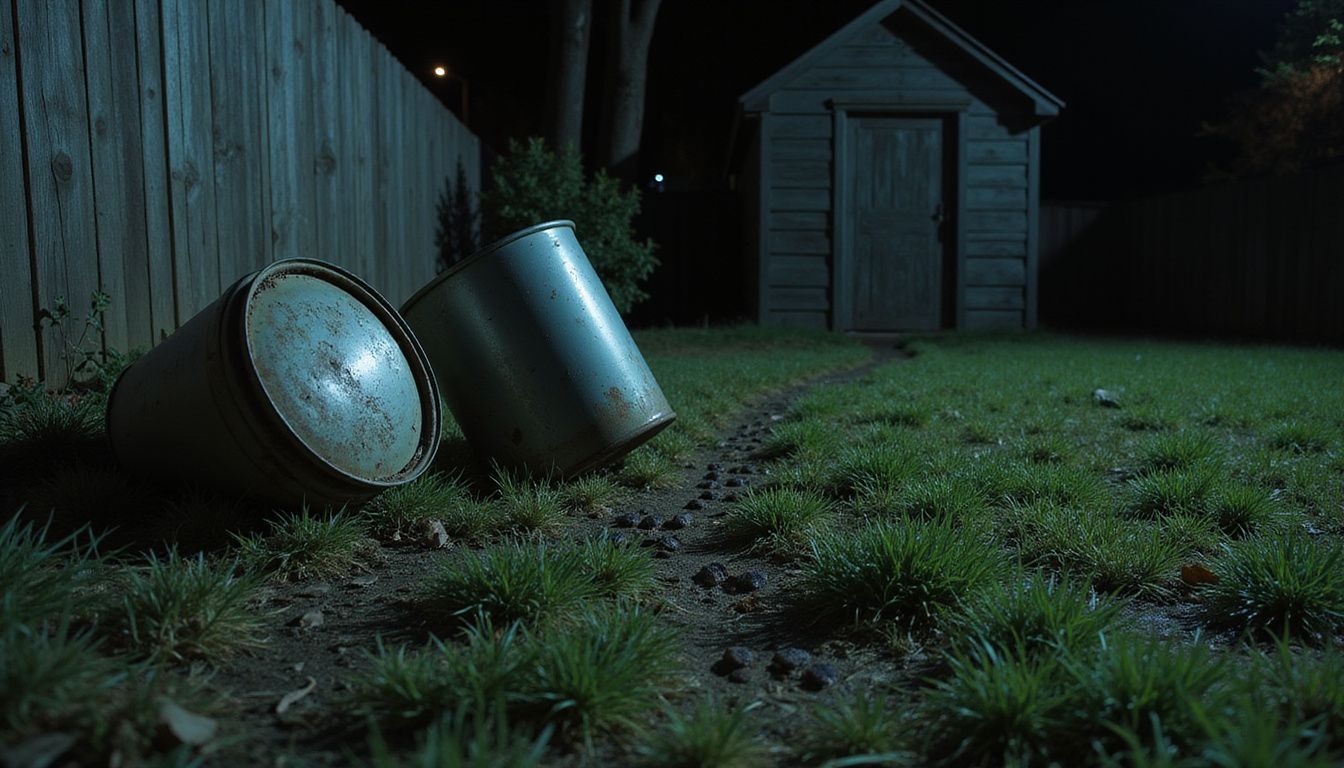
One evening, I found clear signs of skunk presence in my backyard, including damaged grass and disturbed trash bins. These experiences with skunks demonstrate that they leave undeniable evidence around our homes, which calls for measures to secure our areas again.
Preventing Skunks from Entering Your Yard
To keep skunks away, I seal off entry points and secure trash cans to make my yard unattractive to these nocturnal animals, reducing lawn damage and skunk spray incidents.
Seal Off Entry Points
Skunks find food and shelter in yards. They fit through tiny holes and cracks.
- I look for yard holes. Skunks dig under fences or decks for a cozy place.
- I install mesh wire fences 1 foot underground to stop digging.
- I close shed gaps with rocks or concrete blocks, keeping skunks out.
- I use sealed garbage cans with tight lids to deter skunk prey like insects and rodents.
- I repair broken vent covers on the house since vents offer easy access if uncovered.
- I seal openings around decks with lattice panels, buried slightly.
- I block crawl space access with wood or metal barriers. Skunks seek dark, quiet spots.
- I trim trees and bushes near the house and fence lines, removing cover for skunks.
- Regularly, after bad weather, I inspect my home’s perimeter for new cracks or holes.
By doing these things, my backyard stays free from becoming a skunk habitat.
Eliminate Food Sources
Sealing off entry points helps, but removing food sources is key to keeping skunks away. These nocturnal animals dig up lawns looking for grubs and insects. Here’s my plan:
- Use sealed garbage cans. This prevents skunks from searching through trash for food.
- Bring in pet food at night to avoid attracting them.
- Cover compost piles or use a bin with a lid to block the smell that draws skunks in.
- Collect fallen fruit from trees promptly. It’s an easy meal for them.
- Fix leaks to cut off water sources; this makes your yard less appealing.
- If you see signs of lawn damage, apply grub control. This stops skunks from digging for grubs or insects.
- Choose bird feeders that don’t spill seeds on the ground, as scattered seeds attract skunks looking for snacks.
Following these steps greatly reduces the chance of finding a skunk in my backyard seeking food.
Block Potential Shelters
I found out skunks like cozy spots in the yard. To keep them away, I did a few things.
- Block under decks and porches with wire mesh. Skunks find these places welcoming.
- Stack wood neatly above ground. Messy woodpiles attract skunks.
- Trim bushes and trees regularly. Less overgrowth means fewer hiding spots for skunks.
- Make sure shed doors and foundations have no gaps. This stops skunks from getting in.
- Fill any holes in the yard to prevent skunks from using them as homes.
These steps made my backyard less appealing to skunks, protecting their natural habits without harm.
Repelling Skunks Effectively
To deter skunks, use strong scents they dislike and methods that scare them off. This approach helps protect against lawn damage and unwanted visits from these nocturnal animals.
Use Natural Predator Scents
I discovered skunks stay away when they smell coyote urine. It makes them think a predator is nearby. I surrounded my yard with it and noticed a difference.
Coyote urine effectively keeps skunks out.
I also used moth balls in places skunks visit often. They dislike the smell, which helps keep them away. My neighbors have had success using predator urine to deter nocturnal animals, including skunks.
Install Motion-Activated Lights and Sprinklers
After trying natural predator scents, the next step is setting up motion-activated lights and sprinklers. Skunks are nocturnal animals, which means they roam around at night. Bright lights and sudden water can scare them away from a yard.
- Motion-activated lights turn on when they detect movement. This sudden light startles skunks because they prefer darkness. It makes my backyard less inviting for them at night.
- Installing motion-activated sprinklers adds another layer of protection. These sprinklers spray water when they sense motion. The surprise of water also scares skunks away. It’s like having a guard that jumps into action whenever skunks come close.
- Choosing the right places to put these devices is important. I found placing them near potential entry points and food sources works best. This means near fences, garden areas, or garbage cans with sealed lids.
- The cost isn’t as high as one might think. I spent some time comparing prices and features. Some models connect to smartphones, making it easy to control them from anywhere.
- Set up was easier than expected, too. Most models just need batteries or a hose connection. I followed the instructions and had everything working in one afternoon.
- Regular checks ensure they keep working well. Every few weeks, I make sure the sensors are clear of dirt and the batteries are good.
This approach has made a big difference in keeping my yard free from skunks without causing them harm.
What to Do If a Skunk Has Already Settled
I find a skunk in my backyard. I stay calm and keep a safe distance. Skunk spray is tough to remove. To make my yard less appealing, I seal garbage cans and remove pet food dishes.
I look into humane traps for safe catch and release. If unsure, I seek help from local wildlife control experts who handle skunks without causing them stress or harm. For guaranteed removal, I turn to pest control professionals skilled in dealing with nocturnal animals like skunks.
Tips for Neutralizing Skunk Odors
Skunk spray smells terrible. To fix it, try these steps:
- Combine hydrogen peroxide, baking soda, and dish soap to break down the stench. This works on pets and outdoor items.
- Use sealed garbage cans to stop skunks from making a mess. They block smells and keep skunks away.
- To remove skunk smell from clothes, mix vinegar with laundry detergent and wash them.
- Put bowls of vinegar in your home to take in the bad smell and make it smell better.
- Coffee grounds also help with indoor smells. Put them in open containers to absorb odors.
If a skunk is living in your yard, here’s what you can do:
Conclusion
To keep skunks away, I start by sealing entry points and making sure food is secure. Predator urine works well to deter them. If a skunk settles in, I either remove it myself or call a professional.
In case of a spray incident, a mix of hydrogen peroxide and baking soda cuts down the odor effectively. This method focuses on prevention and informed reaction when dealing with these nocturnal visitors.
FAQs
1. What can I use to deter skunks from my backyard?
You can use predator urine like coyote urine, moth balls, and sealed garbage cans as skunk deterrents. Skunks are nocturnal animals that get attracted by food sources so keeping your lawn clean is important.
2. How do I deal with the smell of a skunk spray?
The smell of a skunk spray, which contains mercaptan, can be neutralized using hydrogen peroxide and baking soda. Be sure to act fast because the longer you wait, the harder it will be to remove the smell.
3. Can trapping help in removing skunks from my backyard?
Yes! You could hire an animal trapper or fur trapper who specializes in pest control for spotted skunks or striped skunks removal. They use special traps designed not to harm these nocturnal animals while capturing them.
4. What kind of damage can a spotted or striped skunk cause in my yard?
Skunks are known for causing lawn damage as they dig up grass looking for insects to eat at night when they’re most active.
5. How do I prevent future visits from these smelling creatures after removal?
Preventing future visits involves making your yard less attractive as a habitat for them by sealing all potential food sources like unsealed garbage cans and maintaining regular pest control measures.