“This post contains affiliate links. As an Amazon Associate, I earn from qualifying purchases”
I recently saw a raccoon in my backyard, which surprised me. I learned they can spread diseases like rabies. This made me look up ways to make them leave without harm.
First, I found out about bird feeders. Removing these can lessen their food source, making my yard less appealing. Next, installing a chimney cap keeps them out of my house because they like climbing into chimneys.
Another tip involved motion-activated sprinklers. These startle raccoons away with water when they come close. Also, cleaning up raccoon latrines is key to prevent the spread of raccoon roundworm.
For those dealing with more serious wildlife control issues, professional help might be needed due to other diseases raccoons carry such as canine distemper and Lyme disease from ticks.
One unusual method included using hot sauce around areas I don’t want them scavenging since its strong smell deters them.
Lastly, keeping basements sealed helps avoid giving shelter to these critters or others looking for a warm place to stay.
Key Takeaways
- Keep your yard clean by securing trash and removing food to deter raccoons.
- Install motion-activated sprinklers, lights, or sound devices to scare them away.
- Close off entry points like chimneys and wall gaps with metal mesh or plates.
- Repel raccoons from gardens using cayenne spray without causing harm.
- If problems persist, consider trapping and removal. Always check local laws first.
Signs of Raccoon Activity in Your Backyard
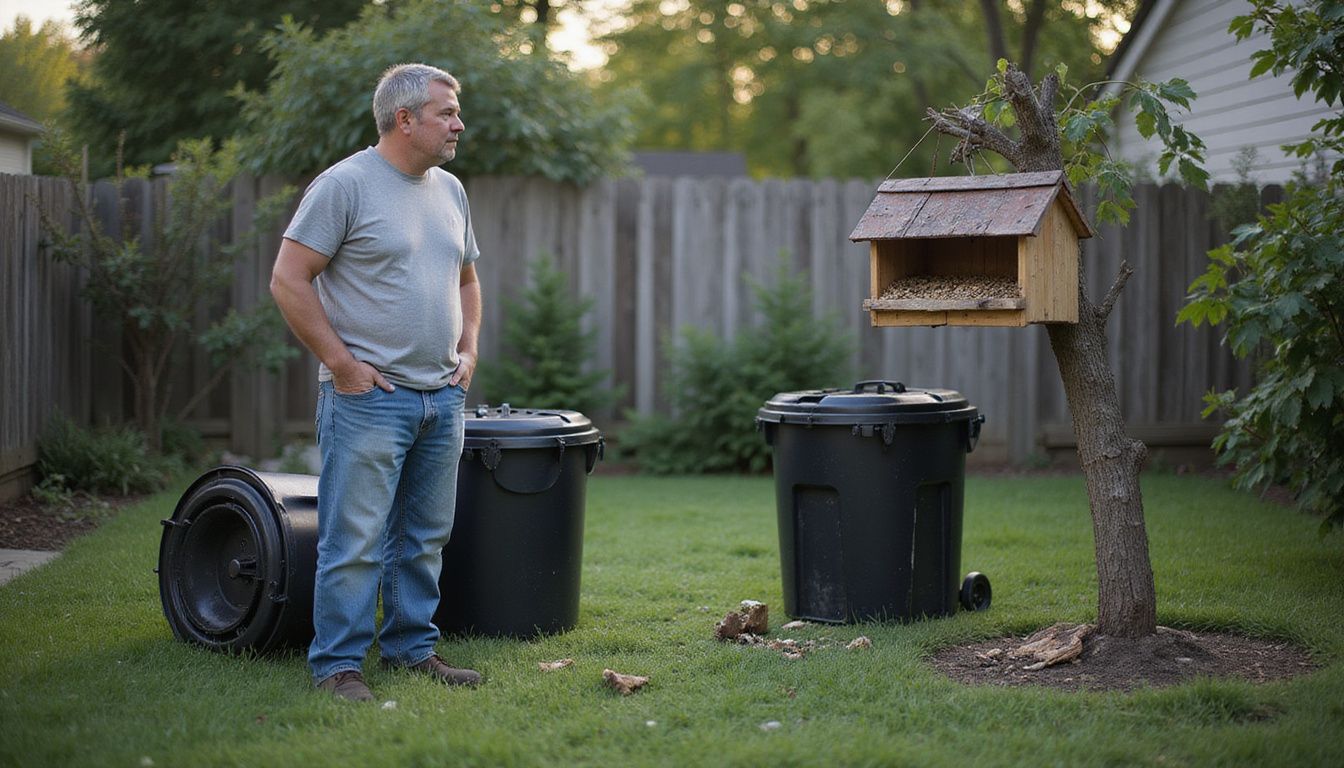
When raccoons come to my backyard, I often find trash cans tipped over. They search for food in the garbage. Raccoons also damage bird feeders to get bird seed.
Raccoon latrines show where they relieve themselves regularly. This is a clear sign they’re around.
I also see paw prints in my yard or near water spots. Frogs attract raccoons since they eat them.
With these signs, I know it’s time to act against these invaders.
What Attracts Raccoons to Your Yard
Raccoons come to my yard for food and water. They get into trash cans, garden crops, and bird feeders. Leaving pet food outside or having a pond attracts them too. Using a chimney cap helps keep them out of chimneys.
They also like hiding places like wood piles or thick shrubbery for sleeping during the day. If they find openings, raccoons will enter attics or under decks for shelter. It’s important to check these areas regularly and make sure there are no easy access points for raccoons.
Installing motion-activated sprinklers can scare them off from gardens. Securing garbage cans and removing outdoor pet food at night reduces their food sources. If raccoons create latrines in the yard or dangerous spots on the property, hiring pest control professionals might be necessary.
For homes with poultry, securing coops is essential to prevent raccoon attacks. Regular visits from a chimney sweep can ensure chimneys remain uninviting to these animals.
Preventing Raccoon Intrusions
To keep raccoons out of my yard, I secure my trash and don’t leave food outside. Here’s how:
– Secure trash to avoid attracting raccoons.
– Don’t leave any food outdoors.
Secure trash and food sources
I make sure my trash cans have tight lids. I even use bungee cords to secure them. This prevents raccoons from eating in my yard. Bird feeders act like an open invitation for them, so I remove or lower them at night.
Bird feeders and open garbage attract raccoons. It’s crucial not just to store food inside but also to eliminate outdoor attractions. This means no pet food bowls outside overnight and keeping BBQ grills clean.
Securing food sources helps keep raccoons away. The phrase “out of sight, out of mind” applies well to these smart animals.
Eliminate water sources
Water in my yard attracts raccoons because they need it to drink and wash their food. To stop this, I fix leaks from outdoor faucets and keep gutters clean so water doesn’t collect.
I also empty buckets and bird baths.
I cover the swimming pool when not in use and adjust sprinklers to prevent puddles. This makes my yard less appealing to raccoons by removing easy water sources.
Keep pet food indoors
I always keep my dog’s food bowl inside. This stops raccoons from coming to my yard for food. Raccoons like easy meals, and outdoor pet food is perfect for them.
A friend of mine used to leave her cat’s food on the porch. Almost every night, a raccoon would eat it. When she moved the food indoors, the visits stopped. Bird feeders can also attract raccoons.
It’s best to take these down at night too. Installing a chimney cap can prevent raccoons from entering your home through the chimney.
Creating a Raccoon-Proof Environment
Making your yard safe from raccoons means building barriers they can’t get past. Putting up secure fences and devices that stop them from climbing are key steps.
Install fencing and raccoon baffles
To keep raccoons out of my yard, I installed tall fences and put baffles on bird feeders. These fences were hard for raccoons to climb. The baffles, slippery disks placed above or below the bird feeders, prevented raccoons from getting to the food.
This strategy worked well. My backyard became less inviting for these animals searching for an easy meal, leading to fewer nighttime visits from them.
Seal off entry points
Raccoons are smart. They fit through small holes to find food or shelter. I check my house for gaps in walls, foundation, and roof. I seal them with metal mesh or plates. This blocks their entry.
Caulk around windows and doors stops them too. Fixing broken vent covers is key since raccoons look for easy access.
Using raccoon deterrents also helps keep them away for good.
Effective Raccoon Deterrents
To keep raccoons away, using motion-activated lights and sound devices can be very helpful. They scare raccoons off because these animals prefer to stay in the dark and quiet. Natural repellents, like predator waste or hot pepper sprays, also make your yard less inviting for them.
Motion-activated lights and sound devices
I use motion-activated lights to scare away raccoons. They flee when a light turns on because they think someone is close. Similarly, devices that make sudden noises are effective.
Raccoons look for food in silence and avoid noisy areas.
Also, I apply natural repellents like predator urine or cayenne sprays. These methods keep the area clear of raccoons without causing them harm.
Natural repellents like predator urine or cayenne sprays
To keep raccoons away, natural repellents are effective. Predator urine scares them off by making them think a dangerous animal is close. Cayenne spray also works well because raccoons dislike its smell and taste.
Dealing with these critters, I found a solution. Mixing cayenne pepper, water, and dish soap in a spray bottle was the answer. Spraying this mixture around trash cans and gardens kept raccoons away without harming any animals or using harsh chemicals in my backyard.
Trapping and Safe Removal
I had a raccoon issue in my backyard. First, I checked local laws and found trapping them is legal. I got a humane trap from a home improvement store. Setting it up was easy but finding the right spot took some thought.
I placed it where raccoons visited, away from pets and kids.
For bait, I used fruits and fish—foods they love. After catching one, I wore gloves to handle the trap safely since raccoons can carry rabies. Then, I released it far away in a wooded area so it wouldn’t return.
Checking laws and safety were crucial for solving this problem without harming the animal.
Conclusion
Getting rid of a raccoon in my backyard is tough but possible. I make sure to secure trash and food. I use lockable containers. If there’s pet food outside, I bring it inside. I also remove water sources like bird baths.
Next, I make the area uninviting. I install fences and cover entry points. Automatic lights and sounds scare them away too. Sometimes, repellents with strong smells or scents from predators work well.
If these steps don’t work, having a professional trap them is my last resort.
FAQs
1. How can I identify a raccoon in my backyard?
A raccoon is easily recognizable with its black mask and ringed tail. They are nocturnal animals, so you may spot them during the night.
2. What should I do if there’s a rabid raccoon in my yard?
If you suspect that the raccoon is rabid, avoid contact at all costs. Contact your local animal control for immediate help as they are trained to handle such situations.
3. How can I prevent raccoons from entering my backyard?
You can deter them by securing trash cans, removing food sources, and installing fencing around your yard.
4. Can professional pest control services help in getting rid of a raccoon?
Yes! Professional pest control services have the know-how and equipment to safely remove these creatures from your property.