“This post contains affiliate links. As an Amazon Associate, I earn from qualifying purchases”
Finding a good substitute for heavy cream can be tricky, especially if you’re looking for something lactose-free. Whether you’re cooking or baking, there are plenty of options out there that can mimic the creaminess of heavy cream without the lactose. In this article, we’ll explore various alternatives that can work as lactose-free heavy cream substitutes, so you can keep enjoying your favorite recipes without any dairy issues.
Key Takeaways
- Lactose-free milk options include soymilk, coconut milk, and cashew milk.
- Evaporated milk and half-and-half can serve as cooking alternatives to heavy cream.
- Non-dairy options like almond milk with oil or silken tofu can create creamy textures.
- Yogurt varieties, such as Greek and almond yogurt, can replace heavy cream in many dishes.
- Plant-based creamers like oat and almond creamer are great for coffee and desserts.
Lactose-Free Milk Options
So, you’re ditching dairy? No problem! There are tons of lactose-free milk options out there that work great as heavy cream substitutes. It’s all about finding the right one for your taste and recipe. Let’s explore some popular choices.
Soymilk
Soymilk is a classic lactose-free option. It’s made from soybeans and water, and it has a pretty neutral flavor, making it versatile for cooking and baking. It’s also a good source of protein, which is a bonus. You can find different varieties, like unsweetened, vanilla, or even chocolate, but for substituting heavy cream, stick with the plain, unsweetened kind. It might not be as thick as heavy cream, but it can definitely add moisture and richness to your dishes. Plus, it’s usually pretty easy to find in most grocery stores.
Coconut Milk
Coconut milk is another great choice, especially if you like a hint of coconut flavor. There are two main types: canned coconut milk and refrigerated coconut milk beverage. For heavy cream substitution, you’ll want the canned kind. It’s much thicker and creamier. Just be aware that the flavor can be noticeable, so it works best in recipes where coconut complements the other ingredients. Think curries, soups, or even desserts. If you need a dairy-free alternative, coconut milk is a solid pick.
Cashew Milk
Cashew milk is made from cashews and water, and it has a naturally creamy texture. It’s not quite as thick as heavy cream, but it’s thicker than some other milk alternatives, like almond milk. It also has a slightly sweet and nutty flavor, which can be a nice addition to certain recipes. You can use it in sauces, soups, or even coffee. Just like with the other options, make sure to choose the unsweetened variety for most cooking applications. Cashew milk is becoming more widely available, so you should be able to find it in the refrigerated section of your local grocery store.
I’ve found that chilling cashew milk before using it as a substitute helps to thicken it up a bit. It’s a simple trick, but it can make a big difference in the final result of your recipe.
Cream Alternatives for Cooking
Sometimes you’re in the middle of cooking and realize you’re out of heavy cream. Don’t panic! There are several alternatives you can use that are probably already in your fridge or pantry. These substitutes might not be exactly the same, but they’ll get the job done in a pinch, especially for cooking.
Evaporated Milk
Evaporated milk is a shelf-stable dairy product with about 60% of the water removed. This makes it thicker than regular milk, giving it a creamier consistency. It’s a decent substitute in many cooked dishes, but it won’t whip. You can use it in sauces, soups, and even some baked goods. It does have a slightly different flavor than heavy cream, so keep that in mind when choosing a substitute.
Half-and-Half
Half-and-half is a simple mixture of equal parts milk and cream. It has less fat than heavy cream, so it won’t thicken sauces as much, but it still adds richness. It’s a good all-around substitute for many recipes, especially if you’re looking to cut down on calories. You can use half-and-half in coffee, soups, and sauces. It can even be whipped if you chill it well, but don’t expect stiff peaks; it’ll be more of a loose sauce.
Milk and Butter
If you have milk and butter on hand, you can create a quick heavy cream substitute. The added fat from the butter helps to mimic the richness of heavy cream. Here’s how:
- Melt butter (1/4 cup) and let it cool slightly.
- Whisk the melted butter into 3/4 cup of milk.
- Use immediately in your recipe.
This mixture works best in cooked dishes like sauces, soups, and baked goods. It’s not suitable for whipping, but it’s a great way to add richness when you’re short on heavy cream. It’s also a good way to use up milk that’s about to expire.
Non-Dairy Cream Substitutes
So, you’re ditching dairy but still want that creamy goodness? No problem! There are tons of non-dairy options out there that can stand in for heavy cream. Some are better for certain things than others, but that’s part of the fun – experimenting!
Almond Milk and Oil
Okay, so this one is pretty straightforward. You can actually mimic the richness of heavy cream by combining almond milk with a neutral-tasting oil, like canola or vegetable oil. It’s not going to whip up like real cream, but it works wonders in sauces and soups. Just whisk together about 2/3 cup of almond milk with 1/3 cup of oil. This is a great dairy-free alternative for savory dishes.
Silken Tofu and Soy Milk
Don’t knock it ’til you try it! Silken tofu blended with soy milk creates a surprisingly creamy base. The tofu adds thickness and body, while the soy milk keeps it smooth. This combo is awesome for sweet recipes, like desserts or even a silky chocolate mousse. Try blending equal parts silken tofu and soy milk until completely smooth.
Coconut Cream
If you want something super rich and decadent, coconut cream is your go-to. Make sure you’re using the thick cream that separates at the top of a can of full-fat coconut milk (refrigerated overnight). You can even whip it for a vegan cashew cream topping! It does have a distinct coconut flavor, so keep that in mind when choosing your recipe.
Finding the right non-dairy cream substitute can really open up your cooking and baking possibilities. Don’t be afraid to experiment with different combinations and ratios to find what works best for your taste and the specific recipe you’re making.
Using Yogurt as a Substitute
Okay, so you’re thinking about using yogurt instead of heavy cream? It’s definitely doable, and it can even add a nice tang to your dish. Plus, you get a little protein boost, which is always a good thing. Let’s look at some options.
Greek Yogurt and Milk
Mixing Greek yogurt with milk is a pretty solid way to mimic the consistency of heavy cream. The trick is to use full-fat Greek yogurt – the non-fat stuff just won’t cut it. It’s too watery. I usually go for a 1:1 ratio of Greek yogurt to milk. So, if your recipe calls for one cup of heavy cream, use half a cup of Greek yogurt and half a cup of milk. Blend it well so you don’t get any weird lumps in your sauce. This works great in soups and sauces, but don’t try to whip it – it won’t work. If you’re looking for a cream cheese substitute, this might be a good option.
Almond Yogurt
Almond yogurt is another option, especially if you’re trying to avoid dairy altogether. The texture can vary a lot between brands, so you might need to experiment a bit to find one that works for you. Some almond yogurts are super thick, while others are pretty thin. You might need to add a little almond milk to thin it out, or a touch of cornstarch to thicken it up, depending on the brand. I’ve found that the flavor can be a little strong, so it’s best in recipes where you want a slightly nutty taste. It’s not a perfect substitute, but it can work in a pinch.
Soy Yogurt
Soy yogurt is probably the closest you’ll get to the real deal in terms of texture and flavor. It’s usually thicker than almond yogurt, and the flavor is pretty neutral, so it won’t overpower your dish. Just like with almond yogurt, the consistency can vary between brands, so you might need to play around with it a bit. I’ve used it in everything from sauces to baked goods, and it’s worked pretty well. If you’re looking for a high protein alternative, this is a good choice.
Using yogurt as a substitute for heavy cream can be a healthy way to cut down on fat and calories. It might change the flavor or texture of your dish slightly, but it’s usually a pretty good trade-off. Just be sure to choose the right type of yogurt for your recipe, and don’t be afraid to experiment a little to get the consistency just right.
Exploring Plant-Based Creamers
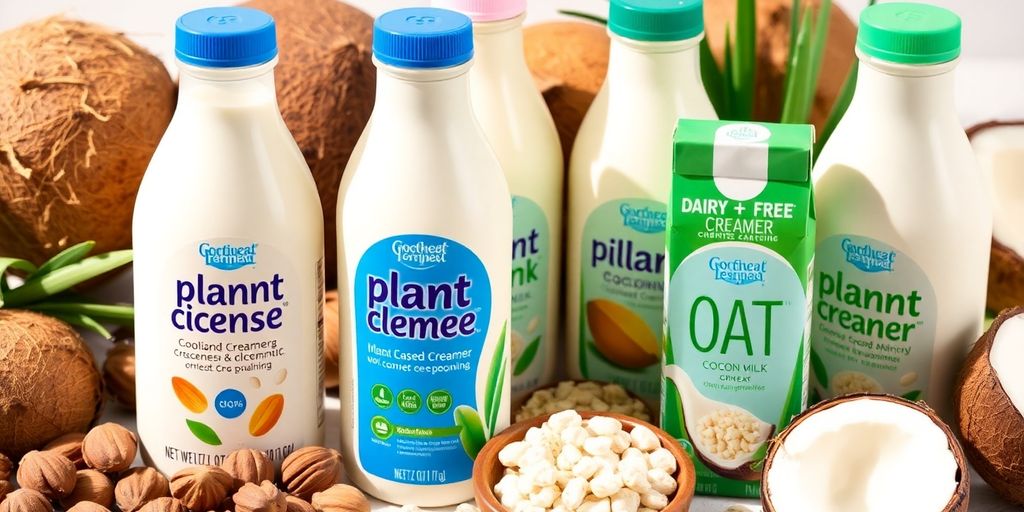
Plant-based creamers have exploded in popularity, and for good reason. They cater to various dietary needs and preferences, offering a dairy-free alternative without sacrificing flavor or texture. You can find them in most grocery stores now, which is super convenient.
Oat Creamer
Oat creamer is a standout for its naturally sweet flavor and creamy texture. It’s made from oats, water, and sometimes oil, and it’s a great option if you’re looking for something that froths well. It’s also generally allergen-friendly, being free of dairy, nuts, and soy. I’ve found it works really well in coffee and tea, adding a richness that’s hard to beat. Plus, it’s often more sustainable than some other plant-based options.
Almond Creamer
Almond creamer is another popular choice, known for its lighter flavor and lower calorie count compared to dairy creamers. It’s made from almonds and water, and it often has added sweeteners and flavors. It’s a good option if you want something that won’t overpower your coffee’s taste. However, it doesn’t always froth as well as oat creamer, and it’s not suitable for those with nut allergies. You can find a variety of brands, like Nutpods French Vanilla Almond + Coconut Creamer, offering different flavor profiles.
Soy Creamer
Soy creamer has been around for a while and is a reliable option. It’s made from soybeans and water, and it tends to have a neutral flavor, making it versatile for different uses. It’s also a good source of protein compared to other plant-based creamers. However, some people are allergic to soy, so it’s not a universal choice. Plus, there are some concerns about the environmental impact of soy production, so it’s worth considering that as well.
I’ve been experimenting with different plant-based creamers for a while now, and I’ve found that it really comes down to personal preference. Some people love the sweetness of oat creamer, while others prefer the lightness of almond creamer. Soy creamer is a solid all-around option, but it’s not for everyone. It’s worth trying a few different types to see what works best for you.
Combining Ingredients for Creaminess
Sometimes, the best way to get that creamy texture is to mix things up! You don’t always need a single substitute when you can combine ingredients to mimic the richness of heavy cream. It’s all about understanding the role fat and liquid play in your recipes.
Nondairy Milk and Neutral Oil
Combining nondairy milk with a neutral oil is a simple way to add richness to sauces and soups. This works because the oil provides the fat content that’s missing in many plant-based milks. Think of it like a vegan version of milk and butter! A good ratio is usually 2 parts nondairy milk to 1 part oil. You can use soy, almond, or even oat milk for this. For a bit of extra flavor, try using olive oil instead of a neutral one, but be mindful of how it will affect the overall taste of your dish.
Cottage Cheese and Milk
Okay, this one might sound a little weird, but trust me! Blending cottage cheese with milk creates a surprisingly creamy base. The cottage cheese adds thickness and a slight tang, while the milk thins it out to the right consistency. It’s a great option for things like creamy pasta sauces or even dips. Just make sure you blend it really well to get rid of any lumps. You can use regular milk or nondairy milk depending on your dietary needs.
Nut-Based Creams
If you’re feeling a little more adventurous, you can make your own nut-based creams. Soaking nuts like cashews or almonds and then blending them with water creates a super rich and creamy base. You can adjust the thickness by adding more or less water. These creams are fantastic in desserts, sauces, and even coffee. Plus, they’re packed with healthy fats and nutrients. For a silky chocolate mousse, this is a great option.
Experimenting with different combinations is key to finding what works best for you. Don’t be afraid to try new things and adjust the ratios to suit your taste. You might be surprised at what you discover!
Choosing the Right Substitute
Okay, so you’ve got all these options for replacing heavy cream. But how do you actually pick the right one? It’s not as simple as grabbing the first thing you see. You need to think about what you’re making and what you want the final result to be.
Consider the Recipe
First off, what are you cooking? A rich, decadent chocolate cake is going to need a different substitute than, say, a creamy tomato soup. Some substitutes are better for baking, while others shine in savory dishes. For example, if you’re making something that needs to be whipped, like frosting, half-and-half probably isn’t going to cut it. You’ll need something with a higher fat content, like coconut cream. On the other hand, if you’re just looking to add a little creaminess to a sauce, evaporated milk might be perfect.
Texture and Flavor
Texture is a big deal. Some substitutes, like silken tofu, can make things super smooth, while others, like Greek yogurt, will add a bit of tang and thickness. Think about what texture you’re going for. Do you want something light and airy, or something rich and dense? Flavor is just as important. Coconut milk will add a distinct coconut flavor, which might be great in some dishes but not so great in others. Taste your substitute before you add it to the recipe to make sure it complements the other ingredients.
Nutritional Content
Finally, consider the nutritional content. Are you trying to cut calories? Add protein? Avoid dairy? Some substitutes, like Greek yogurt, are packed with protein, while others, like almond milk, are lower in calories and fat. If you’re watching your sugar intake, be sure to check the labels, as some plant-based milks can have added sugars. Here’s a quick comparison:
- Greek Yogurt: High in protein, adds tang.
- Coconut Milk: Rich, adds coconut flavor, higher in fat.
- Almond Milk: Low in calories, mild flavor.
Choosing the right substitute really comes down to experimenting and finding what works best for you. Don’t be afraid to try different things and adjust the recipe to your liking. After all, cooking is all about having fun and creating something delicious!
Wrapping It Up
So there you have it! If you find yourself out of heavy cream or just want to try something different, there are plenty of lactose-free options to choose from. Whether it’s coconut milk, almond milk, or even a mix of soy milk and oil, you can still whip up delicious dishes without the dairy. Just remember, each substitute has its own quirks, so you might need to experiment a bit to get it just right. Happy cooking!
Frequently Asked Questions
What can I use instead of heavy cream?
You can try using lactose-free milk, soy milk, or coconut milk as a substitute. They work well in many recipes.
Is evaporated milk a good alternative?
Yes, evaporated milk can be used in place of heavy cream, especially in baking. Just remember it won’t whip up like heavy cream.
Can I mix regular milk with butter?
Absolutely! Mixing 1 part melted butter with 3 parts milk can create a good substitute for heavy cream.
What about using yogurt?
You can use Greek yogurt mixed with milk for a creamy texture in soups and sauces, but it won’t whip.
Are there plant-based creamers available?
Yes, you can find plant-based creamers like oat creamer or almond creamer that can replace heavy cream in coffee or recipes.
How do I choose the right substitute?
Think about what you’re cooking, the flavor you want, and the texture you need to find the best substitute.