“This post contains affiliate links. As an Amazon Associate, I earn from qualifying purchases”
Blue jays in your backyard can make bird watching tough. They scare off smaller birds, like mourning doves, and take over bird feeders. I’ve faced this problem too but found ways to keep them from hogging all the space.
I want to share these tips with you so you can enjoy a variety of birds in your yard again.
First, use different types of bird feeders. Blue jays love sunflower seeds and peanut feeders but aren’t as interested in nyjer thistle seed or feeders designed for smaller birds. Offering a mix helps ensure that all kinds of birds get a chance to eat.
Also, placing the feeders at various levels makes it harder for blue jays to dominate them all. Some birds prefer feeding closer to the ground while others like higher spots.
Another trick is creating separate feeding areas in your yard; one for blue jays with their favorite foods and another area for smaller birds with seeds these larger birds don’t usually eat.
Finally, although blue jays are known for being bold, they’re also cautious around new things. Adding something new near the feeder every now and then can keep them at bay just long enough for other birds to grab a bite.
This way, everyone gets to enjoy bird watching without any group taking over completely.
Key Takeaways
- Use small bird feeders to deter blue jays, making it easier for small birds.
- Scare blue jays with shiny objects, water sprinklers, and fake owls to protect smaller birds.
- Place peanuts or corn away from other feeders to distract blue jays from smaller birds.
- Keep bird feeders far from blue jay habitats to attract more small birds to your yard.
- Adjust your yard care with the changing seasons to maintain harmony among all birds.
Understanding Blue Jay Behavior
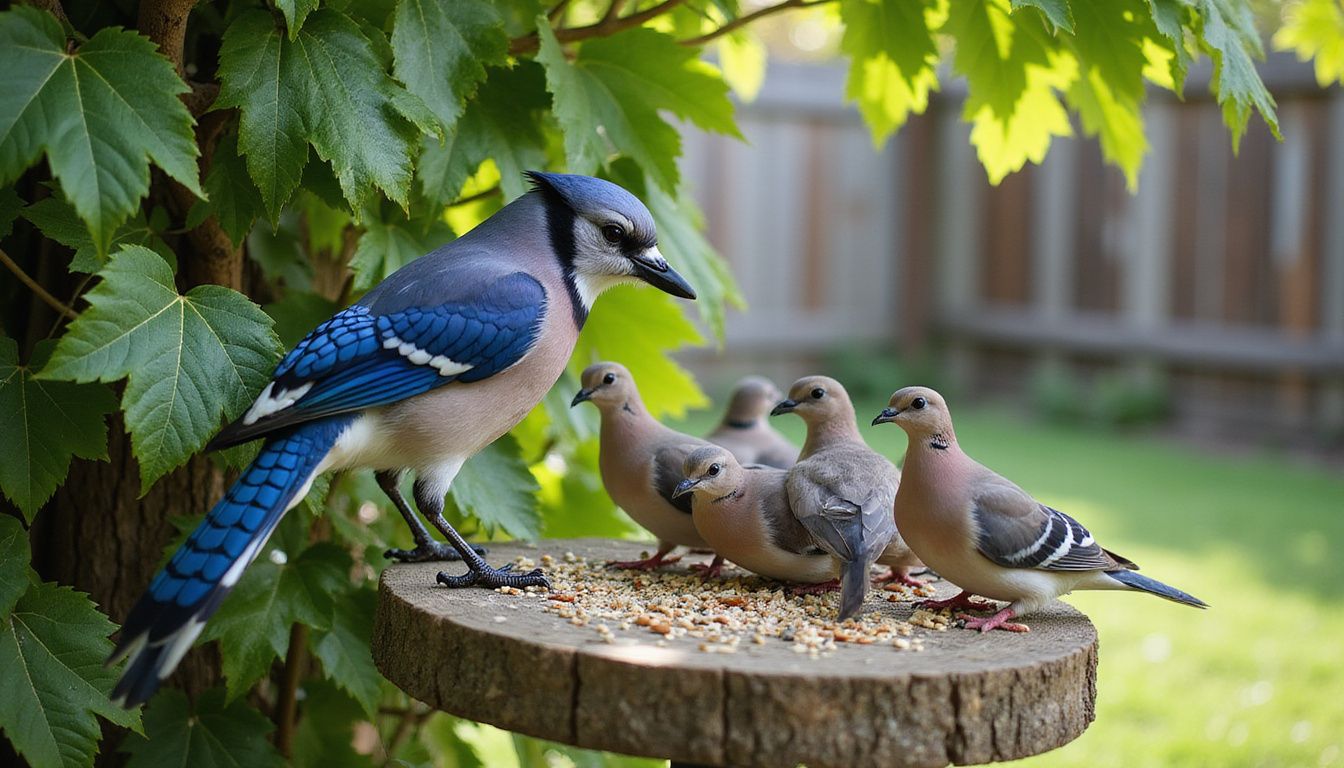
I’ve seen Blue Jays in my backyard. They like areas with trees and shrubs. These birds eat insects, seeds, and nuts. They often take food from feeders meant for smaller birds, showing a preference for sunflower seeds.
They can be aggressive, mainly to protect their space or find food. I witnessed this aggression when mourning doves got too close to their feeder; the Blue Jays scared them off to keep the food to themselves.
This behavior is key to understand if you want different bird types to coexist peacefully in your yard.
Humane Methods to Deter Blue Jays
To deter blue jays, use these methods:
– Hang shiny objects or strips that flutter in the wind.
– Install motion-detecting water sprayers.
– Place predator bird models in your yard.
Use reflective objects or tape
Blue jays caused trouble in my backyard, scaring away smaller birds like mourning doves and hummingbirds. I used reflective objects and tape around my bird feeders to solve this. The wind moves these shiny materials, catching sunlight and discouraging blue jays without affecting other backyard birds.
I found reflective tapes easily and used them by cutting strips to tie on branches near the bird-feeding station. The light reflects off these strips in patterns that blue jays don’t like.
This method is effective for enjoying bird watching peacefully, keeping aggressive birds away gently.
Install motion-activated sprinklers
I installed motion-activated sprinklers to deter blue jays in my backyard. These devices detect movement and release water, surprising the birds and causing them to leave. This method proved effective at keeping them away from bird feeders while being safe for the birds themselves.
It was entertaining too.
With the sprinklers in place, I noticed a decrease in blue jays near my feeders. The automated system freed me from constant monitoring, and it also helped water the lawn, serving a dual purpose.
Deploy fake predators like owl decoys
Blue jays are scared of owls. So, using owl decoys in the garden works well. These decoys trick blue jays into thinking real predators are around, making them stay away for their safety.
Shifting the decoys’ positions confuses them more as they can’t figure out if the threat is genuine.
Then, tweaking bird feeders is crucial to limit these aggressive birds without hurting them.
Adjusting Bird Feeders to Minimize Blue Jays
Switching your bird feeders can keep blue jays away. Use ones for smaller birds and move them from where blue jays nest. This makes your backyard less inviting to them but still welcomes other birds.
Keep reading to learn more!
Use feeders designed for smaller birds
I use feeders that are small. These are great for tiny backyard birds like mourning doves and hummingbirds but not for blue jays. I fill tube feeders with nyjer thistle seed. Blue jays can’t fit on these because they’re too big and prefer sunflower seeds, which I don’t use in slim feeders.
I also choose a peanut feeder designed to keep away bigger, aggressive birds. It has cages that only let small beaks in. This way, peanuts are safe from blue jays, while hens and other small birds can eat without being bothered.
By doing this, my yard becomes a place where smaller birds feel welcome and larger ones find food elsewhere.
Place feeders away from Blue Jay nesting areas
To keep blue jays out of the yard, place bird feeders away from their nesting spots. These birds can bully smaller ones like mourning doves because they go after the same foods, such as sunflower seeds and cracked corn.
Moving feeders gives smaller birds a safer space to eat.
Using different types of feeders also works well. Tube feeders favor small birds because large ones like blue jays struggle to cling onto them. This change lets all kinds of birds enjoy food peacefully without interference from aggressive species.
Alternative Food Sources for Blue Jays
Setting up a separate feeding area with peanuts or cracked corn keeps blue jays happy and prevents them from bothering other backyard birds. This creates a peaceful space for all types of feathered friends to enjoy.
Set up a separate feeder with peanuts or cracked corn
I discovered that blue jays fancy peanuts and cracked corn. I stationed a unique birdhouse in my garden specifically for them, filled with these choices. This technique successfully deters them from disturbing the smaller birds frequenting the other birdhouses.
Consequently, they don’t exhibit aggressive behavior around mourning doves anymore.
Bird-watching has become significantly pleasurable for me. The blue jays frequent their birdhouse for their preferred treats. This arrangement reserves nyjer thistle seed and sunflower seeds exclusively for the other backyard inhabitants.
It’s an efficient approach to manage the dining locations of blue jays in my garden.
Seasonal Strategies to Manage Blue Jays
To keep blue jays away during spring and summer, I hang shiny objects in my yard. They think these are moving predators. I also place birdbaths for water but keep them far from my bird-watching spot.
Blue jays prefer not to share.
In fall, when they collect food for winter, I set up a separate feeder with peanuts or cracked corn. This feeder is placed away from my house and the regular feeders meant for smaller birds like mourning doves or hummingbirds.
This strategy keeps blue jays busy and prevents them from bothering other birds in the area.
Conclusion
To keep blue jays out of my backyard, I learned a few things. Shiny objects and moving water sprinklers scare them away. Fake owls make them think twice before coming back. Changing the feeders helped too—I put them far from where blue jays nest.
I offered peanuts in another spot to keep them busy elsewhere. As the seasons changed, I adjusted my methods to maintain peace without harming birds. This approach led to more quiet and fewer aggressive visitors in my yard for bird watching enjoyment.
FAQs
1. How can I keep blue jays away from my backyard?
You can deter blue jays from your backyard by adjusting what you put in bird feeders. Instead of sunflower seeds or peanuts, try nyjer thistle seed which is not typically favored by these aggressive birds.
2. Is there a specific type of feeder that discourages blue jays?
Yes, using a hopper feeder with small openings will make it difficult for larger birds like the Blue Jays to eat, while still accommodating smaller species like mourning doves.
3. Can other animals or birds help get rid of blue jays in the backyard?
Indeed! Sharp-shinned hawks are natural predators of blue jays and their presence can deter them. However, attracting hawks requires careful consideration as they may also target other desirable backyard birds.
4. Does changing the layout of my yard help discourage blue jays?
Absolutely! Blue Jays prefer yards with plenty of perching spots and open spaces for easy escape routes if threatened. By adding more dense shrubbery or trees, you create an environment less appealing to them but inviting for bird watching enthusiasts looking out for hummingbird migration patterns.
5. Are there any substances that repel Blue Jays?
While many people have tried various substances such as xylite (or birch sugar), its effectiveness is not scientifically proven and could potentially harm other wildlife including beneficial insects like bees and butterflies.