“This post contains affiliate links. As an Amazon Associate, I earn from qualifying purchases”
Mice really like my backyard, but I found a way to deal with them. Here’s how you can keep your yard free of mice.
First, cut tall grass and maintain your lawn. This removes hiding spots for field mice. Next, avoid leaving bird seed on the ground near bird feeders; it attracts mice. Store pet food and birdseed in sealed containers instead of leaving them out.
Also, block any small holes around your home with steel wool or copper mesh wire. This stops mice from getting inside. Use metal mesh to protect young trees from rodents chewing on tree bark.
Keep firewood stacked neatly away from your house since wood piles provide shelter for mice. Remove yard waste regularly because it can become a home for mice too.
Consider using baited traps or snap traps around rodent burrows if you see mouse droppings in your garden. Glue boards are an option as well but use them carefully to avoid harming other wildlife.
Peppermint oil is another tool; its strong smell keeps mice away. Lastly, invest in a compost tumbler rather than having an open compost pile which can attract rodents like squirrels and field mice looking for food.
Following these steps should help solve the problem with mice in the backyard effectively while keeping the garden safe and clean.
Key Takeaways
- Trim tall grass and tidy your yard to eliminate mouse hiding spots.
- Use snap traps and peppermint oil as natural ways to deter mice.
- Block small entry points with steel wool or copper mesh to prevent mice from getting in.
- Keep pet food and birdseed in airtight containers so they don’t attract mice.
- If problems persist, get help from a professional pest control service.
Identifying Signs of Field Mice in Your Backyard
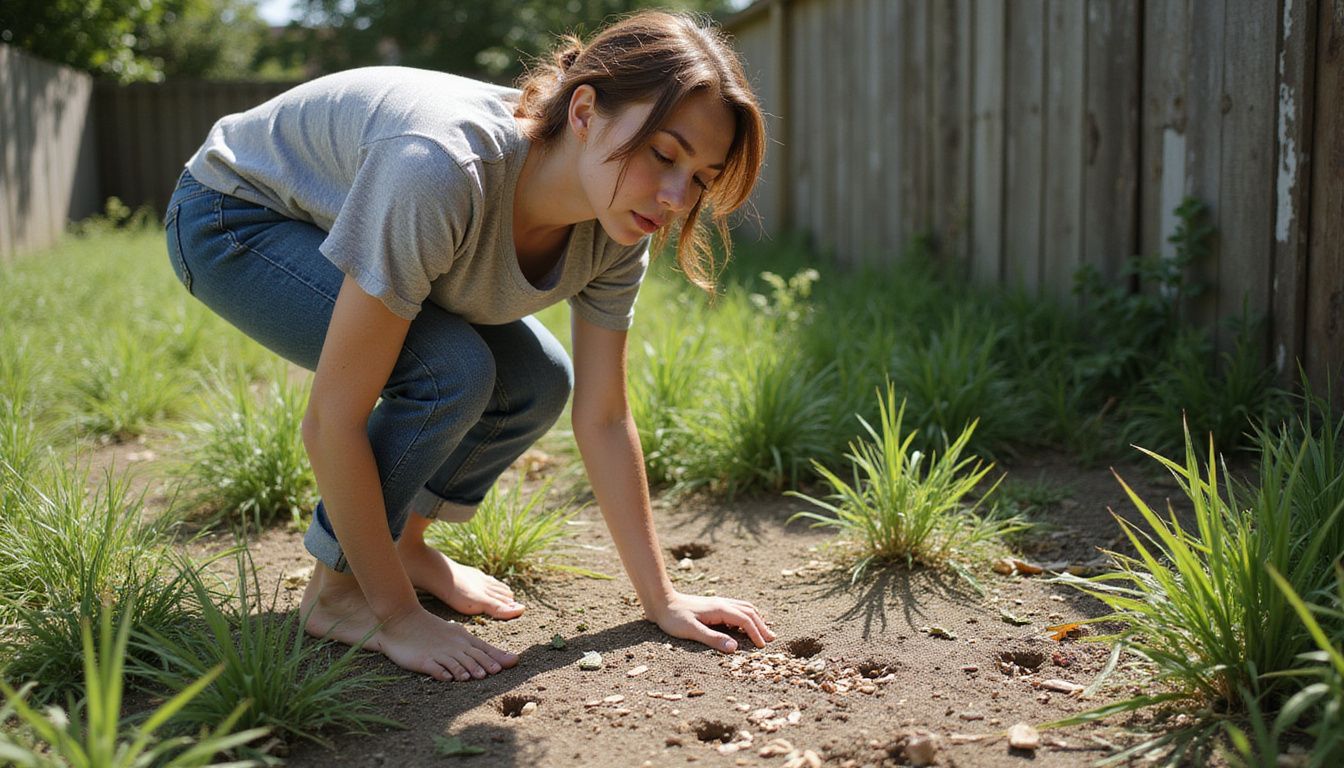
Tiny footprints and small holes signal field mice nearby, living in tall grass and near food sources such as bird seed or pet food.
Common signs of mice activity
I spot mice in my yard by finding small, round mouse droppings near bird seed and pet food. I notice gnaw marks on tree bark and wood piles too. These signs tell me field mice are present.
Mice hide in tall grass and close to rodent burrows. Seeing tracks or pathways in the grass shows they move frequently. They also make nests from shredded materials in sheltered areas.
Chewed leaves or fruits in the garden signal it’s time to check for mice.
Characteristics of field mice holes
After seeing signs of mice, it’s important to know what their holes look like. These are small, dime-sized openings often found in grassy or woody spots. They’re near food sources such as bird feeders and compost piles.
Tall grass by wood piles is a common hiding place.
To find them, check for chewed leaves and tiny footprints at the entrance. The soil may be loosely piled up from digging activity. These entrances can lead to tunnels under garden beds or along fences.
Recognizing these holes helps with planning rodent control in the yard.
Effective Methods to Remove Field Mice
To get rid of field mice, you can place snap traps and sticky boards in your yard. Also, using plants that mice dislike, such as mint or applying spicy pepper around the garden, helps keep them away.
Setting up traps strategically
I have a mice problem in the backyard. Here’s how I tackled it:
- Identified mouse activity near the compost pile and wood piles.
- Chose snap traps for their effectiveness and simplicity.
- Used peanut butter as bait, irresistible to mice.
- Wore gloves when setting traps to avoid leaving human scent.
- Placed traps by walls and paths with visible mouse droppings, where mice prefer to run.
- Checked traps daily, relocating them if no catch within two days.
- Disposed of caught mice with gloves on for safety.
These steps significantly reduced the field mice population in my yard. Now, I’m considering natural repellents like peppermint oil or pepper as additional measures.
Using natural repellents like mint or pepper
Field mice don’t like mint or pepper smells. Here’s how to use that to keep them away:
- Plant mint in the garden, its strong smell deters field mice.
- Put crushed pepper flakes at entrances, the spicy scent keeps mice out.
- Place cotton balls with peppermint oil near burrows and wood piles.
- Spray a mix of water and peppermint oil around the garden.
- Grow plants like cayenne near compost piles, their aroma repels rodents.
- Spread cedar chips around flower beds and young trees; mice dislike cedar scent too.
- Apply clove oil where mouse droppings are found to mask food smells that attract them.
- Wrap copper mesh wire around bird feeder bases to stop mice from climbing.
These actions make your yard less inviting for field mice by using natural scents they avoid.
Preventing Mice Reentry
Keeping mice out for good means sealing their ways in. Stuff any small openings with steel wool and cover larger gaps with wire screens. Keep your yard neat to make it less inviting for them to come back.
Sealing entry points and burrows
I discovered field mice in my yard last spring and took action to stop them.
- First, I inspected my yard and found holes near wood piles and the compost pile.
- I trimmed tall grass short to remove hiding spots.
- Next, I plugged holes with steel wool, which mice cannot chew through.
- For larger openings, I used copper mesh wire because it’s flexible.
- To protect young trees from gnawing, I wrapped their bases with metal mesh.
- I also dug chicken wire into the soil at my yard’s borders to prevent entry.
- Sealing foundation cracks with mortar blocked another entry point for mice.
- Places where pipes or cables entered were sealed off as well.
- In the shed, pet food and bird seed were stored in secure containers.
I realized that using baited traps alone wouldn’t keep mice away permanently. My strategy focused on blocking their entry points and making my yard less attractive to them.
Maintaining proper sanitation
After sealing tiny entry points, I focus on cleaning the yard. I remove wood piles and cut tall grass to eliminate hiding spots for pests. Now, compost goes into a tumbler instead of sitting in a pile.
I also store pet food and bird seed securely to prevent attracting mice. Regular lawn maintenance reduces their hiding places, and removing yard waste is essential. Handling leftovers and garden pests properly keeps field mice away from my space.
Long-Term Control Strategies
To keep mice away, I use metal mesh or chicken wire around young trees and seek help from pest control experts.
Habitat modification and exclusion techniques
I learned controlling field mice involves changing their habitat. I cut down tall grass and cleared wood piles from my yard, where mice like to hide. Sealing entry points is crucial.
I used steel wool and copper mesh wire for small holes around my house.
Mice are attracted to bird seed and pet food. Storing these foods in secure containers helps prevent them. For young trees vulnerable to mice, wrapping the tree bark with metal mesh protects them from damage.
Simple steps significantly help in pest control efforts.
Considering professional pest control services
Field mice kept coming back to my yard. I hired professional pest control. They used steel wool and copper mesh wire to seal entry points. They placed baited traps safely, out of reach from pets or kids.
Pros found rodent burrows under wood piles. With their help, field mice and other pests stopped entering my yard. Hiring them gave me a mouse-free backyard and peace of mind.
Conclusion
Dealing with field mice in the backyard can be straightforward. I use traps and peppermint oil to keep them at bay. Blocking their entrances with metal mesh is effective as well. Cleaning up areas where they might find food or shelter, like tall grass, wood piles, and bird seed, is crucial.
Following these steps can result in a mouse-free yard efficiently.
FAQs
1. What are some signs of field mice in my backyard?
You might have a mice infestation if you notice rodent burrows, chewed young trees and tree bark, or mouse droppings around your yard.
2. How can I make my backyard less attractive to field mice?
Mice love places like tall grass, wood piles, and yard waste where they can hide. Regular lawn maintenance helps keep them away. Also ensure pet food and bird seed from feeders don’t lie around as these attract the house mouse too.
3. Do compost piles attract field mice?
Yes! Compost piles do attract field mice but using a compost tumbler instead of an open pile can help deter them.
4. Are there any natural repellents for getting rid of field mice?
Peppermint oil is known to repel field mice. Spraying it near their suspected hiding spots could help drive them away.
5. Can traps be effective in controlling a mouse infestation?
Absolutely! Baited traps such as snap traps, glue traps or regular mousetraps are very effective at catching these little pests.
6. Can physical barriers prevent field mice from entering my garden?
Definitely! Using chicken wire or copper mesh wire around your garden beds and base of young trees creates a barrier that deters the rodents.