“This post contains affiliate links. As an Amazon Associate, I earn from qualifying purchases”
Cooking at home can be a rewarding experience, but having the right kitchen equipment is key to making it enjoyable and efficient. Whether you’re just starting out or have been in the kitchen for years, investing in quality tools can really change how you cook. This guide covers the essential kitchen equipment every home chef should consider to help them whip up delicious meals with ease.
Key Takeaways
- Quality knives are a must-have for any kitchen; they make chopping and slicing much easier.
- Invest in versatile cookware like non-stick pans and cast iron skillets for better cooking results.
- Don’t overlook basic utensils like spatulas and measuring cups; they are crucial for any recipe.
- Appliances like food processors and blenders can save you time and effort in meal prep.
- Keep your kitchen organized with proper storage solutions to maximize space and efficiency.
Culinary Basics For Every Kitchen
Every home chef needs a solid foundation of tools to build their culinary skills. It’s not just about fancy gadgets; it’s about having the right basics that will help you tackle any recipe. Let’s break down the must-haves for any kitchen, from the simple to the slightly more advanced.
Essential Cooking Utensils
Think about the tools you reach for every time you cook. These are your essential cooking utensils. A good spatula is key – get one that can handle high heat and won’t melt on you. Tongs are another must-have for grabbing, flipping, and serving. And don’t forget a reliable ladle for soups and sauces. Here’s a quick list:
- Spatulas (heat-resistant)
- Tongs (various sizes)
- Ladle
- Whisk
- Wooden spoons
Quality Cookware
Investing in quality cookware is a game-changer. It’s not just about having pots and pans; it’s about having cookware that heats evenly, lasts long, and makes cooking easier. A good stainless steel skillet is a workhorse, perfect for searing, sautéing, and frying. Non-stick pans are great for eggs and delicate foods. And a sturdy saucepan is essential for sauces and boiling.
Measuring Tools
Accuracy is important, especially when baking. A set of measuring cups and spoons is a must. I prefer stainless steel because they’re durable and easy to clean. A liquid measuring cup with clear markings is also essential. For serious bakers, a kitchen scale is a great investment for precise measurements.
Having the right tools can make all the difference in the kitchen. It’s about more than just convenience; it’s about having the confidence to try new recipes and techniques. Start with the basics, and then build your collection as you grow as a cook.
The Importance Of High-Quality Knives
Knives are arguably the most important tools in any kitchen. You can get by with cheap pots and pans for a while, but a dull or flimsy knife will make cooking a chore. Investing in high-quality knives is an investment in your enjoyment of cooking. They make prep work faster, safer, and more precise. A good knife feels like an extension of your hand, allowing you to tackle any culinary task with confidence.
Chef’s Knife Essentials
A chef’s knife is the workhorse of the kitchen. If you’re only going to buy one good knife, this is it. Look for a knife with a blade between 8 and 10 inches long. The handle should feel comfortable in your hand, and the knife should have a good balance. A great chef’s knife enhances meal preparation. I’ve had a few different chef’s knives over the years, and the difference between a cheap one and a good one is night and day. It’s worth spending a little extra to get something that will last.
Paring and Utility Knives
While a chef’s knife can handle most tasks, paring and utility knives are essential for smaller, more delicate work. Paring knives are great for peeling fruits and vegetables, while utility knives are good for slicing smaller items like shallots or garlic. I use my paring knife almost every day. It’s perfect for trimming vegetables or hulling strawberries. A good paring knife should be easy to control and have a sharp, pointed blade. I also find myself reaching for a utility knife when I need something smaller than my chef’s knife but bigger than my paring knife. It’s a versatile tool that’s great for all sorts of tasks.
Knife Maintenance Tips
Taking care of your knives is essential to keeping them in good condition. Here are a few tips:
- Sharpen Regularly: A dull knife is more dangerous than a sharp one. Invest in a good knife sharpener and use it regularly.
- Wash by Hand: Dishwashers can damage knives, so it’s best to wash them by hand with soap and water.
- Store Properly: Store your knives in a knife block or on a magnetic strip to protect the blades.
I used to throw my knives in the drawer with all my other utensils, and they would get dull so quickly. Now I keep them in a knife block, and they stay sharp for much longer. It’s a small change that makes a big difference.
Versatile Cookware For Home Chefs
Having the right cookware can seriously change your cooking game. It’s not just about having pots and pans; it’s about having the right ones that can handle a variety of cooking tasks. Let’s talk about some must-haves for any home chef.
Non-Stick Frying Pans
Okay, let’s be real: everyone needs a good non-stick frying pan. They’re perfect for eggs, pancakes, or anything that tends to stick. A quality non-stick pan makes cooking and cleanup so much easier. But remember, don’t use metal utensils on them, or you’ll scratch the surface and ruin the non-stick coating. I usually grab a new one every year or two, because the coating wears out over time, no matter how careful you are.
Cast Iron Skillets
If the Dutch oven is the pot that does it all, the cast iron skillet is the pan that does it all. They’re beloved by both professional chefs and home cooks because they’re extremely versatile, affordable, and durable. You can use a cast iron skillet to roast a chicken, fry food, bake a pie, or cook over an open fire. Though caring for a cast iron skillet can feel daunting, it’s nothing tedious or scary. (Contrary to popular belief, you can 100% wash a cast iron skillet with soap and water.) Once you get the hang of it, maintaining it will feel like second nature—and it’s worth it because a well-cared-for cast iron skillet can last generations. The Lodge cast iron skillet has been a longtime editor favorite at Serious Eats. It’s affordable, comes pre-seasoned, and has two handles that make it easy to move in and out of the oven. If you can spend a bit more, check out one of our other winning pans from Lancaster. It’s lightweight (relatively speaking, anyway), and is beautifully seasoned straight out of the box.
Stock Pots and Saucepans
No kitchen is complete without a good stock pot and a few saucepans. Stock pots are great for making soups, stews, and boiling pasta. Saucepans, on the other hand, are perfect for sauces, heating up liquids, and cooking smaller portions. I like to have a couple of different sizes on hand. Stainless steel is a good choice because it’s durable and easy to clean. A high-quality stainless steel pan is essential for searing, sautéing, and deglazing. This All-Clad stainless steel pan heats evenly and is built to last a lifetime, making it a worthy investment for any kitchen.
Having a variety of cookware allows you to tackle any recipe with confidence. It’s about building a collection that suits your cooking style and needs. Don’t feel like you need to buy everything at once; start with the basics and add more as you go.
Essential Kitchen Appliances
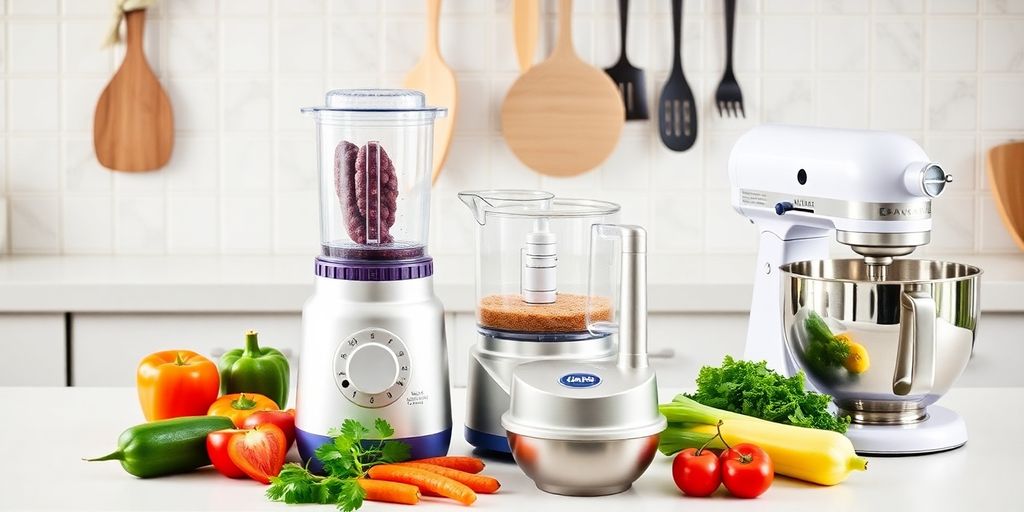
Appliances can really change your cooking game. They can save you time and effort, and sometimes they let you do things you just couldn’t do by hand. Let’s look at some must-haves.
Food Processors
Food processors are super useful. They can chop, slice, shred, and even puree ingredients in seconds. I use mine all the time for making salsa, chopping veggies for soup, or even making nut butter. It’s a real time-saver, especially if you cook a lot. They are also great for making doughs and batters.
Blenders and Immersion Blenders
Blenders are essential for smoothies, soups, and sauces. A regular blender is great for larger batches, while an immersion blender is perfect for blending soups right in the pot. I love using my immersion blender to make creamy tomato soup. It’s so easy and there’s less to clean. You can also use a blender for making things like pesto or even grinding coffee beans in a pinch. If you are looking for a versatile appliance, a blender is a great choice.
Stand Mixers
Stand mixers are a baker’s best friend. They make mixing doughs and batters so much easier. I use mine for everything from cookies to bread.
A good stand mixer is a worthwhile investment if you bake often. It frees up your hands and ensures consistent results. Plus, they come in so many fun colors!
Here’s a quick comparison of stand mixer sizes:
| Size (Quarts) | Best For |
|---|---|
| 5-6 | Most home bakers |
| 7-8 | Larger batches, professional use |
| 4.5 or less | Smaller kitchens, occasional baking |
Cutting Boards And Their Varieties
Okay, so cutting boards. You might think they’re all the same, but trust me, they’re not! I used to just grab whatever was cheapest, but I’ve learned that the right cutting board can actually make a big difference in your cooking experience. Plus, it’s way more sanitary to have a few different ones for different tasks. Let’s explore the best cutting boards.
Material Choices
There are a few main types of cutting board materials, and each has its pros and cons. Wood is classic, and some say it’s gentler on your knives. Plastic is easy to clean (dishwasher safe!), but it can harbor bacteria if it gets too scratched up. Then there’s bamboo, which is a renewable resource and pretty durable. I’ve even seen some made of glass or stone, but those are mostly for serving because they’ll dull your knives super fast.
Here’s a quick rundown:
- Wood: Looks nice, can be sanitized, but needs oiling. I like using wood cutting boards because they are sturdy.
- Plastic: Easy to clean, but can get gross scratches. You can easily chuck plastic cutting boards into a dishwasher.
- Bamboo: Sustainable, fairly durable, but can be hard on knives.
I switched to using separate cutting boards for raw meat and veggies after reading about cross-contamination. It’s a simple step that makes me feel a lot better about food safety.
Size Considerations
Size matters! A tiny cutting board is fine for a lemon, but if you’re prepping a whole chicken, you’ll need something bigger. I like having a large board for big jobs and a smaller one for quick tasks. Think about your counter space too – you don’t want a board that’s so big it’s always in the way.
Maintenance and Care
Taking care of your cutting boards is key to making them last. For wood, that means washing it by hand (no dishwasher!), drying it thoroughly, and oiling it regularly with mineral oil. Plastic boards can usually go in the dishwasher, but check the manufacturer’s instructions. And no matter what material you choose, always sanitize your boards after using them for raw meat or poultry. I always keep a few extra cutting boards available to avoid cross-contamination.
Baking Essentials For Every Home Chef
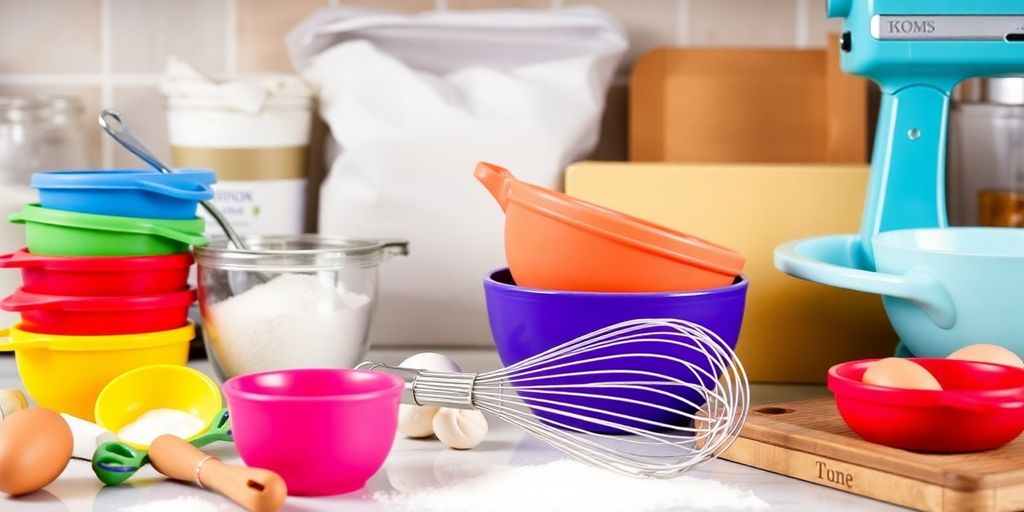
Baking can be a really rewarding experience, but having the right tools makes all the difference. It’s not just about following a recipe; it’s about having equipment that helps you get consistent results. I remember when I first started baking, I tried to make a cake with a flimsy pan, and it was a total disaster! Now, I know that investing in good quality baking tools is worth it.
Mixing Bowls
Mixing bowls are super important. You’ll want a set of different sizes. I like having at least three: a small one for whisking eggs, a medium one for combining dry ingredients, and a large one for mixing everything together. Glass or stainless steel bowls are great because they don’t react with ingredients. Plastic bowls can sometimes retain odors, which you definitely don’t want. I also find that bowls with a non-slip base are really helpful, especially when you’re whisking vigorously.
Baking Sheets and Pans
Okay, baking sheets and pans are where things can get tricky. You need a good variety. For baking sheets, go for the heavy-duty ones that won’t warp in the oven. Cookie sheets with cooling racks are also a must-have for cookies and pastries. For cake pans, I recommend having at least one 9-inch round pan, a square pan, and a loaf pan. Springform pans are awesome for cheesecakes. And don’t forget muffin tins! I’ve found that non-stick pans are easier to clean, but sometimes they don’t brown as evenly as regular metal pans. It’s a trade-off.
Measuring Cups and Spoons
Accurate measuring is key in baking. Forget eyeballing it; you need proper measuring cups and spoons. Get a set of both dry and liquid measuring cups. Liquid measuring cups are usually glass or plastic with a spout for easy pouring. Dry measuring cups are typically metal or plastic and are meant to be leveled off with a knife or spatula. Measuring spoons are essential for small amounts of ingredients like vanilla extract or baking powder. I prefer stainless steel because they’re durable and easy to clean. Here’s a quick guide:
| Measurement | Equivalent |
|---|---|
| 1 cup | 8 fluid ounces |
| 1 tablespoon | 3 teaspoons |
| 1 teaspoon | 1/3 tablespoon |
Having the right baking tools can really improve your baking game. It’s not just about having fancy equipment; it’s about having tools that are reliable and help you achieve consistent results. Start with the basics and then add to your collection as you gain more experience. Happy baking!
Storage Solutions For Kitchen Organization
Okay, let’s be real – a cluttered kitchen is a stressful kitchen. I know I’m not the only one who feels that way! Getting your kitchen organized isn’t just about aesthetics; it’s about making cooking easier and more enjoyable. It’s about knowing where everything is so you can actually find it when you need it. Let’s talk about some ways to get your kitchen storage in order.
Food Storage Containers
Having a good set of food storage containers is a game-changer. I used to just shove leftovers into whatever random container I could find, and it was a disaster. Now, I’ve got a matching set of airtight containers, and it’s made a huge difference. They stack neatly in the fridge, keep food fresh longer, and are way more eco-friendly than using plastic wrap all the time. I’ve found that clear containers are the best because you can easily see what’s inside without having to open every single one. Plus, they’re great for meal prepping!
Spice Racks and Organizers
If you’re anything like me, your spice collection has probably gotten a little out of hand. I swear, spices just multiply when you’re not looking! A spice rack or organizer can really help you keep things under control. There are so many different options out there, from wall-mounted racks to drawer inserts to tiered shelves. I personally like the magnetic spice jars that stick to the fridge – they save a ton of counter space. Whatever you choose, make sure it’s something that makes it easy to see and access your spices. Nobody wants to dig through a pile of jars to find the cumin!
Utensil Holders
Utensil holders are another one of those things that seem simple but can make a big difference in your kitchen organization. I used to just toss all my spatulas, spoons, and whisks into a drawer, and it was always a mess. Now, I’ve got a couple of utensil holders on my countertop, and it’s so much easier to grab what I need. Plus, it frees up drawer space for other things. You can find utensil holders in all sorts of materials, from stainless steel to ceramic to wood. Just pick something that matches your kitchen decor and is big enough to hold all your utensils. If you have a small kitchen, consider a small kitchen ideas that can be mounted on the wall to save space.
I think the biggest thing I’ve learned about kitchen organization is that it’s an ongoing process. It’s not something you can just do once and forget about. You have to constantly be decluttering, reorganizing, and finding new ways to make the most of your space. But trust me, it’s worth it. A well-organized kitchen is a happy kitchen!
Wrapping It Up
So there you have it! Investing in the right kitchen gear can really change how you cook. Whether you’re just starting out or you’ve been at it for years, having the right tools makes everything easier and more fun. From a good chef’s knife to a solid cutting board, these essentials help you whip up meals with confidence. Remember, it’s not just about having fancy gadgets; it’s about having the basics that work well. So, take a look at your kitchen, see what you might be missing, and consider adding some of these must-haves to your collection. Happy cooking!
Frequently Asked Questions
What kitchen tools are essential for every chef?
Every chef needs a few basic tools like a sharp chef’s knife, a sturdy cutting board, mixing bowls, measuring cups, and pots of different sizes. These tools help in preparing a variety of meals easily.
Why is a good knife important in the kitchen?
A good knife is crucial because it allows for precise cutting and chopping, making cooking safer and more efficient. A sharp knife can make meal prep much quicker.
What types of cookware should I have?
You should have a few key pieces of cookware, including a non-stick frying pan, a cast iron skillet, and a stock pot. These can handle a wide range of cooking tasks.
What kitchen appliances are must-haves?
Essential kitchen appliances include a food processor, a blender, and a stand mixer. These tools can help you prepare meals faster and with less effort.
How do I choose the right cutting board?
When choosing a cutting board, consider the material (like wood or plastic) and the size. It’s good to have a few different boards for different types of food to avoid cross-contamination.
What baking tools do I need to get started?
To start baking, you need mixing bowls, baking sheets, measuring cups and spoons, and a whisk. These tools will help you mix and bake a variety of recipes.