“This post contains affiliate links. As an Amazon Associate, I earn from qualifying purchases”
Removing bamboo from your backyard is tough. Some types, like Phyllostachys aureosulcata, grow quickly if you’re not careful. This post will show effective ways to control bamboo in your yard.
Let’s get started!
Key Takeaways
- Chop bamboo to the ground and remove roots for complete elimination.
- Use thick tarps to cover bamboo, cutting off sunlight to kill it.
- Install barriers or use pots for bamboo to manage its spread.
- Pour boiling water on small bamboo patches as a chemical-free solution.
- Hire a professional if removing bamboo seems too difficult.
Why Remove Bamboo From Your Backyard
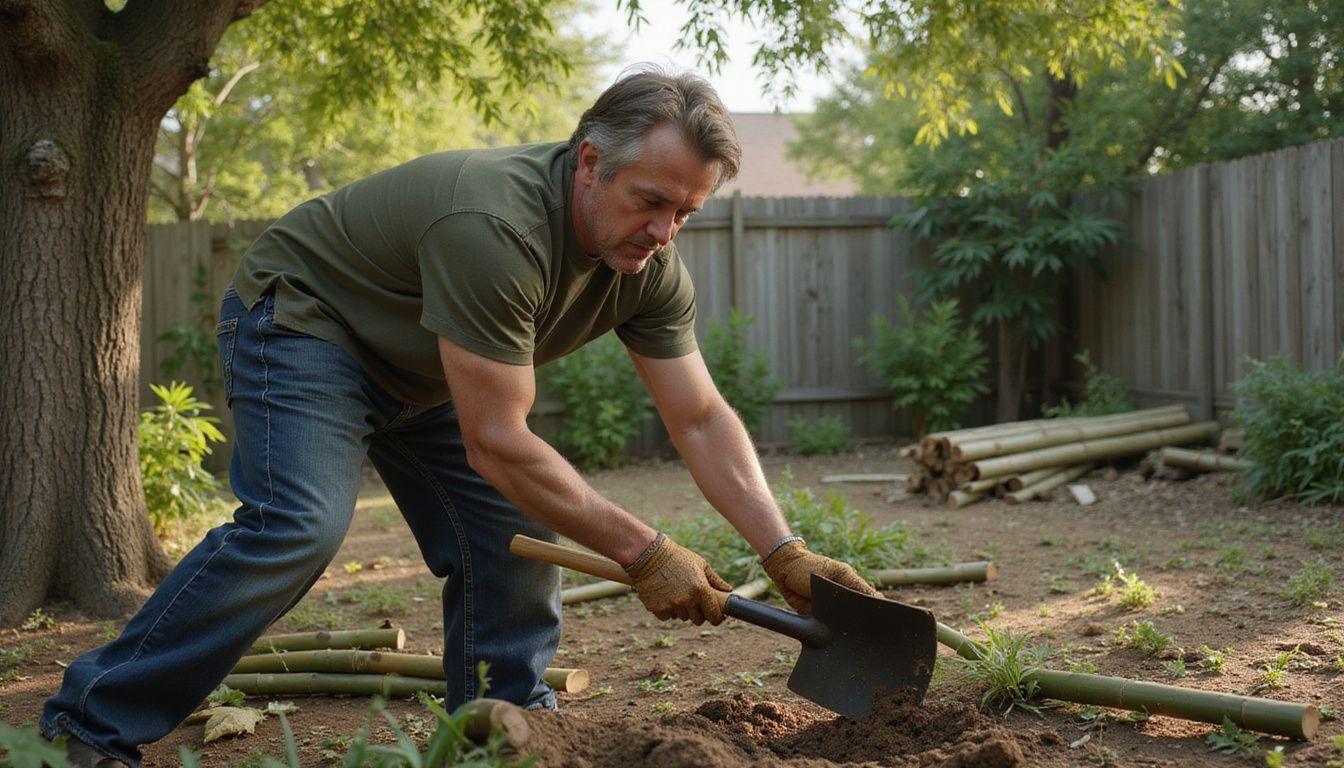
Bamboo looks good but can overwhelm your yard quickly. It spreads fast and is hard to manage. When bamboo grows beyond your garden, it can push out other plants. Bamboo has underground stems called runners that move far, showing up unexpectedly.
I found out the hard way that bamboo doesn’t stay in one place.
It’s not just about a tidy garden. Getting rid of bamboo also helps protect local ecosystems. As an invasive species in many places, bamboo fights native plants for water and sunlight.
This competition harms animals relying on those native plants for habitat or food. Cutting down on bamboo aids in keeping balance—both in your backyard and nature.
Methods to Get Rid of Bamboo
I can remove bamboo by cutting the stalks or using chemicals to stop its spread in my yard.
Cutting Bamboo to Ground Level
To control bamboo growth in my backyard, I cut it down. This approach works for both clumping and running bamboo. Here’s my method:
- The best time to cut is late winter or early spring before new shoots grow.
- I use a chainsaw or sharp pruning shears for clean cuts.
- I make sure to cut all the stalks as close to the ground as possible.
- After cutting, I remove all pieces to prevent regrowth.
- If new shoots appear, I cut them back immediately.
This process slows down growth but doesn’t fully kill the bamboo. For complete eradication, digging up the roots after cutting helps.
Digging Up Bamboo
Bamboo can quickly take over a yard. Here are steps to remove it:
- Identify the main plant and its shoots.
- Use a shovel to clear around the bamboo’s roots.
- Cut under the roots with a spade to lift them out.
- Remove all parts of the root system and shoots.
- Search for any remaining roots or shoots that could grow back.
- Dig up new shoots as soon as they pop up.
- Clean tools after use to prevent spreading bamboo pieces.
This approach is effective for both running bamboo and clumping bamboos. Running bamboo spreads fast and demands immediate action. Clumping bamboo doesn’t spread as much but also requires removal efforts. I always wear gloves for hand protection from sharp edges. Clearing your yard of bamboo takes time and work, but it’s possible with these steps.
Smothering Bamboo With Tarps
Getting rid of bamboo in the yard can be a tough job. Covering it with tarps is one method that works well.
- First, cut all the bamboo stalks down to ground level. This makes it easier for the tarps to lay flat and cover all areas.
- Choose heavy-duty black plastic tarps. These block sunlight best and help kill the bamboo.
- Make sure the tarp covers every inch of where the bamboo grows. Bamboo can spread from even a small uncovered area.
- Use rocks or heavy objects to secure the edges of the tarps. Wind can lift them and let sunlight reach the bamboo.
- Leave the tarps on for at least two months during summer. Heat and lack of light will kill most of the bamboo roots.
- Check under the tarps after two months. If there are any green shoots, cover them back up quickly.
- Removing dead bamboo and roots is next. A shovel works best for this job.
- Dispose of all parts of the plant properly. Bamboo can start growing again from small bits left in or on top of soil.
- Finally, keep an eye on the area for a while. New shoots might pop up from roots missed during removal.
Smothering bamboos with tarps takes time but saves effort in the long run compared to other methods like digging or using chemicals.
Using Herbicides
I need to remove bamboo from my yard, and I found an effective method.
- Pick a non-selective herbicide since it kills all plants it touches.
- Wear gloves, long sleeves, and goggles for protection.
- Choose a calm day to prevent spray drift onto other plants.
- Spray in the early morning when dew makes the herbicide stick better to the leaves.
- Follow the label for correct mixing instructions.
- Apply the herbicide on bamboo leaves using a sprayer.
- Wait several weeks and might need more than one application to see results.
- Dig up the dead bamboo plants and roots after they die.
Applying Boiling Water
Removing bamboo can be a challenge. A straightforward approach involves boiling water. Here’s the process:
- Trim the bamboo shoots close to the ground, making the roots vulnerable.
- Boil a lot of water. The size of your bamboo patch determines how much you need.
- With protective gloves on, carry the hot water to where you cut the bamboo.
- Pour the boiling water directly onto the exposed roots. This heat kills some root systems.
- This boiling water technique suits small areas or young shoots best.
- If new growth appears, do this several times for a few days.
- Ensure kids and pets stay away from this area until it cools.
This method offers an effective way to manage bamboo with zero chemicals involved, helping keep your garden clean and reducing yard waste.
Containing Bamboo Growth
To stop bamboo from spreading in my garden, I install barriers or use containers. This approach keeps their roots contained.
Installing a Rhizome Barrier
I have fast-spreading bamboo in my backyard. Here’s how I install a rhizome barrier to control it:
- First, I choose high-density polyethylene (HDPE) for the barrier. It’s durable and effective.
- Then, I measure my yard to know how much HDPE I need.
- The barrier must go at least 24 inches deep to block the bamboo roots or rhizomes.
- I dig a trench around the area, making it slightly deeper than 24 inches.
- Next, I put the HDPE sheet into the trench vertically and ensure it’s upright.
- If using more than one piece of HDPE, I overlap them by 2 feet to prevent gaps.
- After that, I backfill the trench with soil and pack it tightly against the barrier.
- Leaving about 2 inches of HDPE above ground prevents rhizomes from crossing over.
- Once a year, I check for any rhizomes trying to escape and cut them back as needed.
This approach doesn’t eliminate bamboo but keeps it from spreading uncontrollably in my yard.
Potting Bamboo
To control bamboo growth, potting is an effective strategy.
- Pick a large, durable pot made of thick plastic or ceramic to support bamboo’s rapid growth.
- Use well-draining soil mixed with some sand to promote healthy roots without waterlogging.
- Water the bamboo daily during warm months, but avoid over-watering by checking the soil moisture first.
- Apply a balanced liquid fertilizer monthly in the growing season since potted bamboo doesn’t get natural ground nutrients.
- Position the bamboo where it receives morning sunlight but is shaded from intense afternoon rays to prevent sunburn.
- Prune regularly by trimming the top and thinning crowded stalks for bushier growth and better health.
Following these steps ensures my garden includes beautiful, manageable potted bamboo.
Trench and Berm Method
I tried the trench and berm method for bamboo control. Here’s how:
- Dug a trench 2 feet deep and 3 feet wide around the bamboo.
- Filled the trench with concrete to stop roots from spreading.
- Made a raised soil area, called a berm, near the bamboo to guide new shoots.
- Regularly checked the barrier for damage or escaping shoots.
- Cut any new shoots on the wrong side immediately.
This strategy requires initial effort but makes controlling bamboo easier later.
When to Call a Professional
Battling bamboo can be tough. When bamboo starts invading unexpected areas or overwhelms your yard, it’s time for action. Despite using common DIY methods like cutting, digging up, covering with tarps, and applying herbicides, the problem may persist.
Professionals possess special tools and knowledge for handling problematic perennial grasses like bamboo. They use strong rhizome barriers and commercial-grade herbicides not usually sold to the public.
Their experience allows them to identify specific types of bamboo—such as golden bamboo in my case—and implement targeted removal strategies.
Experts are often needed to completely remove bamboo because it requires skills beyond what most gardeners have.
Conclusion
Removing bamboo from my backyard is tough. I start by cutting, digging, and smothering the bamboo. If that fails, I use non-selective herbicides or pour boiling water on it. For a lasting solution, I install barriers or grow bamboo in pots to control its spread.
Sometimes, hiring a professional is the best choice to clear my yard of this stubborn plant.
FAQs
1. How can I remove bamboo from my backyard?
You can control the growth of both clumping and running types of bamboo, such as golden bamboo or river cane, by using non-selective herbicides. This will kill off the leafy parts and the growing tip of the plant.
2. What is a natural way to eradicate bamboo?
Covering your garden with mulch made from wood or other organic materials may help in bamboo eradication. The mulch blocks sunlight, which prevents new shoots from sprouting.
3. Can sheet metal be used for controlling bamboo growth?
Yes, installing a barrier made of sheet metal around your trees or plants can effectively prevent running bamboos like reynoutria japonica (Japanese knotweed) from spreading further into your yard.
4. Is there any specific type of pesticide effective against heavenly bamboo?
Non-selective herbicides are generally effective against most species of bamboos including heavenly bamboo. However, it’s important to follow label instructions to avoid harming other plants.
5. Will removing all visible shoots stop new ones from growing?
Removing visible shoots helps but won’t completely stop new ones since bamboos are an herbaceous perennial plant that regrows each year unless you also eliminate their root system.