“This post contains affiliate links. As an Amazon Associate, I earn from qualifying purchases”
Removing grass from your backyard is a big job. I’ve faced this challenge and tried many ways to do it. Let’s go through some methods, including pulling up the sod by hand or using natural options like vinegar or boiling water.
We’re about to begin.
Key Takeaways
- Use sod cutters or vinegar to remove grass safely.
- Sheet mulching stops sunlight and kills grass, making soil healthier.
- Choose boiling water instead of chemicals to kill grass eco-friendly.
- Remove grass in early spring or late fall for cooler weather benefits.
- After getting rid of grass, prep the soil for drought-resistant plants or native landscaping.
Reasons to Remove Grass from Your Backyard
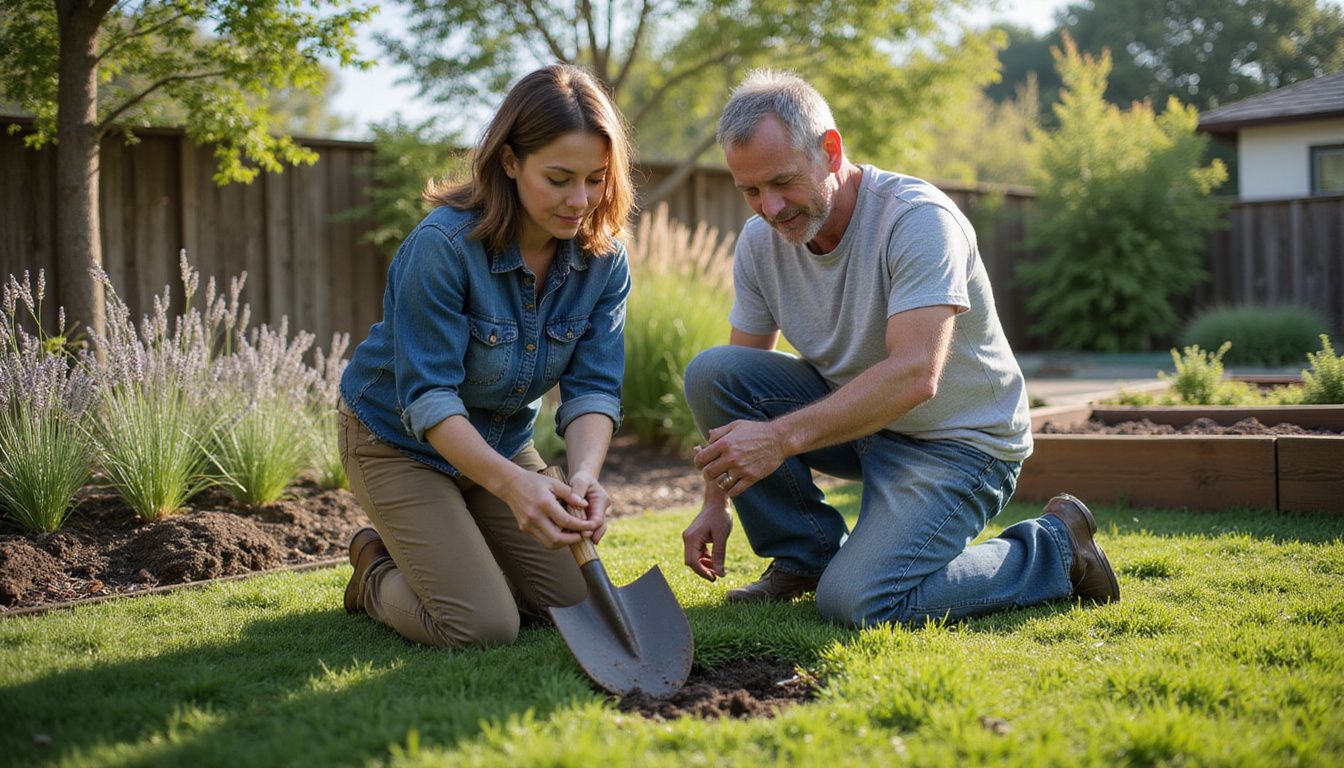
I remove my lawn to save water, reduce yard work, and create space for drought-tolerant plants and vegetable gardens.
Save water and reduce maintenance
Removing grass saves water. Grass needs lots of water in hot months. Drought-tolerant plants and native plants need less watering. This reduces maintenance time – no weekly mowing.
Using mulches or native plants keeps soil moist without extra water from sprinklers. These options also naturally fight weeds, reducing garden upkeep.
Choosing sustainable landscaping saves water and makes enjoying outdoor spaces easier.
Create space for a garden or alternative landscaping
I got tired of my lawn and wanted something new. I chose to create a sustainable garden with drought-tolerant plants and fruit trees for fresh produce.
First, I assessed the space available and the soil type. Some parts were ideal for native plants that need less water and support local wildlife. Other areas suited vegetable beds or berry bushes well because they received plenty of sunlight.
For tools, I used a sod cutter to remove the grass easily. I also used landscape fabric and wood chips to stop weeds from growing back in unwanted areas.
This transformation took time but eventually turned my yard into an oasis with food forests, beautiful flowers attracting bees, saving water, and enhancing outdoor space vitality.
Prevent grass from invading unwanted areas
Grass grows where it’s not wanted. To stop this, I use borders and edgers around my garden beds and paths. I also put down landscape fabric and plastic sheeting under mulch in flower beds for extra protection.
I tried sheet mulching too. This method involves laying cardboard over the grassy area, then covering it with soil or compost. It blocks light and air, killing the grass underneath without chemicals.
Over time, this has helped prevent Bermuda grass from invading fruit trees and vegetable patches, keeping my yard tidy and reducing the time spent on weeding each weekend.
Preparations Before Removing Grass
Before I start yanking out the lawn, I make sure I know how big the area is. Then, I grab tools like a shovel and gloves, and think about staying safe while working.
Assess the size of the area
To start, I always check how big my backyard is. This tells me the amount of work and tools needed. A tape measure helps me find out the area for grass removal. I write down these measurements.
The advice “Measure twice, cut once” applies here too. Last year, when planning for drought-tolerant plants, knowing the exact size was crucial. For small areas, a shovel worked fine.
For larger spaces, using a sod cutter saved time and effort. It’s also key to mark the area with stakes and string or spray paint to stay organized while working.
Gather necessary tools and materials
I’m preparing to take out the backyard grass by gathering necessary tools and materials.
- A sod cutter cuts turf fast, ideal for big areas.
- I use a spade or shovel to dig up grass in small sections.
- A wheelbarrow helps move removed sod and soil.
- Gardening gloves protect my hands from blisters and cuts.
- Landscape fabric acts as a weed barrier, preventing new growth of grass and weeds.
- I spread organic mulch over cleared areas to enhance soil health and fight weeds.
- Plastic sheeting is key for solarization, using heat to kill grass.
- Vinegar or boiling water are non-toxic ways to kill weeds without chemicals.
- A hose or drip irrigation system keeps newly planted areas well-watered efficiently.
These items ensure effective grass removal and set the stage for planting something new.
Consider safety precautions
Safety is key when removing a lawn. Wear gloves, long sleeves, and eye protection with tools like sod cutters to prevent injuries. Be careful with weed control chemicals such as glyphosate.
Read labels and use in well-ventilated areas to avoid skin contact and potential harm. Proper safety measures make the job smoother and prevent accidents.
Methods to Remove Grass
To clear out unwanted lawn grass, you can use several methods like applying vinegar or using clear plastic to kill the turf. Tools such as shovels and garden forks are essential for this job. Here are the steps to transform your backyard:
– Apply vinegar to kill grass quickly.
– Cover the area with clear plastic to let the sun help in grass removal.
– Use shovels and garden forks to dig out the dead turf.
Herbicide application
Herbicides quickly kill lawn grass. Stores sell many kinds. Some kill all plants, and others only target specific grasses like Bermuda grass or weeds but leave flowers and bushes alone.
It’s crucial to read the label and follow instructions for safe use.
Wear gloves and protective clothing for safety from chemicals. Spray when the wind is calm to avoid spreading chemicals to other areas. After spraying, waiting a few days or weeks may be necessary to see the full effects.
This approach is good for large spaces where hand digging would be too hard.
Digging it up manually
I decided to remove grass from a part of my backyard. I gathered tools, including shovels and a sod cutter. The shovel lifted the turf, and the sod cutter cut through grass roots. Wearing gloves for protection, I dug up small sections to avoid getting tired.
For bigger areas, I used a rear-tine tiller after the sod cutter. This tool broke up the soil and made it easier to remove leftover roots. I continued until all unwanted grass was removed.
Then, I prepared the soil for new plants that need less water—like drought-tolerant plants or native ones better suited for my climate.
After removing all that grass, solarization helped control any remaining weed seeds.
Solarization technique
I tried a method known as solarization to remove grass. This process involves covering the ground with plastic sheeting, using the sun’s heat to kill grass, weed seeds, and pests. I chose clear plastic because it allows more sunlight through.
First, I watered the soil thoroughly. Then, I placed the clear plastic over the grassy area, ensuring it fit snugly against the ground. I left this setup throughout summer. Within weeks, the results were visible.
The unwanted grass and weeds had died off, leaving soil ready for planting new vegetation.
Sheet mulching method
Sheet mulching blocks sunlight with cardboard or newspaper. This stops grass growth. Then, adding compost and mulch on top feeds the soil with nutrients. Without digging or chemicals, this method is earth-friendly and conserves water.
The grass underneath dies over months, leaving nutrient-rich soil ready for drought-tolerant plants or fruit trees.
For a natural way to remove grass without toxins, sheet mulching works well.
Non-toxic natural approaches (e.g., vinegar, boiling water)
To remove unwanted grass, I’ve used eco-friendly methods that don’t hurt the environment.
- Vinegar is a powerful weed killer. Pouring it on grass kills it because the acid burns the leaves. It works best on sunny days.
- Boiling water also kills grass quickly. I boil water and pour it over the grass patches to kill them instantly.
- Salt can kill grass, but I only use a little to avoid soil damage. Mixing salt with water and spraying it on the grass helps.
- Adding dish soap to vinegar makes a stronger weed killer. The soap helps the vinegar stick to leaves, killing the grass faster.
- Clove oil or citrus oil acts as natural herbicides. Spraying these oils on unwanted grass protects nearby plants I want to keep.
These methods have helped me maintain an eco-friendly backyard by clearing out undesired grass areas effectively.
Tips for Effective Grass Removal
Removing grass at the right time can make the process easier and improve your results. Here’s how to create a space you love without grass:
– Pick the correct season for grass removal.
– Use methods like sheet mulching or sod cutting for effective removal.
– Consider replacing traditional turf with native plants or drought-tolerant options for sustainable landscaping.
Work during the right season
Early spring or late fall is the best time for lawn removal. The weather is cooler, making outdoor work easier. New plants also have less stress from summer heat.
During these seasons, spring rains soften the ground. This makes it easier to dig or use a sod cutter. For sheet mulching, this timing allows materials to decompose before planting season starts.
I noticed better results with this approach compared to starting in summer.
Ensure proper disposal of removed grass
Choosing the right season makes grass removal easier. Composting old grass is a smart choice for later gardening use. But, if the grass has weeds or disease, it’s better to avoid composting.
Some places allow you to recycle yard waste safely. Always check local guidelines for disposing of garden leftovers.
You can also use grass clippings as mulch in your yard or someone else’s. This helps keep moisture in and weeds out without costing extra. Just spread the clippings thinly to prevent rot and help your garden at no additional cost while reducing waste significantly.
What to Do After Removing Grass
Once the grass is gone, I prepare the soil and consider mulch to protect it. This allows me to create a unique yard without grass.
– Add organic mulch for soil health.
– Plan a no-grass landscape with native plants and fruit trees.
Prepare soil for new planting
Removed the grass and started soil preparation for new plants. Used a rear-tine tiller to break up the soil, making it easier for roots to grow.
Added organic matter like compost to improve soil health. This helps retain water and nutrients. For clay soil, mixed in some sand to enhance drainage.
Installed drip lines before planting. Drip irrigation systems ensure water reaches the roots directly, saving water and preventing diseases on leaves.
Now the area is ready for fruit trees and drought-tolerant plants.
Install alternative landscaping options
After removing the grass, I chose drought-tolerant plants and some fruit trees to save water and add color. I also planted native plants that attract local wildlife and are low maintenance.
For walkways, I used landscape fabric with organic mulch on top to suppress weeds without chemicals. In my vegetable garden, I applied a no-till method by layering organic matter directly on the soil.
This approach boosts soil health and helps produce vibrant veggies and herbs without digging.
Use mulch for soil protection
Using mulch protects the soil. It keeps moisture in and stops weeds. Mulch comes from leaves, straw, or wood chips. On the ground, it traps water and boosts plant growth. In my garden, organic mulch prevents erosion; less soil washes away in rain.
Mulch benefits my yard beyond looks; it maintains healthy soil with little effort. Around trees and perennial grass, mulch keeps roots cool and moist for better growth.
Frequently Asked Questions
I often hear people asking if grass can come back after using vinegar and how long solarization takes to kill grass.
How long does it take for grass to die using solarization?
Solarization takes 4 to 6 weeks to kill grass. Clear plastic sheeting collects sun heat, cooking the turf below. It works best in summer’s peak heat. The soil heats up, killing grass, weeds, and some pests.
For success, you need clear weather and sunlight. Use strong plastic sheeting and secure it well to the ground. Watch for any tears or gaps where heat could escape. In about a month, the grass will turn brown and die off.
Will grass grow back after using vinegar?
I once tried vinegar to kill stubborn Bermuda grass in my backyard. Vinegar is a non-toxic option and initially, it worked. The grass quickly turned brown and died. However, vinegar only kills the surface level of the grass but often leaves the roots alive underground.
This means the grass can grow back.
For a lasting solution, you might need to combine vinegar with other methods. After applying vinegar, removing the leftover roots or using sheet mulching could prevent regrowth. Preparing the soil for new plants creates a garden free from unwanted turfgrass.
Conclusion
Removing grass from your backyard saves water and cuts down on work. You can use many methods, but I like sheet mulching best because it’s good for the earth. Once the grass is gone, you can plant gardens, native plants, or fruit trees to make your yard more sustainable.
Tools like a sod cutter can help with this process. This way, we move toward having a greener space.
FAQs
1. How can I remove grass from my backyard?
You can use methods like lawn removal using a sod cutter or sheet mulching to get rid of grass in your backyard. These techniques help prepare the ground for sustainable landscaping with native plants and fruit trees.
2. What is sheet mulching and how does it aid in grass removal?
Sheet mulching involves covering the area with layers of organic matter, landscape fabric or plastic sheeting to suppress weed seeds and Bermuda grass growth. It’s an effective method for sustainable gardening as it promotes healthy soil without needing a powered tiller.
3. Can I replace my turf grass with drought-tolerant plants?
Yes, replacing turf grass with drought-tolerant plants reduces water runoff, making your garden more sustainable. Plant choices could include those that thrive in clay soil and require less water such as Canada thistle.
4. Why should I consider using a weed barrier during lawn removal?
A weed barrier helps in weed suppression by blocking sunlight needed for weeds to germinate while allowing water through to nurture desired plants.
5. How do I maintain erosion control after removing my lawn?
To prevent erosion after removing your lawn, consider implementing drip irrigation systems along with planting native species that hold soils together effectively creating a biodegradable shield against erosion.
6. Are there any professionals who can guide me on getting rid of backyard grass?
Horticulturists or experts in urban forestry are knowledgeable about no-till gardening practices, sowing seeds for new plantings, and overall maintenance of sustainable landscapes post-grass removal.