“This post contains affiliate links. As an Amazon Associate, I earn from qualifying purchases”
Dealing with wasps and yellow jackets in the backyard can be a challenge. I’ve had this experience before. Certain insects are attracted to our food, making al fresco dining their preferred option.
This article will guide you on how to effectively eliminate them.
Yellow jackets and similar stinging insects can disrupt outdoor enjoyment. They find our food enticing, transforming peaceful picnics into troublesome events. Here’s how to deter them from returning.
Begin by understanding your opponent: Yellow jackets are a type of wasp renowned for their aggressive nature, particularly near their burrows in the soil or concealed locations. In contrast to bees that sting once, these pests can sting repeatedly, leading to uncomfortable reactions or even anaphylactic shock in individuals with allergies.
To prevent luring them:
– Keep food concealed.
– Use trash cans with secure lids.
– Clear any stagnant water which could be potential nesting sites.
– Avoid wearing vibrant clothing that might attract wasps.
For management methods:
– Detect and cautiously get rid of nests early in the season when they’re smaller.
– Employ pest control for larger or inaccessible nests.
– Set up traps explicitly made for yellow jackets at a distance from inhabited areas.
A word of caution: Make safety a priority when dealing with stinging insects. If you don’t feel confident managing them, get in touch with a professional pest control service or an experienced beekeeper who is familiar with yellow jackets and other alike pests.
Key Takeaways
- Use traps and soapy water to catch wasps, including yellow jackets. For larger issues, opt for commercial sprays.
- Clean your yard regularly and make sure trash bins are sealed well to prevent wasps.
- Grow mint, basil, lavender, and marigolds in your garden; these plants deter wasps.
- Seal ground holes and repair any damages to your house to eliminate possible wasp nests.
- Turn off outdoor lights when they’re not in use to keep wasps away at night.
Identifying Wasps and Yellow Jackets
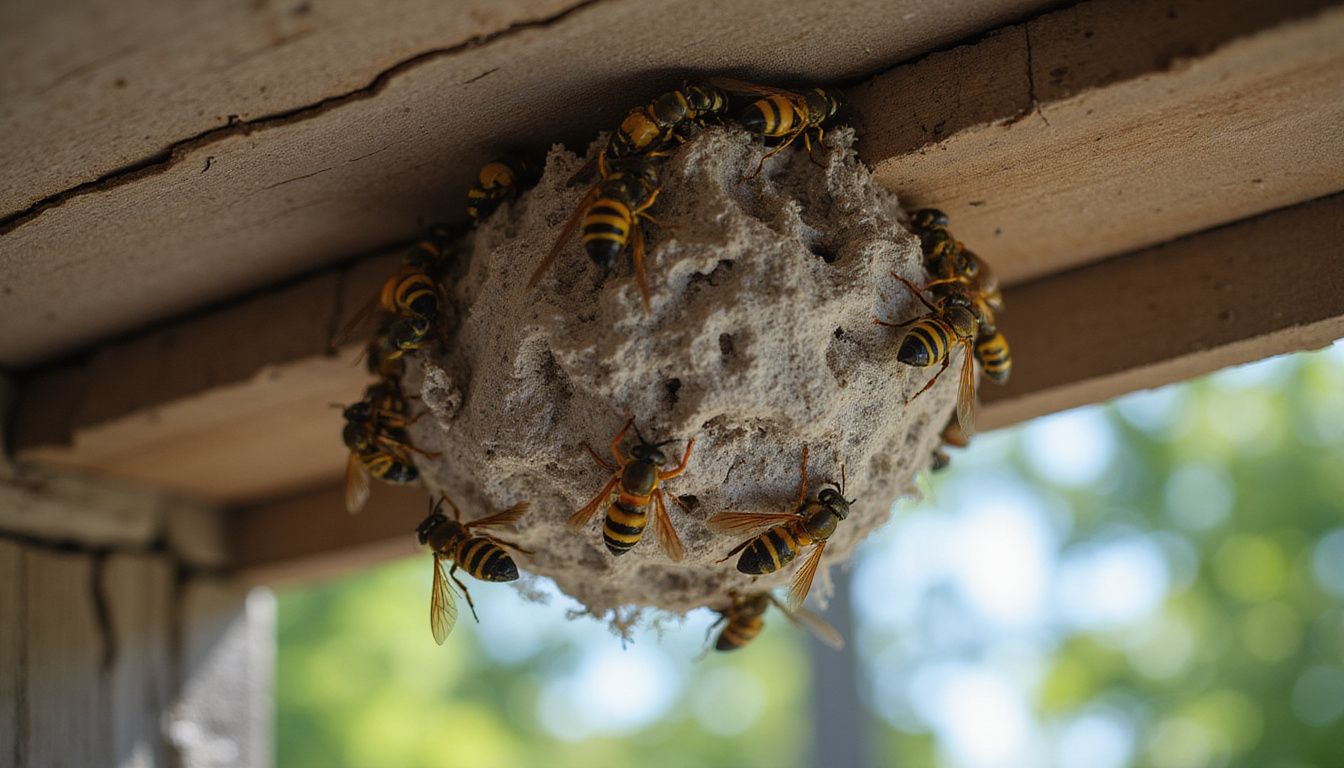
To find wasps and yellow jackets, watch for nests on the ground or under roof edges. These insects are often in yards.
I check my backyard for wasps often. Here’s what I look out for:
- Wasps flying around usually means they’re searching for food or a nesting spot.
- Spotting nests in trees, under eaves, or in the ground points to yellow jackets or other wasps.
- Buzzing noises from hidden places might mean a nest is close by.
- Chewed wood suggests paper wasps are building their home with it.
- More aphids and insects in the yard can attract wasps that feed on them.
- Dead bugs or small animals indicate some wasp species leave behind remains after eating.
- Seeing wasps indoors often could signal a nest in the attic or walls.
- Wasp damage on fruit and plants shows they’ve been feeding there.
- Wasps near garbage cans or outdoor dining areas are drawn by food waste and sweets.
- Getting stung more frequently in specific yard spots usually means there’s a nearby nest.
These signs alert me to any issues with stinging insects like yellow jackets, paper wasps, and others around my home.
Common Wasp Species in Backyards
Now that we’ve examined how to identify the presence of wasps in your backyard, I will explain which types you might encounter. My backyard adventures have acquainted me with a few common types that you might find as well. Learning about them was quite useful. So, here is a straightforward table for clarity:
| Wasp Species | Description | Location Found |
|---|---|---|
| Yellow Jackets | They have a distinct yellow and black pattern. Very aggressive. | Often found near trash and food sources. |
| Paper Wasps | Long bodies and legs, with a bit of a reddish-brown color. | Nest in eaves and attic spaces. |
| Hornets | Larger than yellow jackets, with a white and black pattern. | Prefer tall trees and shrubs. |
This chart made things clearer for me. Yellow jackets, for example, are attracted to my outdoor meals. Their nests can also be found near my garbage cans. Paper wasps choose more secluded areas, like beneath the overhangs of my roof. And hornets? They nest high in the trees, which can make them challenging to notice at first glance.
I discovered that addressing each type requires unique strategies. For yellow jackets, it was essential to secure trash and cover food during outdoor events. For paper wasps, consistently monitoring and clearing any initial nesting helped. Hornet nests usually needed a professional due to their location.
Each interaction provided me with greater insight into these buzzing inhabitants. They contribute to the ecosystem, assisting with pollination and pest control. Yet, in my own backyard, establishing equilibrium was essential. This sometimes meant removing them carefully to fully enjoy my outdoor space.
Things That Attract Wasps
Wasps are attracted to my yard for food, including sweets and proteins like those found at barbecues. They also look for places to build their nests.
Food and Beverages
I’ve seen more wasps near my patio lately. They come for food and drinks left outside, especially sweets like soda, juice, and cookies. To keep them away, I make sure trash bins are sealed tightly so the smells don’t attract these stinging insects.
My yard’s flowers and plants also attract wasps. They search for nectar just as they do insects or sip from our drinks.
Flowers and Plants
Flowers draw wasps for nectar and hunting pests like caterpillars. Sweet, bright, and late-blooming flowers attract more wasps. To avoid them, don’t plant these near patios or doors.
Choosing certain plants can make a yard less appealing to wasps. Mint, basil, and marigold act as natural repellents. Planting them where people hang out can help keep wasps away without harming health or the environment with pesticides.
Warmth and Light
Wasps like sunny spots for their nests, often choosing under roof eaves or on porch ceilings. I discovered a wasp nest on my shed door where the afternoon sun hits hardest. To deter them, I now use outdoor lights sparingly at night since lights attract wasps similar to moths.
Turning off patio lights when they’re not in use helps me keep wasps away from my area.
Effective Methods to Get Rid of Wasps
To handle yellow jackets and other wasps in my yard, I find two methods effective:
– I set traps to catch them.
– I use insecticide sprays to kill them quickly.
Use Wasp Traps
Setting up wasp traps helps reduce their presence in backyards. These devices catch wasps by using bait such as sugar water, soda, or protein during spring. It’s important to place these traps away from busy areas to avoid attracting more wasps.
Regularly emptying the traps ensures they remain effective at capturing wasps.
Apply Soap and Water Mixtures
To deal with wasps, I use a mix of soap and water. I put dish soap and water in a spray bottle. Then, I spray it on nests or directly at the insects. The soap blocks their breathing pores, so they can’t breathe well.
This method is safe for homes, plants, and pets. It’s also cheap because I already have the ingredients in my kitchen. But, I need to aim carefully to avoid getting stung by angry yellow jackets or other wasps trying to escape.
Spray Commercial Wasp Killers
I used commercial wasp killers to tackle a yellow jacket nest in my backyard. These products, packed with strong chemicals, can kill wasps instantly. I followed the instructions carefully, wore protective gear, and sprayed from afar.
Minutes later, the number of wasps near the nest dropped significantly.
Spraying at dawn or dusk is crucial because that’s when these insects are likely inside their nests. It’s also important to make sure the product is safe for pets and plants. This approach let me manage yellow jackets effectively without facing stings or allergic reactions from bee stings.
Preventing Future Wasp Infestations
To prevent wasps and yellow jackets from returning, I clean my yard and plant things they dislike. This strategy effectively keeps them at bay.
Remove Nesting Sites
Wasps, yellow jackets, and bald-faced hornets pick specific spots in the yard for their nests. I tackle this issue by removing potential nest sites.
- Inspect roof eaves, wall cavities, and shed corners for nests since these spots offer shelter.
- Seal any cracks and crevices to stop wasps from entering homes and making nests inside.
- Always close waste containers because they draw wasps looking for food.
- Get rid of unused appliances or lawn equipment in the yard; they can turn into nesting areas.
- Trim back bushes and trees close to the house. Thick foliage is a preferred hiding spot for wasp nests.
- Fill holes in the ground to prevent yellow jackets from creating ground nests there.
- Repair broken panels or siding on the house to remove protected nesting spaces.
Also, keeping the yard clean helps deter wasps from visiting.
Keep Your Yard Clean
Keeping my yard neat stops wasps and yellow jackets from setting up homes. They look for places with easy access to food and spaces for their nests. To prevent this, I ensure trash bins are sealed and garbage is removed on time.
This reduces their chances of finding food.
I also trim bushes and mow the lawn to eliminate potential nesting spots. And, I remove standing water in containers like buckets or bird baths to keep away insects that wasps might eat.
By making my yard unwelcoming, I help prevent these stinging insects from moving in.
Use Wasp-Repellent Plants
I implement certain plants as a natural buffer against wasps in my yard.
- The potent aroma of mint deters wasps. I maintain it in containers to prevent excessive spreading.
- Basil serves the dual purpose of discouraging wasps and enhancing our kitchen preparations.
- Lavender, while loved by humans for its scent, acts as a deterrent for wasps. It’s easy to maintain and adds to the beauty of the garden.
- The vibrant Marigolds act as a deterrent, preventing wasps from nearing my patio area.
- Citronella candles work effectively against mosquitoes and assist in managing wasps during outdoor nighttime activities.
I regularly integrate these plants into my garden for efficient pest control, specifically targeting reduction in the local wasp community. This strategy aids in protecting my yard from these insects.
Conclusion
I find that removing wasps, including yellow jackets, is straightforward with the right steps. I set traps and use soap water for effective control. For harder cases, I turn to commercial sprays.
Keeping my yard tidy helps prevent these insects from returning. Also, planting certain types of plants deters them permanently. By staying vigilant and acting promptly, I maintain a wasp-free backyard.
FAQs
1. What are some common types of wasps and stinging insects in my backyard?
You might find yellow jackets, bald-faced hornets or southern yellowjacket wasps in your backyard. Some people also encounter solitary wasps like the mud dauber.
2. How can I identify a yellow jacket nest or other wasp nests?
Yellow jacket nests often resemble hives and are usually found in ground nests. Bald faced hornet’s nests, on the other hand, look more like bee colonies.
3. What should I do if I get stung by a wasp or yellow jacket?
If you’re stung by these insects, it’s important to treat the sting immediately to avoid further infection and discomfort from an insect bite or sting.
4. Are there any effective ways for yellow jacket control and getting rid of other stinging insects?
Yes! Pest management strategies include using bug zappers for electronic control as recommended by U.S Department of Agriculture; this helps with crop protection too!
5. Can I get professional help for pest management?
Absolutely! You can reach out to your local insect control services via email or phone provided on their user profiles over their internet service provider network.
6. What precautions should be taken while dealing with these pests?
Always wear protective clothing like full-length pants when dealing with these pests to avoid potential bites and stings.