“This post contains affiliate links. As an Amazon Associate, I earn from qualifying purchases”
Raising chicken broilers can be a rewarding venture, especially if you know how to do it right. Whether you’re a beginner or looking to improve your skills, this guide will walk you through everything you need to know about raising broilers for maximum yield. From understanding the basics of broiler chickens to preparing them for market, we’ve got you covered with practical tips and insights to help you succeed in your poultry farming journey.
Key Takeaways
- Choose the right breed of broiler for optimal growth and meat quality.
- Ensure your coop is comfortable and safe for your chickens.
- Feed your broilers a balanced diet and monitor their intake.
- Provide fresh water at all times to keep your birds healthy.
- Implement health management practices to prevent diseases and ensure a profitable yield.
Understanding Broiler Chickens
What Is A Broiler Chicken?
Okay, so what exactly is a broiler chicken? Simply put, a broiler chicken is a chicken specifically bred and raised for meat production. These aren’t your egg-laying breeds; broilers are all about that fast growth and efficient feed conversion. They’re designed to pack on weight quickly, reaching market size in a relatively short amount of time. This makes them a popular choice for commercial meat production, and increasingly, for folks raising their own meat at home.
Choosing The Right Broiler Breed
Choosing the right breed is a big deal. There are a few popular options, each with its own pros and cons. Here’s a quick rundown:
- Cornish Cross: These are the most common commercial broiler. They grow incredibly fast, reaching market weight in as little as 6-8 weeks. However, they can have some health issues due to their rapid growth, like leg problems. It’s important to provide complete protection for your birds.
- Freedom Rangers: A slower-growing option, taking around 11-12 weeks to reach market weight. They’re known for being more active and foraging more, which can improve meat flavor. They tend to be healthier than Cornish Crosses.
- Red Broilers: Another heritage breed option, similar to Freedom Rangers in terms of growth rate and foraging ability. They’re known for their reddish plumage.
Consider what’s important to you – growth rate, health, flavor – and choose a breed that fits your needs. Also, think about your climate and how well the breed will adapt to your local conditions.
Broiler Growth Rates
Broiler growth rates are seriously impressive. These birds are designed to gain weight rapidly. Here’s a general idea of what you can expect, but keep in mind that these are averages, and actual growth rates can vary depending on breed, feed, and environment. Each breeder will advise their own estimation of broiler growth.
| Week | Average Weight (lbs) |
|---|---|
| 1 | 0.2 – 0.3 |
| 4 | 1.5 – 2.0 |
| 6 | 3.0 – 4.0 |
| 8 | 5.0 – 6.0+ |
It’s important to monitor your birds’ growth regularly to make sure they’re on track. Weighing a sample of your flock each week can give you a good idea of their average weight and help you identify any potential problems early on. Remember that uniformity is key. Uniformity is a percentage of birds that are within 10% of the target weight, for that age.
Broiler growth is influenced by a bunch of factors. Good feed is a must, and so is a clean and comfortable environment. Stress can slow down growth, so make sure your birds have plenty of space and aren’t overcrowded. Keep an eye on the temperature, too – broilers need a warm environment, especially when they’re young. Proper breeding of broilers reduces losses and this is very important for poultry rearers.
Setting Up Your Broiler Farm
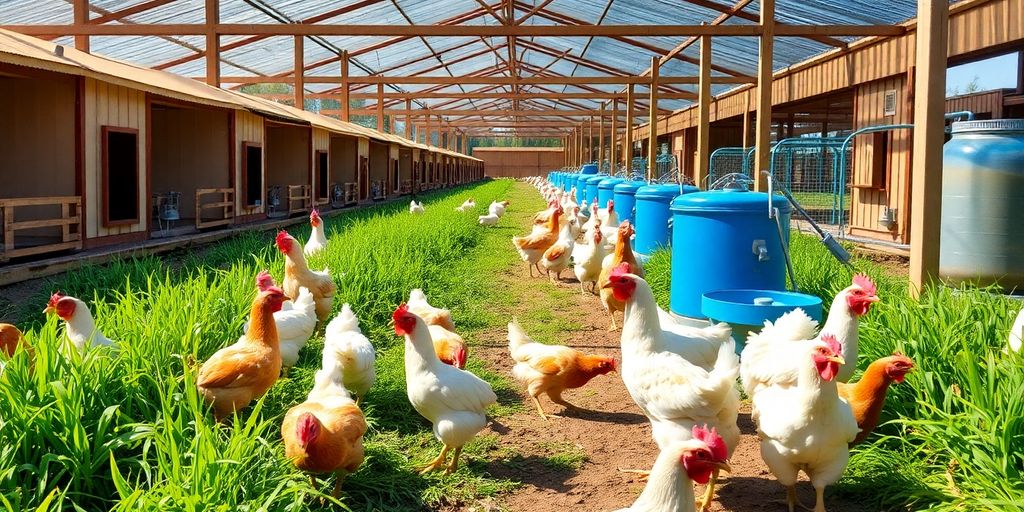
So, you’re ready to dive into broiler farming? Awesome! Getting your farm set up right is super important. It’s not just about throwing some chicks in a coop and hoping for the best. It’s about creating an environment where they can thrive, stay healthy, and grow quickly. Let’s break down the essentials.
Essential Equipment For Broiler Farming
Okay, first things first, you’re gonna need some gear. Think of it as the tools of your trade. Here’s a quick rundown:
- Feeders: You’ll need enough feeders so all the chicks can eat without fighting. There are different types, like trough feeders or hanging feeders. I prefer hanging feeders because they keep the feed cleaner and reduce waste.
- Waterers: Just like feeders, you need enough waterers. Nipple drinkers are great because they’re sanitary and easy for the chicks to use. Plus, they minimize spills.
- Brooders: When the chicks first arrive, they need a warm place to hang out. Brooders provide that warmth. Heat lamps or propane brooders are common choices. Make sure you have a backup in case one fails.
- Ventilation System: Good airflow is key to preventing disease and keeping the air fresh. Fans and ventilation systems help with this. You don’t want a stuffy, ammonia-filled coop.
- Lighting: Proper lighting encourages growth and activity. You’ll need a timer to control the light cycles.
Designing The Coop For Comfort
Think of the coop as your broilers’ home. You want it to be comfortable and safe. Here are some things to consider:
- Space: Overcrowding is a recipe for disaster. Make sure you have enough space per bird. A good rule of thumb is about 0.75 to 1 square foot per bird, but this can vary depending on the breed and your management style. Refer to poultry farming business for more information.
- Flooring: Deep litter is a popular choice. It’s basically a thick layer of bedding material like wood shavings or straw. It absorbs moisture and provides insulation. Just make sure to keep it clean and dry.
- Insulation: Insulation helps regulate the temperature inside the coop. This is especially important in extreme climates. You want to keep the coop cool in the summer and warm in the winter.
- Natural Light: While you’ll need artificial lighting, natural light is also important. Windows can provide natural light and ventilation. Just make sure they’re properly screened to keep out predators.
A well-designed coop can significantly impact your broilers’ growth and health. Pay attention to the details, and don’t be afraid to make adjustments as needed. It’s all about creating the best possible environment for your birds.
Creating A Safe Environment
Safety is paramount. You need to protect your broilers from predators, diseases, and other hazards. Here’s how:
- Predator Control: Fences, netting, and guard animals can help keep predators away. Common predators include foxes, coyotes, and hawks. Regularly inspect your fences for holes or weak spots.
- Biosecurity: Biosecurity measures prevent the introduction and spread of diseases. This includes things like foot baths, hand washing stations, and restricting access to the farm. It’s also important to source your chicks from a reputable hatchery.
- Rodent Control: Rodents can spread diseases and contaminate feed. Use traps and baits to control rodent populations. Keep your feed storage area clean and tidy.
- Ventilation: Proper ventilation reduces the buildup of ammonia and other harmful gases. This helps prevent respiratory problems in your broilers. Make sure your ventilation system is working properly.
- Regular Inspections: Regularly inspect your coop and equipment for any signs of damage or disrepair. Address any issues promptly to prevent accidents or injuries.
Setting up your broiler farm is a big undertaking, but it’s also incredibly rewarding. By focusing on comfort, safety, and efficiency, you can create an environment where your broilers can thrive and you can maximize your profits.
Feeding Your Broilers Effectively
Types Of Feed For Broilers
Okay, so feeding broilers isn’t just about tossing them any old chicken feed. It’s a bit of a science, especially if you’re aiming for maximum yield. Broilers need a high-quality, nutrient-rich diet for optimal muscle development nutrient-rich diet, with varying protein requirements throughout their growth stages. Younger chicks require higher protein levels to support their development.
- Starter Feed (Weeks 0-4): This is your high-protein stuff, usually around 20-23% protein. It’s designed to get those little guys growing fast right out of the gate. Some starter feeds even have medication to prevent coccidiosis, which is something you definitely want to avoid. Just make sure there’s no medication residue before you process them.
- Grower Feed (Weeks 4 until processing): You can dial back the protein a bit, usually to around 19%. This helps them continue to grow at a good pace without putting too much stress on their systems.
- Finisher Feed (Optional, last 1-2 weeks): Some people switch to a finisher feed with slightly different nutrient ratios to optimize meat quality and fat content right before processing. It’s not always necessary, but it can make a difference.
It’s important to make sure the feed is easy for the chicks to eat and digest. You don’t want them wasting energy trying to break down tough feed particles. Also, keep an eye on the calcium-to-phosphorus ratio – it should be around 2:1 for healthy bone development.
Feeding Schedule And Amounts
Broilers are basically eating machines, so you need to have a plan. They grow super fast, and that means they need a lot of food. Here’s a rough idea of what to expect:
- Weeks 0-3: Free feed. Let them eat as much as they want, whenever they want. They’re growing the fastest during this period, so don’t restrict them.
- Weeks 4-6: You can start to monitor their intake a bit more closely. Make sure they’re still getting plenty of food, but avoid overfeeding, which can lead to health problems.
- Weeks 7 until processing: Continue to monitor their intake. Some people switch to a slightly restricted feeding schedule during this time to improve feed conversion rates (how much feed they need to gain a pound of weight).
Here’s a table showing approximate feed consumption:
| Age (Weeks) | Approximate Feed Consumption per Bird |
|---|---|
| 0-3 | 1-2 pounds |
| 4-6 | 3-4 pounds |
| 7-8 | 3-4 pounds |
Keep in mind that these are just estimates. The actual amount of feed your broilers need will depend on their breed, environment, and overall health. Watch them closely and adjust their feed accordingly.
Using The Right Type Of Poultry Feeder
Choosing the right feeder is more important than you might think. You want something that’s easy for the chicks to access, minimizes feed waste, and is easy to clean.
- For young chicks (under 1 week): You can use shallow dishes, like shoebox lids or egg cartons. This makes it easy for them to find the food and start eating. Some people put marbles in the dishes to prevent the chicks from walking in the food and making a mess.
- For older chicks (1 week and up): There are lots of commercial feeders available. Some popular options include:
- Tube feeders: These are simple and inexpensive. They consist of a tube that holds the feed and a pan at the bottom where the chicks can eat.
- Trough feeders: These are long, narrow feeders that can accommodate a lot of chicks at once. They’re a good option if you have a large flock.
- Automatic feeders: These feeders automatically dispense feed at set intervals. They can save you time and effort, but they’re also more expensive.
Make sure the feeder is the right height for your chicks. You want them to be able to reach the food easily without having to stretch or strain. Also, keep the feeder clean to prevent the spread of disease. Clean poultry feeders regularly, removing any spilled or soiled feed.
Water Management For Broilers
Importance Of Fresh Water
Water is super important for broilers. They need it to digest their food properly. Think of it like this: without enough water, they can’t process all that feed they’re eating, and that impacts their growth. It’s not just about keeping them alive; it’s about maximizing their potential. Fresh water is a must.
- Water helps regulate body temperature.
- It aids in nutrient absorption.
- It’s essential for waste removal.
Making sure your broilers always have access to clean water is one of the easiest and most effective things you can do to keep them healthy and growing fast. Don’t skimp on the water!
Watering Systems For Broilers
There are a few different ways to provide water to your broilers. Each has its pros and cons, so it’s worth thinking about what works best for your setup. I’ve tried a few different methods, and here’s what I’ve learned:
- Nipple drinkers: These are great because they keep the water clean and reduce spillage. The chickens peck at the nipple to release water. They can be a bit pricey to set up initially, but they save water in the long run.
- Bell drinkers: These are the big, round drinkers that hang from the ceiling. They’re easy to fill and provide a good amount of water, but they can get dirty quickly, and the chickens can sometimes spill water.
- Trough drinkers: These are simple troughs filled with water. They’re cheap and easy to set up, but they require frequent cleaning to prevent contamination. I used poultry drinkers for a while, but switched to nipples to reduce mess.
Monitoring Water Intake
Keeping an eye on how much water your broilers are drinking can give you clues about their health. If they suddenly start drinking a lot less, it could be a sign that something’s wrong. Here’s a simple table to give you an idea of what to expect:
| Age (Weeks) | Water Intake (Gallons per 100 Birds per Day) |
|---|---|
| 1 | 1 |
| 3 | 3 |
| 6 | 5 |
Of course, these are just averages. Factors like temperature and humidity can affect how much water your birds need. If it’s hot, they’ll drink more. If it’s cool, they’ll drink less. Just pay attention to their behavior and adjust accordingly. Also, make sure you have brooding equipment ready to go!
Health Management Practices
Okay, so keeping your broilers healthy is, like, super important. If they get sick, your yield is gonna tank, and nobody wants that. It’s way easier to prevent problems than to try and fix them later. Think of it like this: a little effort now saves a ton of headaches later.
Preventing Common Diseases
The best way to deal with broiler diseases is to stop them from happening in the first place. This means keeping things clean, making sure they have enough space, and watching out for any weird behavior. Here’s a few things I always keep in mind:
- Cleanliness is key: Regularly clean and disinfect the coop. I’m talking about removing old litter, scrubbing surfaces, and using a good disinfectant. It’s a pain, but it makes a huge difference.
- Ventilation matters: Make sure the coop has good airflow. Stale air can lead to respiratory problems, and nobody wants a bunch of chickens coughing all day.
- Watch for signs: Keep an eye on your birds. Are they eating normally? Are they active? Are their droppings normal? If you see anything off, investigate it. Early detection is everything.
I always try to think about what could go wrong and then take steps to prevent it. It’s like playing chess with diseases. You gotta think a few moves ahead.
Vaccination Schedules
Vaccines are a big deal. They can protect your flock from some really nasty diseases. Talk to your vet about what vaccines are recommended in your area and set up a vaccination schedule. Here’s a basic idea of what that might look like:
| Age (Days) | Vaccine | Method |
|---|---|---|
| 1 | Marek’s Disease | Subcutaneous |
| 7 | Newcastle/Bronchitis | Eye Drop |
| 14 | Gumboro | Drinking Water |
Keep in mind that this is just an example. Your vet will know what’s best for your specific situation. Don’t skip this step! It’s worth the investment.
Maintaining Biosecurity
Biosecurity is all about keeping diseases out of your farm. It’s like having a security system for your chickens. Here’s what I do:
- Control access: Don’t let just anyone wander into your coop. Keep visitors to a minimum, and make sure they wear clean clothes and boots.
- Foot baths: Put foot baths with disinfectant at the entrance to your coop. This helps kill any germs that might be on people’s shoes.
- Quarantine new birds: If you’re bringing in new birds, keep them separate from your existing flock for at least 30 days. This gives you time to see if they’re carrying any diseases. Think of it as a broiler farm layout.
- Rodent and pest control: Keep rodents and pests under control. They can carry diseases and spread them to your chickens. Set traps, use bait, and keep the area around your coop clean.
By following these health management practices, you can keep your broilers healthy and happy, and that means a better yield for you. It’s all about being proactive and paying attention to the details.
Maximizing Growth And Yield
Monitoring Growth Metrics
Okay, so you’ve got your broilers, they’re eating, drinking, and generally acting like chickens. But how do you really know if they’re on track for maximum yield? It’s all about the data, baby! Regularly tracking your flock’s growth is super important.
Here’s what I do:
- Weigh a sample: Grab a few birds each week and weigh them. This gives you an average weight to compare against breed standards.
- Keep records: I use a simple spreadsheet to track weekly weights, feed consumption, and any health issues. This helps spot trends early.
- Compare to benchmarks: Every breed grows at a different rate. Find the growth chart for your specific breed and see how your flock stacks up. This paper logbook can help you keep track of everything.
It’s easy to get caught up in the day-to-day, but taking the time to monitor growth metrics will pay off big time when it’s time to sell. You’ll be able to identify problems early and make adjustments to keep your birds on track.
Adjusting Feed For Optimal Growth
Feeding broilers isn’t just about throwing feed in a trough and hoping for the best. It’s a science! You need to adjust the feed based on their age and growth stage. Remember, chicks need a higher protein feed to start. This 20% protein feed is crucial for their development.
Here’s a basic feeding schedule I use:
| Age | Feed Type | Protein Percentage |
|---|---|---|
| 0-3 weeks | Chick Starter | 20% |
| 3-6 weeks | Grower Feed | 18% |
| 6+ weeks | Finisher Feed | 16% |
Don’t be afraid to tweak the feed based on your flock’s growth. If they’re growing too slowly, you might need to increase the protein. If they’re growing too fast, you might need to dial it back. It’s all about finding that sweet spot. This is where meticulous management comes in handy.
Stress Reduction Techniques
Happy chickens grow better. Period. Stress can seriously impact growth rates and overall yield. So, what can you do to keep your broilers chill?
- Space: Make sure they have enough space. Overcrowding is a major stressor.
- Cleanliness: Keep the coop clean and dry. No one likes living in filth.
- Ventilation: Good ventilation is key to preventing respiratory problems and keeping the air fresh.
- Lighting: Provide adequate lighting, but avoid harsh, direct light. Chickens prefer a more natural light cycle.
Also, try to minimize any sudden changes in their environment. Chickens are creatures of habit, and sudden changes can freak them out. By implementing these stress reduction techniques, you’ll see a noticeable improvement in your flock’s growth and overall health.
Preparing For Market
Timing The Market For Sales
Okay, so you’ve raised your broilers, and they’re looking good. Now comes the part where you actually make some money: selling them. Timing is super important here. The market for broilers can fluctuate a lot, and you want to try and sell when prices are high. It’s not an exact science, and it’s hard to predict, but keeping an eye on market trends can help. You can look at broiler price fluctuation to get a sense of how difficult predicting the market can be.
- Keep track of market reports.
- Talk to other farmers to see what they’re planning.
- Be ready to sell when the opportunity arises.
It’s worth remembering that for every day you delay getting your broilers to market, your profits are reduced by the cost of feed. So, don’t hold on too long hoping for a better price if it means you’re just spending more on feed.
Processing Your Broilers
Once you’ve got a buyer lined up, you need to process your broilers. This involves humanely slaughtering the birds, plucking their feathers, and eviscerating them. You can do this yourself if you have the equipment and know-how, or you can take them to a processing plant. If you’re doing it yourself, make sure you follow all the regulations and guidelines for food safety. Remember that you can expect to lose some weight during processing.
- Slaughter the birds humanely.
- Pluck the feathers carefully.
- Eviscerate the birds thoroughly.
Packaging And Distribution Strategies
After processing, you need to package your broilers for sale. This usually involves wrapping them in plastic and labeling them with the weight, price, and any other relevant information. Then, you need to get them to your customers. If you’re selling directly to consumers, you might sell them at a farmer’s market or deliver them to their homes. If you’re selling to a store or restaurant, you’ll need to arrange for transportation. Consider the essential needs for your broilers.
- Wrap the broilers securely.
- Label them clearly.
- Transport them safely.
Here’s a simple table showing potential distribution channels:
| Channel | Pros | Cons |
|---|---|---|
| Farmer’s Market | Direct contact with customers, higher prices | Limited reach, weather-dependent |
| Local Stores | Wider reach, consistent sales | Lower prices, competition |
| Restaurants | Bulk sales, premium prices | Requires consistent quality and reliability |
Wrapping It Up
So there you have it! Raising broiler chickens can be a rewarding venture if you follow the right steps. From choosing the best breed to providing proper care and nutrition, every detail counts. Remember, the goal is to keep your birds healthy and stress-free while maximizing their growth. If you stick to the basics—good feed, clean water, and a safe environment—you’ll likely see great results. Have you tried any of these tips? Or do you have your own tricks up your sleeve? I’d love to hear your thoughts in the comments!
Frequently Asked Questions
What is a broiler chicken?
A broiler chicken is a type of chicken that is raised specifically for meat. They grow quickly and are usually ready to be sold after about 6 to 8 weeks.
How do I choose the right breed of broiler chicken?
When selecting a breed, look for those known for fast growth and good meat quality. Popular choices include the Cornish and Red Ranger breeds.
What should I feed my broilers?
Broilers need a special diet that includes starter feed, grower feed, and finisher feed. These feeds are designed to help them grow quickly and stay healthy.
How much water do broiler chickens need?
Broilers should always have access to fresh, clean water. They need a lot of water to help them digest their food properly.
What are common health issues for broiler chickens?
Broilers can face health problems like respiratory issues and infections. It’s important to keep their environment clean and monitor their health regularly.
How do I prepare my broilers for market?
Timing is key! Monitor their growth and weight, and process them when they reach the desired size. Proper packaging is also important for selling.