“This post contains affiliate links. As an Amazon Associate, I earn from qualifying purchases”
Discovering gaps in your yard can be bothersome. I’ve found them in my green space as well. Mostly, animals or water concerns are the reasons behind these issues. This guide aims to provide you an easy solution for these gaps.
Animal excavation and housing habits can lead to the formation of gaps. Grubs might be the magnet for these animals. Implementing grub control can disrupt this chain of events.
Incorrect water runoff can also create gaps in your green space. Addressing drainage problems will rectify this situation.
To mend these gaps, you’ll require some grass seed intended for repairing. If you’re dealing with larger spaces, you might want to consider using tall fescue seeds due to their durability.
Maintaining a pest-free environment aids in avoiding future gaps. Castor oil and beneficial nematodes are effective for pest management without causing harm to your green space.
If birds are feasting on the seed before it has a chance to sprout, consider employing bird feeders at a distance from the repaired area as a diversion.
Finally, routine yard maintenance like mowing contributes to the health of your green space and increases its resilience to issues.
Key Takeaways
- To deter animals from digging, apply castor oil and coffee grounds around your yard. These methods repel wildlife harmlessly.
- Plant pest-repelling flowers to target grubs without harming beneficial insects.
- Address water drainage issues by ensuring it directs away from your home, reducing yard soft spots.
- Erect fences or wire mesh barriers to block out digging pests and deer.
- If these steps don’t solve the problem, seek a professional who specializes in lawn pest control and irrigation solutions.
Common Causes of Holes in Your Yard
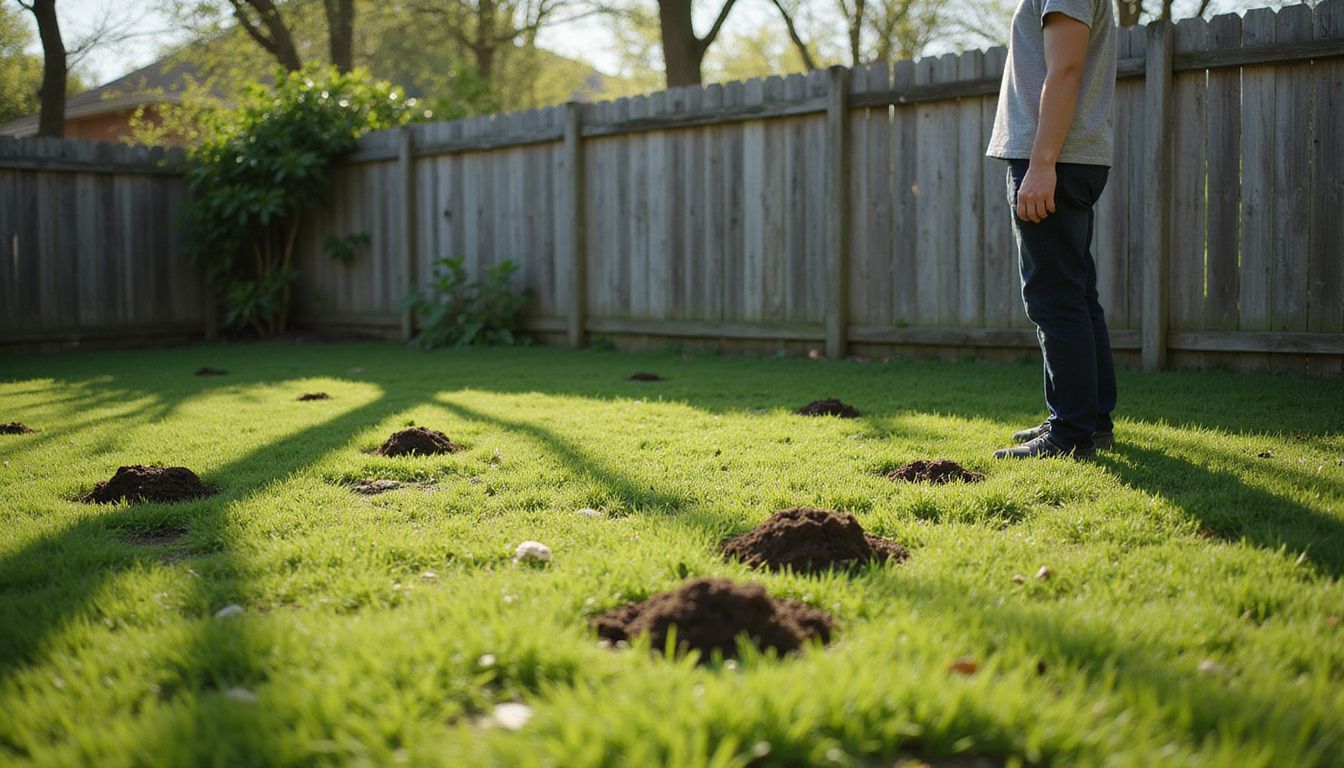
Holes in my yard can be from animals like moles or big bugs searching for food, or because too much water weakens the ground.
Burrowing Animals (Moles, Voles, Gophers, etc.)
I had a mole problem in my yard. These animals dig underground tunnels searching for food or creating homes. Moles, voles, and gophers can create many holes.
A mole can tunnel up to 15 feet per hour.
To solve this, I studied their habits. Moles eat insects and are active both day and night. Gophers eat plants and pull them into their tunnels. Voles prefer plant roots and stems, making small paths on the surface.
Castor oil worked as a natural deterrent against these burrowers without harming them. Coffee grounds around plants also helped make my yard less attractive for digging.
Maintaining a healthy lawn was crucial. I repaired water leaks since excess water attracts these animals. Having fewer bugs in my yard meant moles had less food.
Installing barriers or fencing underground kept gophers away from my garden.
By understanding these animals’ habits, managing the holes in my yard became easier.
Insects and Pests (Grubs, Cicada Killer Wasps, Ground-Nesting Bees)
Last summer, my lawn suffered from grub damage. These pests, which are young beetles, eat grass roots and cause yellow patches. To deal with them, I used grub control products.
My yard also had holes from cicada killer wasps and ground-nesting bees. These insects dig to create homes and lay eggs. Though the sight of holes was initially alarming, I learned cicada killer wasps prey on damaging bugs.
Ground-nesting bees play a critical role in pollination as they fly around during the day.
To control these insects while avoiding harm to beneficial ones, I adopted natural methods such as planting flowers that repel them and maintaining bird feeders to attract insect-eating birds.
This strategy helped me manage pest issues without harming useful insects.
Irrigation Issues
Holes in yards can also come from irrigation issues. When water pools or doesn’t drain well, soft spots form. These spots often sink under pressure, creating dips and holes. I learned fixing this might mean adjusting the lawn watering schedule or putting in better drainage systems.
To tackle this, it’s essential to check pipes and sprinklers for leaks. Even a tiny crack can release enough water to soften the ground over time. Also, altering the landscape slope makes water flow away rather than collect in one area.
This advice is useful for preventing yard problems without needing advanced tools or knowledge.
Identifying the Source of the Holes
To find out what’s causing holes in your yard, check the hole size and shape. If you notice tracks or chewed plants, animals or bugs could be living there.
Size and Shape of Holes
The size and shape of holes in my lawn give clues about their creators. Small, round holes usually come from ground bees nesting. When I see larger, uneven holes, animals could be digging for food or shelter.
Moles create mound-like tunnels underground.
I discovered tiny holes in a line were made by solitary bees. While they’re beneficial to gardens, they can harm lawns. Large holes near plants often point to gophers or voles feeding on roots, quickly damaging a garden.
Solitary bees are important for pollination but not ideal for grass health. Animals like moles seek insects below the surface, altering the landscape with their mounds. Gophers and voles target plant roots, posing threats to both lawns and gardens.
Signs of Animal or Insect Activity
I often find tracks and disturbed grass in my yard, signs that animals like red foxes or nocturnal creatures are around. Small holes near the garden indicate grubs or cicada killer wasps could be the problem.
Bird feeders draw starlings at dawn and dusk. Dirt piles suggest gopher tortoises might be close. Using castor oil can help deter certain pests from the lawn. By observing these activities, I learn better ways to manage lawn care.
How to Get Rid of Holes in Your Yard
Holes in the yard are usually caused by animals searching for food or water pooling incorrectly. To solve this:
– Eliminate food sources and water accumulation to deter pests.
– Use castor oil, spicy pepper, or coffee grounds around holes to keep animals away.
– Install fences to block larger animals from entering.
– Improve drainage to fix water-related issues causing soft ground and attracting diggers.
Remove Food Sources and Water Access
I once had to deal with many holes in my yard. Here’s what worked:
- Cut the grass often. A lawnmower makes this easy.
- Take down bird feeders to avoid attracting seed-seeking animals.
- Use grub control in spring or early summer. This cuts off the food supply for moles and alike.
- Repair any dripping outdoor faucets. Less water means fewer pests.
- Place water dishes for animals away from your lawn, so they don’t come close.
- Keep pet food indoors to prevent raccoons and similar creatures from digging around.
- Spread castor oil along garden borders as a safe way to repel burrowers.
These steps reduced the number of holes without hurting animals or using harsh chemicals.
Use Natural Deterrents (Cayenne Pepper, Coffee Grounds, etc.)
To keep pests out of the yard in natural ways that are safe for both pets and the environment, consider these tips:
- Sprinkle cayenne pepper around your yard to scare off squirrels and rabbits. They can’t stand the spice.
- Spread coffee grounds in garden areas to deter ants and slugs because they dislike the smell.
- Make a garlic mix by blending garlic with water, then spray it on plants to repel insects.
- For mole control, mix castor oil with dish soap and water. Pour this solution into their tunnels; moles hate it.
- Grow plants like marigolds and peppermint. Marigolds keep insects away, while peppermint deters ants and mice.
- Install bird feeders to attract birds. Birds eat pests such as grubs and worms, helping with pest control naturally.
- Place a shallow dish of beer in your yard overnight to trap slugs. They crawl in but can’t escape.
Using these household items or easily available solutions helps maintain a pest-free yard without causing harm to wildlife or using strong chemicals.
Install Barriers and Fencing
I protect my yard from animals digging holes by using barriers and fencing. Here’s how:
- Wire mesh is effective against burrowing lawn pests like moles, voles, and gophers.
- Deer jump high, so I use fences at least 8 feet tall to stop them.
- Burying the fence about 12 inches deep prevents diggers from getting in.
- Electric fencing works for larger or nocturnal animals like bobcats.
- Around plants, I place gravel or crushed shells to keep smaller pests away.
- Installing gates tightly leaves no gaps for animals to enter through.
- I check and fix any damage to fences quickly to maintain protection.
-Lawn care includes positioning bird feeders away from garden areas directs birds elsewhere.
By following these steps, my lawn stays safe without harming wildlife.
Address Irrigation or Drainage Problems
Water should flow away from the house to keep grass seed and plants thriving. Here’s my approach to fixing irrigation issues:
- Make sure the yard slopes away from the house for proper drainage.
- For pooled water, install a trench or French drain by digging and filling it with gravel or rock.
- Apply soil wetter on hard spots where water won’t soak in, letting it reach deeper roots.
- Mix compost into the soil to improve its structure and moisture retention.
- Create rain gardens in low areas to manage excess water and add beauty.
- For clay soils, add sand and peat moss to enhance drainage.
- Adjust sprinklers to avoid over-watering certain spots.
- Choose local grass types that need less water.
- Hang bird feeders away from places where animals might dig.
Following these steps keeps my lawn free from standing water issues.
When to Call a Professional
At times, my yard becomes too much for me to handle. If persistent problems like new holes or damage continue despite my efforts, seeking a professional becomes necessary. These experts quickly diagnose and solve issues with lawncare, from lawn pests and grub control to fixing irrigation systems, equipped with specialized tools and expertise.
Professionals can safely address tough challenges like moles or yellowjacket wasps that I prefer not to tackle myself. Calling them ensures safety and effectiveness in managing backyard troubles.
They use their experience to make yard problems disappear.
Conclusion
Fixing yard holes is a challenge I faced. I learned to recognize the causes, like moles, grubs, or water issues. Identifying whether animals or bugs were responsible was key. To combat this, I placed coffee grounds near the holes and repaired any water leaks.
Installing fences helped deter some animals. When the situation worsened, I didn’t hesitate to call a professional for help. This approach made managing my lawn care tasks more manageable.
I also explored other ways to maintain my lawn’s health and appearance. For grub control, proactive measures proved effective in reducing damage from these pests. Selecting the right grass seed played a vital role in establishing a resilient lawn that could withstand pest pressures.
To address wildlife intrusions—I noticed diurnal creatures leaving pawprints or clues of their visits—I invested in bird feeders as a distraction tactic away from the main yard area; however, it was important to avoid attracting unwanted pests with these feeders.
Another natural deterrent strategy included using castor oil around my garden edges; its smell keeps digging critters at bay without harming them.
Through trial and error—and learning on-the-go—my efforts led to fewer unwelcome guests and better outdoor spaces around my home.
FAQs
1. How can I identify what’s causing holes in my yard?
You can often tell by looking for clues like pawprints, whether the animal is active during the day (diurnal), or if you spot any flying pests.
2. What are some ways to get rid of lawn pests that make these holes?
Grub control methods work well for many pests. Also, using castor oil as a natural deterrent helps keep them away from your lawn.
3. Can bird feeders affect the number of holes in my yard?
Yes, they can attract animals with claws that dig up your lawn while searching for food dropped from bird feeders.
4. After getting rid of these pests, how do I repair my lawn?
Replanting grass seed where there were once holes will help restore your lawn’s beauty and health.