“This post contains affiliate links. As an Amazon Associate, I earn from qualifying purchases”
Dealing with a muddy backyard was tough for me. I found out that poor drainage and heavy rain were the causes. Here’s what I learned to fix it.
Key Takeaways
- Stop mud by installing French drains or adjusting gutters.
- Use aerators on your lawn and adjust the yard’s slope to improve water absorption.
- Before big changes, use pine flakes or gravel to soak up water.
- Add compost to soil and plant dense grass to absorb rainwater.
- For a dry path in high traffic areas, build rain gardens or lay stones.
Identify the Cause of Mud in Your Backyard
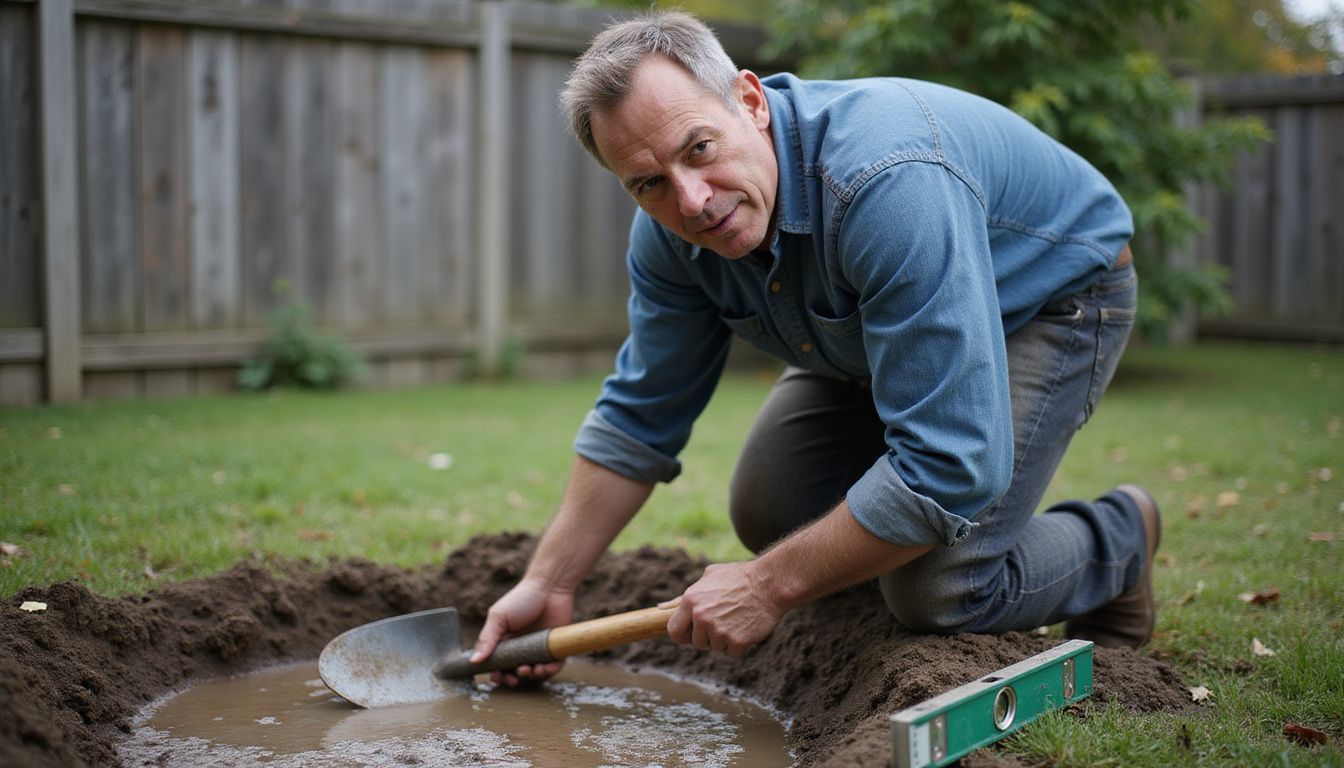
To solve a muddy backyard problem, check for poor drainage, compacted soil, or uneven ground. These issues can increase mud after heavy rainfall.
Poor drainage
Dealing with poor drainage in the backyard can be quite a challenge. This situation arises when rainwater or sprinkler water fails to drain adequately, creating an unpleasant muddy scenario.
I recognized this issue when I observed an abundance of pools sprouting across my yard after a heavy shower.
A reliable solution for this problem can be the installation of French drains. A French drain serves as an underground conduit that guides water away from your yard towards places such as the street or certain areas in your yard that are optimized for managing excess water, thus maintaining your property’s dry condition.
Alongside this, make sure gutters are adjusted to prevent water from being directed into lower areas, this approach can also contribute to minimizing water accumulation and mud build-up.
Soil compactionSoil compaction means the ground is pressed down hard, making it tough for water to seep through. My yard has clay soil, which got muddier after rain because of this issue. To test the soil’s compactness, I pulled on some grass and found it difficult, showing the ground was tight.
To solve this, I used a lawn aerator across my yard. This tool removes small chunks of earth, creating spaces for air and water. These openings allow water to penetrate deeper into the soil instead of forming mud on the surface.
Next, we focus on improper grading…
Improper grading
I faced a big problem with poor drainage because my yard didn’t slope away from my house. This caused water runoff to collect near my foundation and create puddles. To fix it, I had to plan well and use heavy equipment in some cases.
Adjusting the land’s slope was key to improving drainage. By doing this, I ensured rainwater flowed away from my house, which helped avoid puddles. I spoke with experts for advice and rented equipment to reshape my yard correctly.
This step was essential in keeping my backyard dry and healthy.
Quick Fixes for Mud Control
To fix a muddy backyard after rain, consider these steps:
– Spread pine shavings or straw to absorb water.
– Use rocks or wood chips to keep the area dry until you can make permanent changes.
Use pine flakes or straw
Last spring, I used pine flakes in my yard. They quickly absorbed the mud. Pine flakes allow air and water to pass through, helping the ground dry faster. Straw also proved effective, especially around garden plants.
I then added gravel in some areas.
Lay gravel or wood chips
I used gravel and wood chips in my yard to control mud. Gravel quickly drains water, keeping walkways dry. Wood chips absorb moisture, firming up the soil around garden beds. This reduces splashing on plants during rain and improves soil drainage.
Improve Drainage in Your Backyard
Fixing a muddy yard starts with improving how water moves through it. Adding special pipes or reshaping the land can make a big difference.
Install a French drain
I installed a French drain in my backyard to solve the constant mud problem. This system, hidden underground, uses gravel and a pipe to move water away from the house. I dug a trench, placed the pipe inside, and covered it with gravel.
After the first heavy rainfall, my yard was noticeably drier.
Next, I adjusted the yard’s slope to improve water flow away from my home.
Correct yard grading
To avoid a muddy yard, I adjusted the slope so water flows away from my house. This prevents pooling and soaking. A slight tilt keeps the yard dry after rain.
Soil type affects drainage. Clay retains water, unlike sandy soil. Adding sand and organic matter improved drainage. These changes solved my water runoff issues without expensive tools or high costs.
Bury gutter downspouts
I installed underground gutter downspouts to reroute water away from my home and alleviate yard pooling. With a trench shovel, I created a path for the downspout to run below ground into a dry well or rain garden.
This facilitates smooth drainage without causing water accumulation.
I easily attached the downspout to a PVC pipe or flexible drainpipes. Ensuring the slope was accurate was crucial for smooth water flow and backlog prevention. This technique significantly minimized soggy areas in my backyard after substantial rain.
Enhance Soil and Lawn Health
Improve your yard by adding compost to enhance soil quality, promoting thick grass growth that absorbs more water and reduces mud.
– Add compost for better soil.
– Grow thick grass to absorb water.
– Reduce mud effectively.
Add organic material to the soil
I added compost and leaves to the soil, improving water absorption and preventing soil compaction. Kitchen scraps, yard waste, and store-bought compost worked well. I mixed these into the ground with a shovel.
The soil became less hard, helping my lawn look better.
Next, I aerated the lawn. This process involved poking holes in it to enhance air and water movement through the soil.
Dethatch and aerate the lawn
After adding organic material to my soil, I worked on the lawn’s health. This involved removing thatch and aerating the soil for better air and water flow. Thatch, a layer of dead grass, blocks water and nutrients from reaching roots.
I used a tool to remove it then created small holes across the lawn for aeration. These steps improved grass growth.
Aerating also addressed soil compaction problems. Compacted soil limits root expansion and nutrient uptake. With more space, my lawn absorbed rainwater efficiently, cutting down mud after heavy rainfall.
Healthy roots grew strong plants that resisted pests and diseases better.
Overseed with hardy grass
I make the lawn breathe by dethatching and aerating, then I plant new grass seeds. This freshens up the yard. Hardy grass types are best because they handle stepping stones, heavy rainfall, and clay soil well.
Choosing local grass types is smart. They survive dry spells and heavy rain without making my backyard muddy again. By planting these tough seeds, my lawn gets healthier, fights off weeds, and stays less muddy.
Long-Term Solutions for Mud Prevention
To fix a muddy yard, I create rain gardens to absorb excess water and install concrete paths to reduce soil compaction.
– Rain gardens use plants and soil to capture runoff water.
– Concrete paths prevent high-traffic areas from becoming muddy.
Create a rain garden
I made a rain garden to fix my muddy backyard. This area catches runoff water from the roof and driveway during rain. A rain garden helps this water soak into the ground, reducing mud.
I picked plants that like water, such as blue vervain and wet-soil grasses.
Creating the rain garden was simple. First, I chose a spot where water gathers but kept it away from the house. I dug a shallow hole and mixed in compost for better drainage. After planting my chosen plants, I spread mulch over them to keep moisture in the soil and prevent weeds.
Now, heavy rain transforms into a beautiful garden instead of creating mud. The garden absorbs moisture naturally.
Use hardscaping for high-traffic areas
Hardscaping with stepping stones, gravel, or artificial turf helps manage mud caused by heavy rainfall. These materials allow for better rainwater runoff compared to grass or soil, especially in areas with high foot traffic.
To install gravel and wood chips, simply spread them on the ground. Artificial turf requires more preparation but offers year-round appeal with minimal maintenance. This approach keeps the backyard dryer and reduces mess after rainstorms.
Conclusion
In order to address a soggy backyard, I must first discern the source. Insufficient drainage, compacted soil, or a faulty gradient often result in mud. Prompt actions such as incorporating wood chips or pebbles are potential solutions.
For a sustainable approach, setting up a subterranean pipe network or altering the yard’s gradient can hinder water accumulation. Amending the soil with organic material and sowing resilient grass effectively manages rainfall.
Developing a rain garden or establishing firm walkways in frequently used areas maintain those areas dry all year round. These measures serve dual purposes – they mitigate the mud issue and simultaneously improve the aesthetics and functionality of my outdoor space.
FAQs
1. How can I fix my muddy backyard caused by poor drainage?
You can improve the soil drainage in your backyard through several methods. Installing a French drain or other types of drainage systems, like dry wells, helps manage water runoff effectively. Incorporating organic matter into clay or silty soil also enhances its water absorption capacity.
2. Can planting grass help with a muddy yard?
Yes! Grass planting is an effective way to deal with a muddy yard as the root systems aid in soil compaction and water absorption, reducing the chances of mud formation during heavy rainfall.
3. What are some alternatives to grass for dealing with a muddy backyard?
Ground cover plants provide excellent alternatives due to their dense root systems which prevent soil erosion and excess water accumulation. Artificial turf is another option that requires less maintenance than natural lawn care.
4. How does mulching help get rid of mud in my backyard?
Organic mulch such as wood chips not only enriches your garden but also improves soil structure by increasing its ability to absorb rainwater run-off efficiently thereby preventing mud formation.
5. Are stepping stones useful for managing a muddy yard?
Absolutely! Stepping stones create pathways that reduce foot traffic on wet lawns thus minimizing further compaction and subsequent muddiness after heavy rainfalls.
6. Can trees contribute to solving my muddy backyard problem?
Indeed they can! Trees’ extensive root systems aid in absorbing excess moisture from the ground while their leaves intercept rainwater before it reaches the ground, helping manage irrigation effectively.