“This post contains affiliate links. As an Amazon Associate, I earn from qualifying purchases”
Mushrooms often show up in my yard. They like wet places and lots of organic matter to eat. This post will tell you how to remove mushrooms from your yard.
First, mushrooms need damp areas and organic material. If your yard is moist and has things like tree stumps or lots of leaves, mushrooms may grow. To stop this, keep the yard dry and clean up any organic waste.
Second, mushrooms spread through fruiting bodies that release spores. Mowing can help by cutting these before they spread.
Also, compacted soil makes a good home for mushrooms because it holds more water. Aerating the soil can help by making it less compact and improving drainage.
Another point is about lawn care products. Some natural fungicides can target mushrooms without hurting your grass or plants.
Finally, if you have tree stumps or large amounts of dead plant material in your yard, removing them can reduce mushroom growth since they feed on this organic matter.
In short, managing water in the yard, keeping it clean, aerating the soil, using natural fungicides when necessary, and removing big sources of food for mushrooms helps keep them away.
Key Takeaways
- Mushrooms thrive in moist, organic areas. Dry out your yard and clear away debris to prevent them.
- Cut the grass, manually remove mushrooms, and apply soap or vinegar solutions for elimination.
- Improve water drainage and increase sunlight exposure. Remove dead vegetation and wood to avoid mushroom growth.
Why Mushrooms Appear in Your Backyard
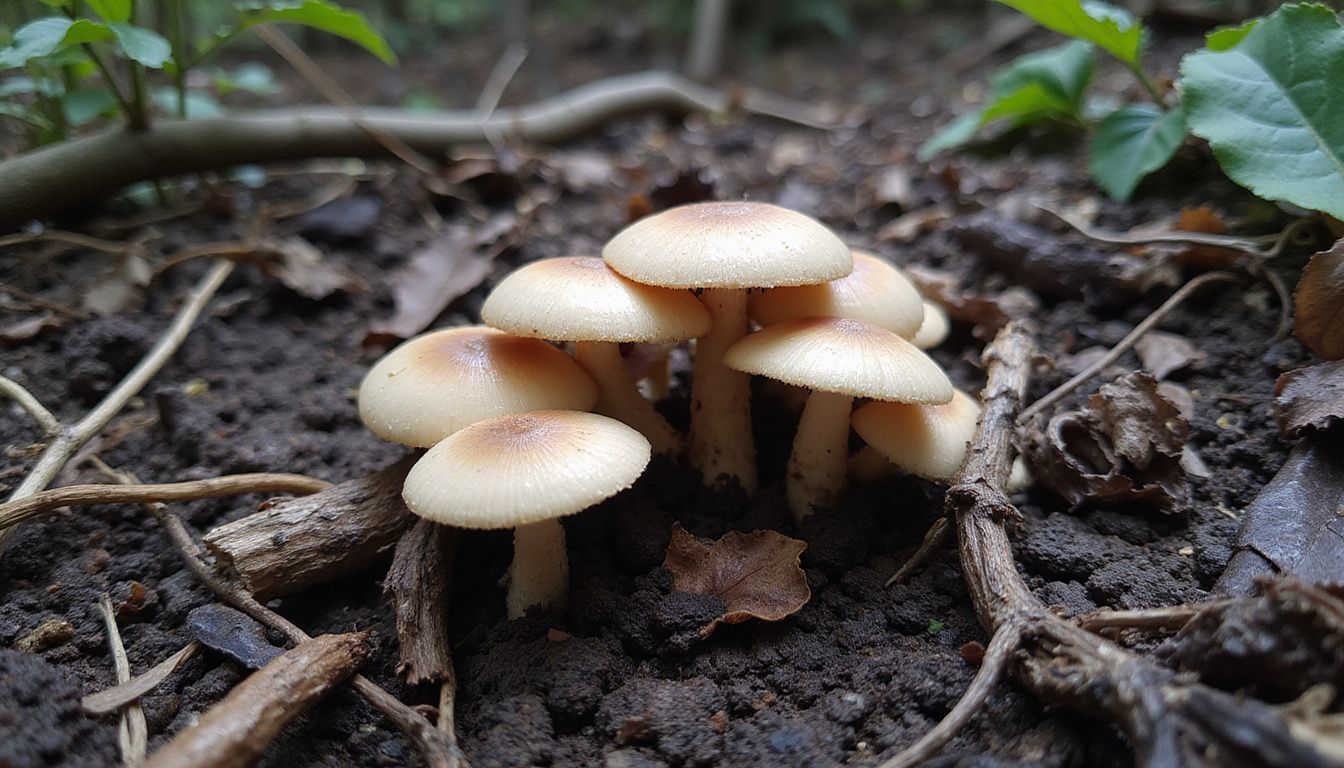
I find mushrooms grow well in wet, shady areas and they eat dead plants on the lawn.
Excess moisture and poor drainage
Mushrooms grow in my yard when there’s too much water and the soil can’t absorb it all. This issue gets worse if the soil is hard and compact, blocking water from filtering through.
To stop mushrooms from appearing, I work on making sure my lawn drains better. This includes breaking up the hard soil or setting up a way for excess water to escape.
Also, mushrooms feed on organic materials like dead wood or plants. By cleaning up leftover plant parts or tree stumps, I reduce their food source drastically. A yard without decaying organic matter means fewer mushrooms to deal with.
Decaying organic matter
Water isn’t the only problem. Decaying organic matter also causes mushrooms to grow in lawns. This includes leaves, grass clippings, and parts of trees like fallen branches. Over time, this material breaks down and feeds mushrooms.
I found many mushrooms around an old tree stump left to rot, showing anything once alive can support these fungi.
To stop this, I remove dead plants and wood from my lawn often. It’s a simple step that keeps mushrooms away. For instance, after mowing – which helps the lawn stay healthy – I always rake up the clippings instead of leaving them out.
Dead plant matter attracts mushrooms.
Limited sunlight exposure
Mushrooms grow well in dark, wet areas. Shade from trees and buildings keeps the yard dim and damp. This makes it an ideal place for mushrooms. By cutting tree branches, more sunlight reaches the ground.
This helps dry out the lawn quicker after it rains or gets watered. A drier lawn discourages mushrooms from growing. It also improves grass health and prevents other issues.
Methods to Remove Mushrooms
To remove mushrooms from your lawn, start by identifying the type. Then:
– Pick them up or dig them out.
– Spray a mix of soap and water or vinegar directly on them to kill them.
Hand-picking and proper disposal
I wear gloves and pick lawn mushrooms by hand. This method keeps my yard free of mushrooms. I pull out the entire mushroom to prevent them from growing again. After that, I put them in a trash bag.
This stops new spores from spreading.
Picking mushrooms by hand helps control outbreaks without damaging the environment or my lawn. It’s a good first step for small problems. For larger issues, more steps might be necessary.
Using a spade for removal
Here’s how to remove lawn mushrooms with a garden spade. Grab the spade and dig gently around the mushroom. Aim deep to remove both the fruiting body above ground and its roots below.
This ensures they don’t grow back quickly.
Removing mushrooms this way helps keep my yard clean longer than just knocking them over or using a lawnmower. It cuts down on organic material at the surface, preventing new mushrooms from sprouting later.
Applying natural remedies like dish soap or vinegar
I use dish soap mixed with water as a natural fungicide. This mixture, when sprayed on mushrooms, helps them disappear. It’s effective and avoids harsh chemicals.
Vinegar mixed with water works well too. I spray it directly on the mushrooms. Often, they die within a day. This method is good for dark, moist lawn areas where organic material builds up.
Preventing Mushroom Growth
To keep mushrooms away from your yard, focus on creating an environment they don’t like. Make sure water doesn’t stand around by fixing any spots where water collects. Let more sunlight hit the ground by trimming branches that shade your grass too much.
Also, pick up fallen leaves and dead plants so mushrooms have less food to grow on. This way, you can enjoy a mushroom-free yard for longer periods without much trouble. Explore more tips to maintain a healthy lawn!
Improve lawn drainage
I discovered that a moist yard can invite mushrooms. For better water flow, I punctured the ground to ensure quicker water absorption rather than forming puddles. I integrated sand and compost to mitigate soil congestion, facilitating smoother water passage.
I also restructured the terrain near my home to gently incline from the foundational structure. This redirects water from my lawn, maintaining its dryness. These actions primarily addressed the mushroom problem and concurrently improved my lawn’s health.
Increase sunlight exposure
Trimming tree branches helps because it lets more sunlight hit the ground. This reduces mushroom growth in yards. After pruning my trees, I saw fewer mushrooms.
I also moved big items like sheds and large plants to let more sun reach the soil. This change resulted in less mushrooms. More light on your lawn stops mushrooms from growing easily.
Remove organic debris regularly
I always clear away dead plants and leaves. This action stops mushrooms from popping up in my yard because mushrooms feed on organic material like leaves, fallen branches, and old flowers.
So, getting rid of these things cuts down their food source.
Also, I make sure to pick up after mowing the lawn or taking out dead trees. Removing grass clippings and tree remains keeps the yard dry and sunny. Mushrooms prefer moist and shaded areas, so a clean yard means fewer places for them to grow.
Conclusion
To get rid of yard mushrooms, I cut down on watering and increase sunlight. I remove them by hand or shovel immediately. To prevent their return, I improve lawn drainage and allow more light in.
I also clear out decaying plants and wood since fungi feed on these materials. This keeps my garden tidy and free from mushroom growth.
FAQs
1. What makes mushrooms grow in my backyard?
Mushrooms, part of the plantae kingdom, thrive on organic material like old tree stumps or manure. They also love compacted soil and damp areas that are common in forest floors but can appear anywhere from a desert to your lawn.
2. How can I stop mushrooms from growing on my lawn?
To have a mushroom-free yard, focus on lawn care. Regular mowing prevents the fruiting bodies of mushrooms from spreading spores. Also, remove excess organic matter such as fallen leaves and animal waste which provide nutrients for their growth.
3. Can poisonous mushrooms be found in backyards?
Yes indeed! Some types of lawn mushrooms could be poisonous to both humans and animals alike – always exercise caution when you spot them.
4. Are there natural ways to get rid of these unwanted fungi?
A simple yet effective method is improving your lawn maintenance routine by aerating compacted soil and watering less frequently since fungi love moist environments. You may also consider using a natural fungicide if the problem persists.
5. Do brown patches mean I have fairy rings?
Brown patch is actually a different type of fungus that affects grasses while fairy rings are circular formations made by certain kinds of mushrooms decomposing organic matter beneath your turf.